Pardon of Confederate Soldiers on December 25, 1868
1868 · Washington, D.C., United States
President Andrew Johnson issued a final unconditional pardon to all Confederate soldiers.
April 14, 1865
U.S. President Abraham Lincoln was shot by John Wilkes Booth at Ford's Theatre in Washington, D.C. He died the following day, marking a pivotal moment in American history.
Washington, D.C., United States | Ford's Theatre
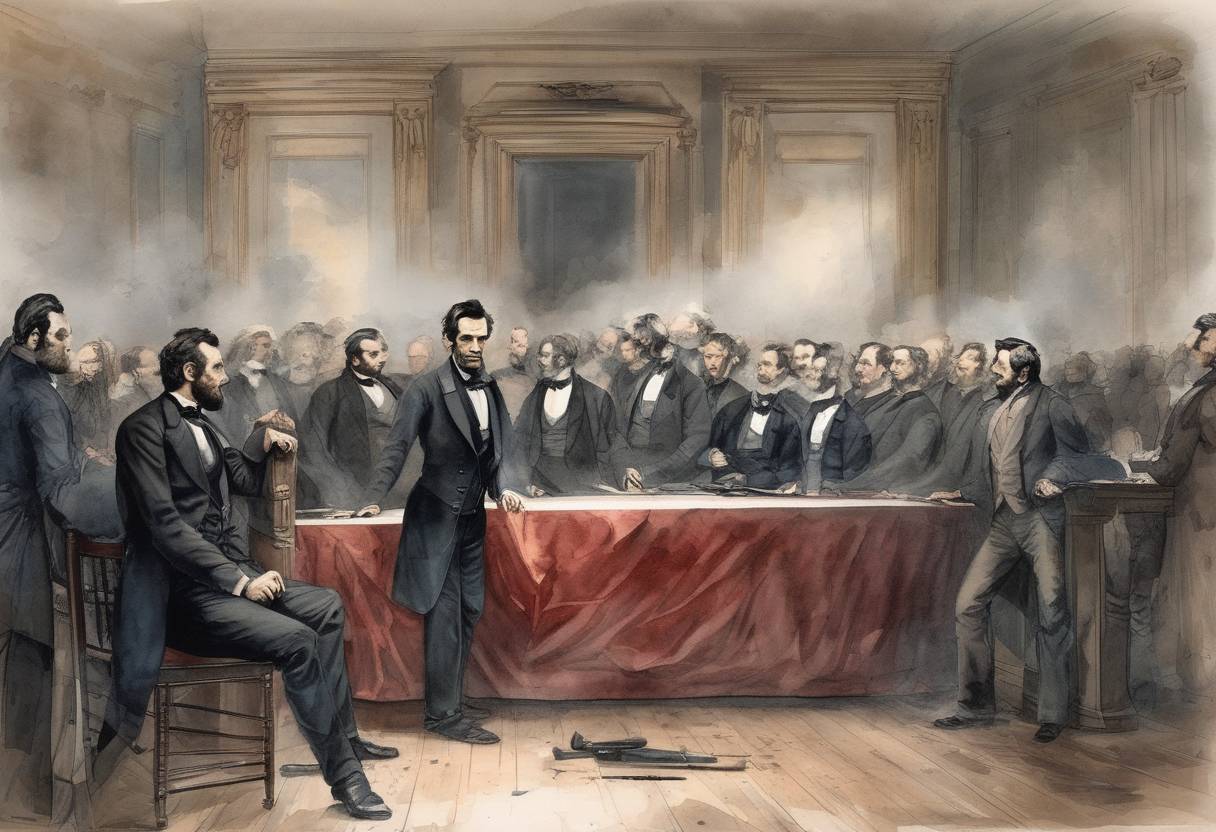
On the evening of April 14, 1865, a significant and tragic event unfolded in American history: President Abraham Lincoln was shot by John Wilkes Booth at Ford’s Theatre in Washington, D.C. This act marked a pivotal moment in the nation’s history, occurring just days after the end of the Civil War.
End of the Civil War: The Civil War had effectively concluded with General Robert E. Lee’s surrender to General Ulysses S. Grant at Appomattox Court House on April 9, 1865. The nation was beginning to heal from the wounds of a brutal conflict that had lasted four years.
Lincoln’s Vision for Reconstruction: President Lincoln was focused on reuniting the country and had begun outlining his plans for Reconstruction, which aimed to bring the Southern states back into the Union with leniency and to address the rights of newly freed slaves.
Ford’s Theatre: On the night of April 14, Lincoln attended a performance of the play “Our American Cousin” at Ford’s Theatre. He was accompanied by his wife, Mary Todd Lincoln, and their guests, Major Henry Rathbone and his fiancée, Clara Harris.
John Wilkes Booth: Booth, a well-known actor and Confederate sympathizer, had been plotting to kidnap Lincoln but shifted his plan to assassination following the Confederate defeat. He saw Lincoln as a tyrant and believed killing him would aid the Southern cause.
The Shooting: At approximately 10:15 PM, Booth entered the presidential box and shot Lincoln in the back of the head with a .44 caliber Derringer pistol. Booth then leapt onto the stage, reportedly shouting “Sic semper tyrannis” (Thus always to tyrants), the state motto of Virginia.
Lincoln’s Death: President Lincoln was carried across the street to the Petersen House, where he succumbed to his injuries the following morning, April 15, 1865, at 7:22 AM. His death marked the first assassination of a U.S. president.
National Mourning: The nation was plunged into deep mourning. Lincoln’s body was transported by train in a funeral procession that traveled through several states, allowing millions to pay their respects.
Impact on Reconstruction: Lincoln’s assassination had profound implications for the Reconstruction era. His successor, Andrew Johnson, faced significant challenges and controversies in implementing policies that would shape the post-war United States.
Capture of Booth: Booth fled the scene and was pursued by Union soldiers. He was eventually found hiding in a barn in Virginia and was killed on April 26, 1865, after refusing to surrender.
The assassination of Abraham Lincoln was a turning point in American history. It not only deprived the nation of a leader who had guided it through its most perilous period but also altered the course of Reconstruction and the future of civil rights in the United States. Lincoln’s legacy as a champion of liberty and equality endures, and his assassination remains a somber reminder of the nation’s turbulent past.
Source: en.wikipedia.org