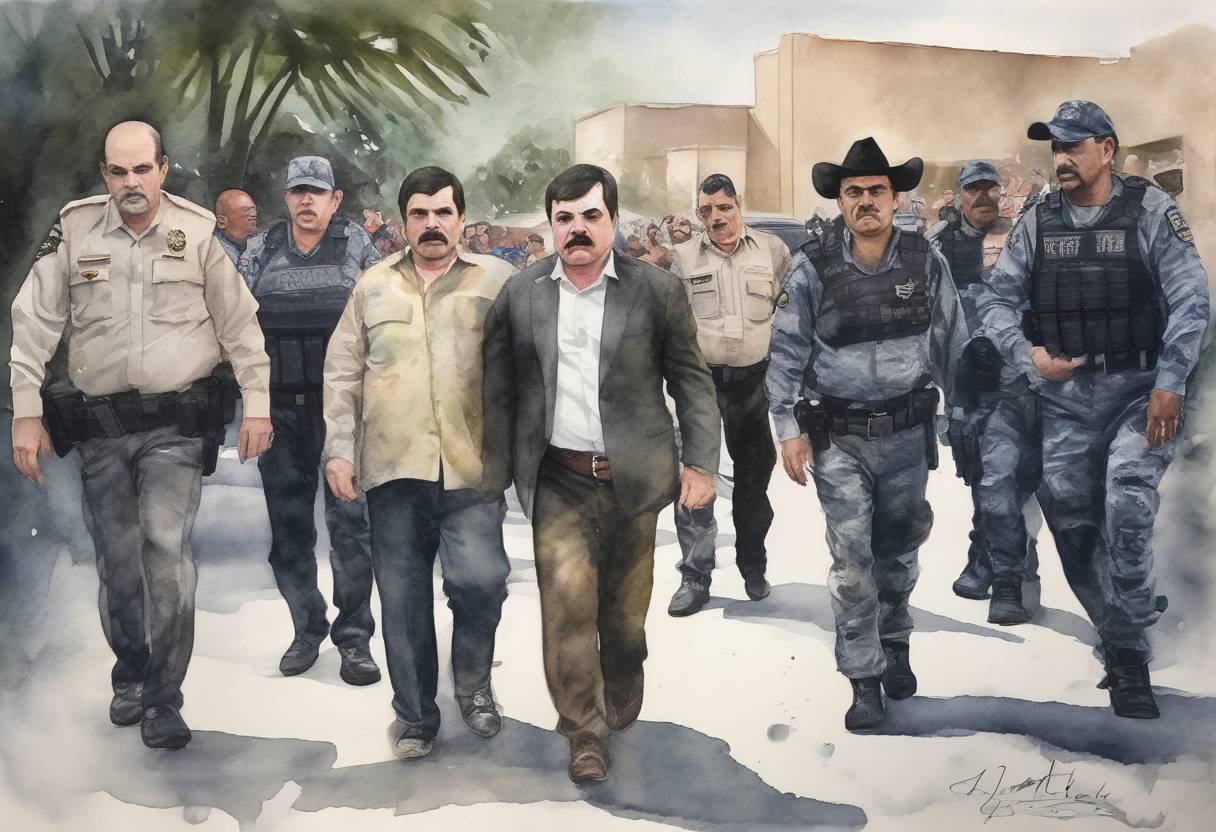
Recapture of Joaquín ‘El Chapo’ Guzmán - January 8, 2016
On January 8, 2016, Joaquín ‘El Chapo’ Guzmán, the infamous Mexican drug lord and head of the Sinaloa Cartel, was recaptured by Mexican authorities. This event marked a significant moment in the ongoing battle against drug trafficking in Mexico and was a major victory for the Mexican government.
Background
Joaquín Guzmán, known as ‘El Chapo’ (meaning “Shorty” in Spanish due to his stature), had been one of the most wanted criminals in the world. He was notorious for his role in leading the Sinaloa Cartel, which was responsible for a significant portion of drug trafficking into the United States. Guzmán’s operations were marked by extreme violence and corruption, making him a high-priority target for law enforcement agencies globally.
Previous Escape
Before his recapture in 2016, Guzmán had escaped from prison twice. His most recent escape occurred on July 11, 2015, when he broke out of the Altiplano maximum-security prison in Almoloya de Juárez, Mexico. He managed this through a sophisticated tunnel system that led from his cell to a construction site over a mile away. This escape was a major embarrassment for the Mexican government and highlighted issues of corruption and security lapses within the prison system.
The Recapture
The operation to recapture Guzmán was a coordinated effort by Mexican security forces, including the Mexican Navy and Federal Police. The operation took place in the city of Los Mochis, in the state of Sinaloa, following a tip-off about Guzmán’s whereabouts.
Key Events
- Intelligence Gathering: Mexican authorities had been tracking Guzmán’s movements through various intelligence sources, including intercepted communications and surveillance.
- Raid in Los Mochis: The operation culminated in a raid on a house in Los Mochis, where Guzmán was hiding. The raid resulted in a gunfight between Guzmán’s security team and Mexican marines, leading to the death of five of Guzmán’s associates.
- Capture: Guzmán attempted to flee through the city’s drainage system but was ultimately captured by the authorities. He was then transported back to the Altiplano prison.
Aftermath and Significance
The recapture of ‘El Chapo’ was a significant achievement for the Mexican government, restoring some confidence in its ability to combat organized crime. It also underscored the challenges faced by law enforcement in dealing with powerful drug cartels that possess extensive resources and influence.
Following his recapture, discussions about extraditing Guzmán to the United States intensified. In January 2017, he was extradited to the U.S., where he faced numerous charges, including drug trafficking, money laundering, and murder. In 2019, Guzmán was convicted and sentenced to life in prison plus 30 years.
Broader Impact
Guzmán’s recapture and subsequent extradition highlighted the international nature of drug trafficking and the importance of cross-border cooperation in tackling such issues. It also brought attention to the ongoing struggles within Mexico to address corruption and improve the effectiveness of its judicial and penal systems.
Overall, the recapture of Joaquín ‘El Chapo’ Guzmán was a pivotal moment in the fight against drug cartels and remains a significant event in the history of law enforcement efforts against organized crime.