The Incorporation of the Baltimore and Ohio Railroad
1827 · Baltimore, United States
The Baltimore and Ohio Railroad is incorporated, becoming the first U.S. company to be granted a charter for the transportation of passengers and freight.
July 30, 1729
Baltimore, Maryland, is founded.
Baltimore, United States
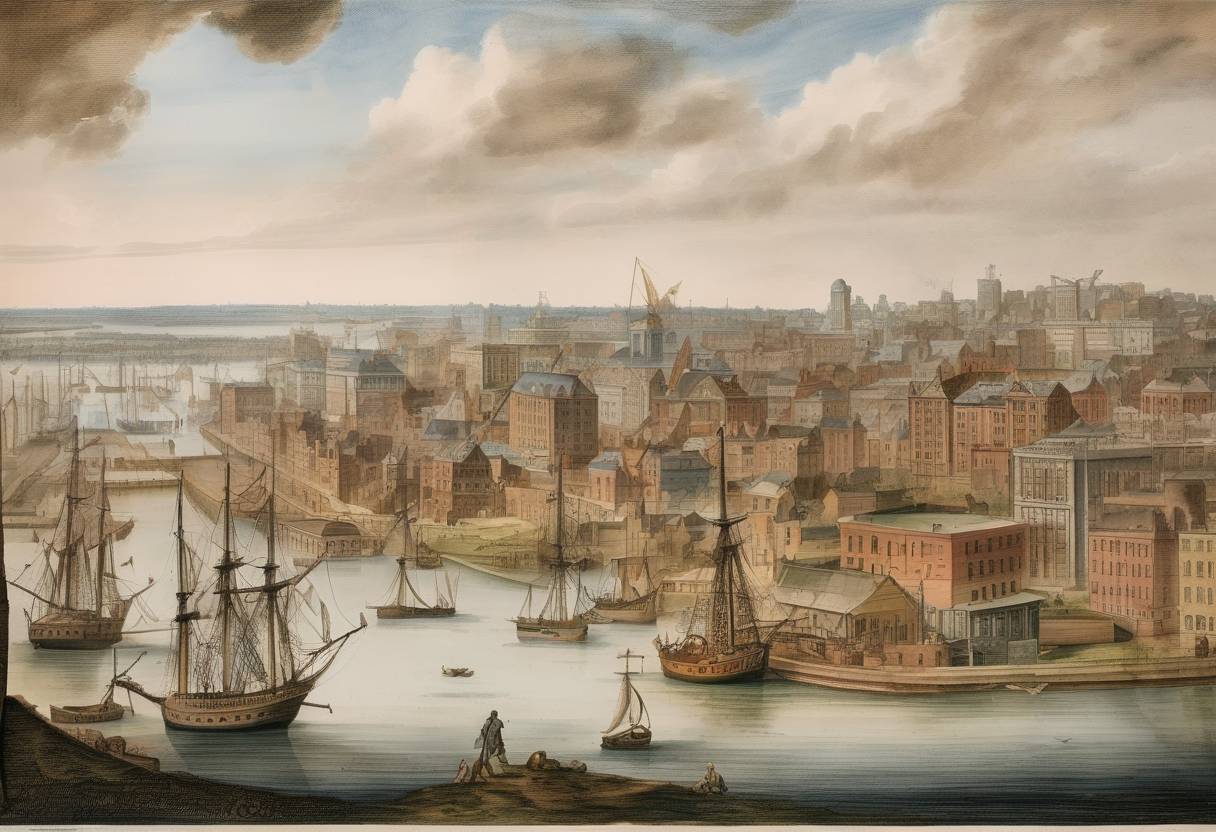
On July 30, 1729, the city of Baltimore, Maryland, was officially founded. This event marked the establishment of what would become one of the most significant ports and cities in the United States.
Colonial Maryland: In the early 18th century, Maryland was a British colony with a growing economy based on agriculture, particularly tobacco farming. The need for a port city to facilitate trade and commerce was becoming increasingly apparent.
Strategic Location: The area that would become Baltimore was strategically located on the Patapsco River, which flows into the Chesapeake Bay. This location was ideal for trade, providing access to the Atlantic Ocean and serving as a gateway for goods moving to and from the interior of the colony.
Legislative Action: The Maryland General Assembly passed an act on July 30, 1729, to establish the town of Baltimore. The act called for the purchase of 60 acres of land from Charles Carroll, a prominent landowner, to be laid out into streets, lots, and public spaces.
Naming: The town was named in honor of Lord Baltimore, the title held by the Calvert family, who were the proprietors of the Maryland colony. The Calverts were instrumental in the founding and development of Maryland.
Early Growth: Initially, Baltimore was a small settlement, but its advantageous location quickly attracted settlers, merchants, and tradespeople. The town’s economy began to diversify beyond tobacco, incorporating industries such as shipbuilding and milling.
Port City: By the mid-18th century, Baltimore had developed into a bustling port city. It became a center for the export of grain and other agricultural products, as well as a hub for the import of goods from Europe and the Caribbean.
Economic Impact: Baltimore’s growth as a port city contributed significantly to the economic development of Maryland and the surrounding regions. It played a crucial role in the trade networks of the American colonies.
Cultural and Social Development: Over time, Baltimore evolved into a diverse and culturally rich city. It became known for its vibrant communities, educational institutions, and contributions to American culture and industry.
Role in American History: Baltimore would later play important roles in American history, including during the American Revolution and the War of 1812, particularly noted for the Battle of Baltimore and the writing of “The Star-Spangled Banner.”
The founding of Baltimore on July 30, 1729, set the stage for the city’s development into a major urban center, influencing the economic, cultural, and historical landscape of the United States.
Source: en.wikipedia.org