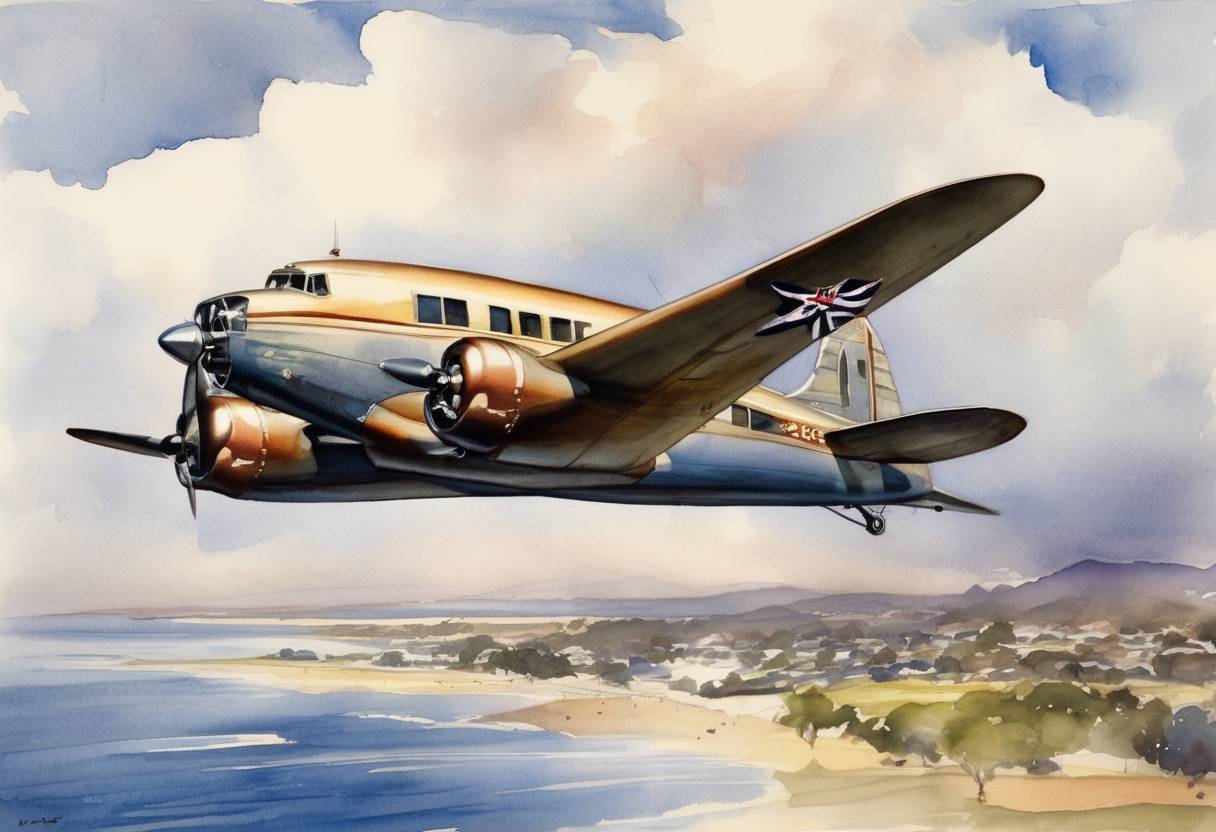
The First Flight of the Douglas DC-3 - May 15, 1935
On May 15, 1935, the Douglas DC-3, an aircraft destined to transform commercial air travel, embarked on its maiden flight in Santa Monica, California. The DC-3 represented a significant advance in aviation technology and design, marking the beginning of a new era in passenger air transport.
Background and Development
The DC-3 was developed by the Douglas Aircraft Company, led by influential American engineer and aircraft designer Donald Douglas. The aircraft was the result of continuous improvements from its predecessors, the Douglas DC-1 and DC-2. It was designed in response to the demand from airlines for an aircraft that could efficiently carry more passengers even on longer routes without sacrificing profitability.
Technical Innovations
The DC-3 featured several technical advancements that set it apart:
- Capacity and Comfort: It could carry up to 21 passengers, a significant improvement over its predecessors, and offered enhanced comfort with its wider cabin.
- Range and Performance: With a range of approximately 1,500 miles (2,400 km), it outperformed other aircraft of its time, making cross-country flights more feasible.
- Durable Design: Its robust design and twin radial engines provided reliability and ease of maintenance.
Impact on Air Travel
The introduction of the DC-3 had a transformative impact on both the aviation industry and the broader public:
- Economic Viability: Its efficiency made air travel more affordable, leading to the proliferation of passenger air service.
- Widespread Adoption: By the late 1930s, it became the backbone of many airlines’ fleets. During World War II, the military version, the C-47 Skytrain, became crucial for transport and logistics, demonstrating its versatility.
- Post-war Influence: After the war, many of the surplus C-47s were converted for civilian use, further entrenching the DC-3’s role in aviation history.
Legacy
The Douglas DC-3’s influence continues to be felt long after its inception. It is credited with establishing standards for modern passenger aircraft, remaining in the skies for decades after its debut. The DC-3 is still in limited commercial service today, attesting to its durable design and enduring legacy.
In summary, the first flight of the Douglas DC-3 on May 15, 1935, was a pivotal moment in aviation history, greatly facilitating the expansion of commercial air travel and setting the stage for the global connectivity enjoyed today.