Washington's Admission as the 42nd State of the United States
1889 · Olympia, United States
Washington was admitted as the 42nd state of the United States, expanding the nation's territory in the Pacific Northwest.
May 19, 1858
Minnesota was admitted as the 32nd U.S. state.
St. Paul, United States | United States Government
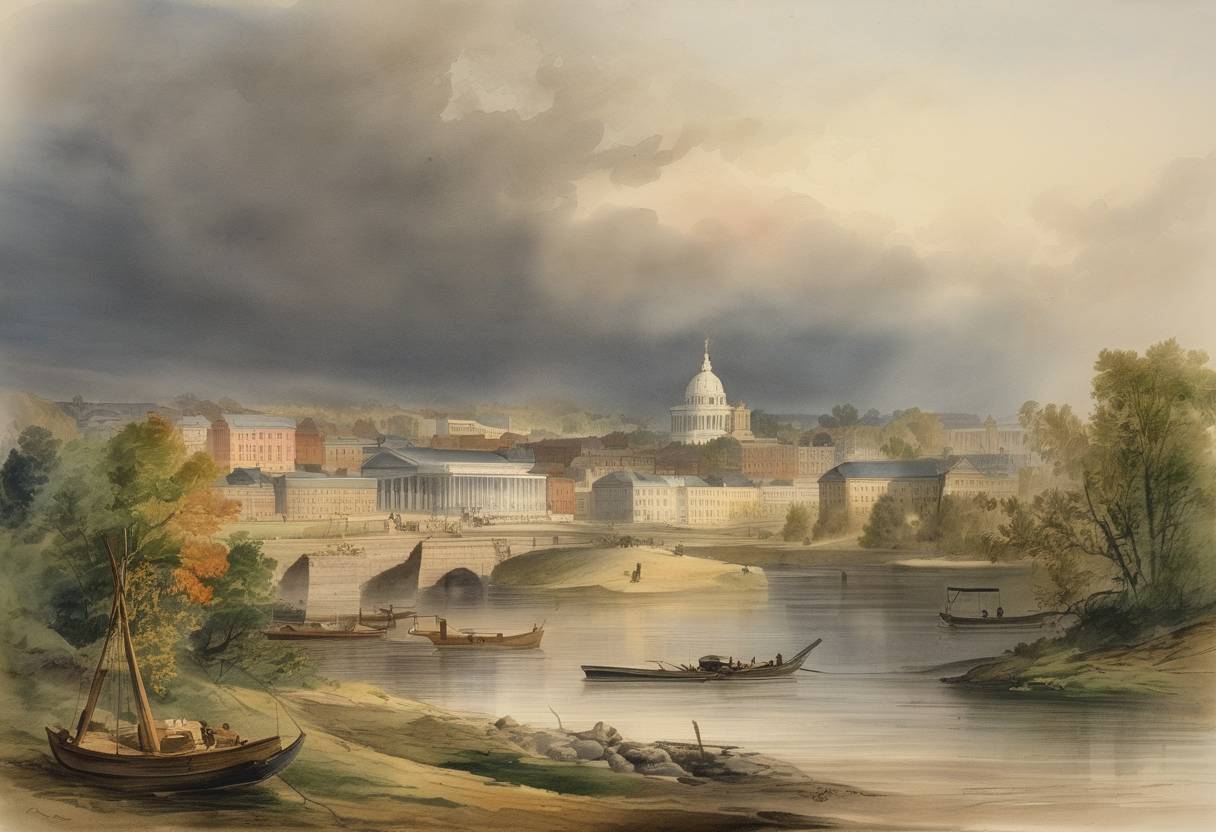
On May 11, 1858, Minnesota was officially admitted to the United States as the 32nd state. This event marked a significant expansion of the United States as it solidified American presence in the Central Northwestern territories, contributing to the further development of this region.
Prior to its statehood, the region known as Minnesota had undergone several delineations and governance under various territorial claims. Initially part of the French colony of Louisiana, it was ceded to the United States in 1803 as part of the Louisiana Purchase. The North West Company and American fur traders first spurred significant attention to the area.
In 1849, Minnesota was organized as a U.S. territory, amidst a growing population of settlers drawn by the promise of fertile agricultural land, primarily spurred by the Homestead Act offering free land to settlers. Politicians and settlers alike recognized the potential for economic growth and development inherent in the region.
The path to statehood was marked by discussions over boundaries, governance, and political representation. There were concerns about maintaining the balance between free and slave states—it was crucial amidst the politically charged backdrop of pre-Civil War America. Minnesota, being a free state, further tipped the scale towards the abolitionist cause.
The state constitution was drafted in 1857, and the final congressional approval came when the act admitting Minnesota into the Union was signed by President James Buchanan.
Minnesota’s admission laid the groundwork for rapid settlement and economic development. The population quickly expanded, driven by the state’s rich natural resources, significant timber reserves, and proximity to major water transport routes, such as the Mississippi River.
The state’s entry into the Union also played a part in the broader narrative of U.S. expansionism during the 19th century. It held geopolitical significance by maintaining the momentum of westward expansion, contributing to the complex dynamics leading up to the American Civil War.
The admission of Minnesota as the 32nd state represented a significant milestone in American history. It helped shape the social, economic, and geographical landscape of the United States during a period of robust growth and considerable change.
Source: www.loc.gov