The Haymarket Affair: May 1, 1886
1886 · Chicago, United States
The Haymarket affair began in Chicago as part of a nationwide movement for an eight-hour workday, leading to a violent confrontation.
July 8, 1905
The International Workers of the World (IWW), also known as the 'Wobblies,' was founded in Chicago, aiming to unite all workers against the capitalist system and improve industrial workers' conditions.
Chicago, United States | International Workers of the World
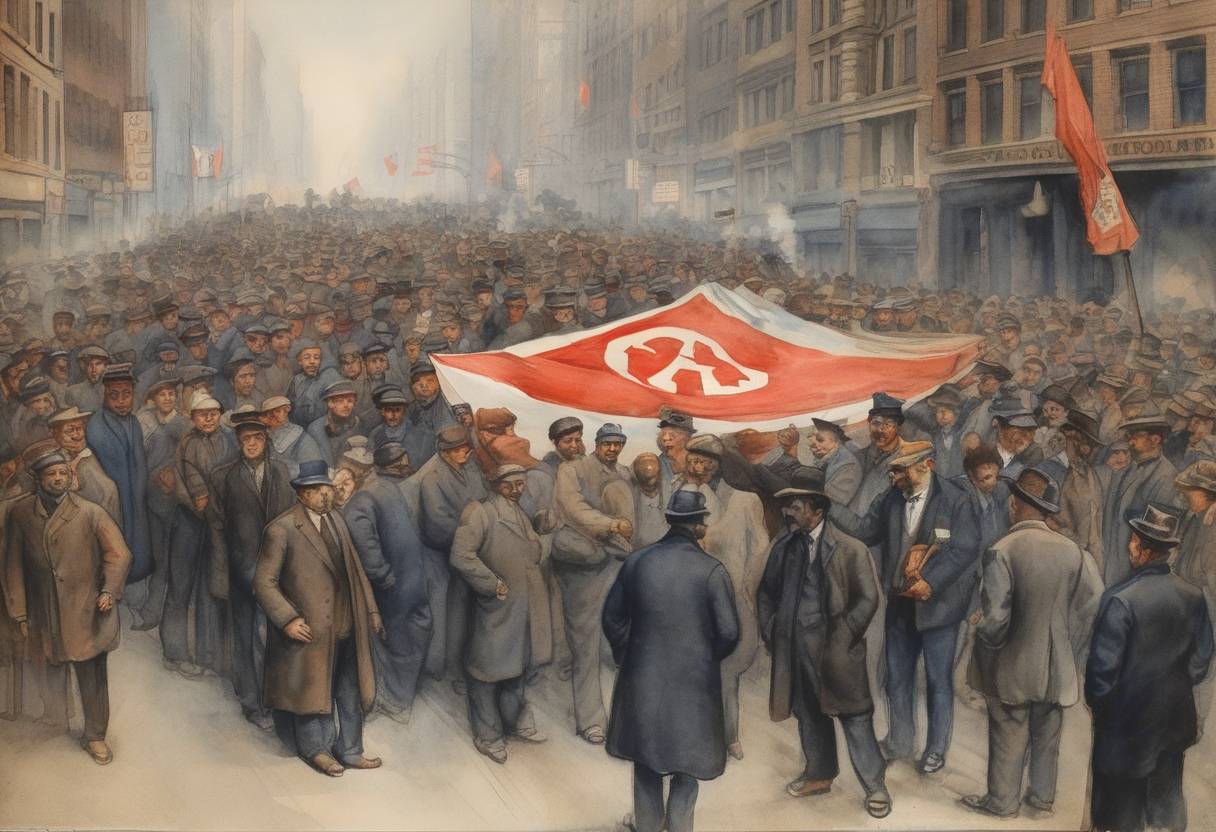
On July 8, 1905, the Industrial Workers of the World (IWW), often referred to as the “Wobblies,” was founded in Chicago, Illinois. This ambitious labor organization aimed to unite all workers across various industries into a single, powerful union. The IWW sought to challenge the capitalist system and address the harsh conditions faced by industrial workers at the time.
By the early 20th century, industrial workers in the United States were experiencing severe exploitation, with long hours, low wages, and unsafe working conditions being the norm. Labor movements had taken many forms, but traditional unions were often sector-specific and sometimes discriminatory, excluding immigrants and non-skilled laborers.
The founding convention of the IWW took place over several days in June 1905, culminating in its official establishment on July 8. Convened at Brand’s Hall in Chicago, the meeting attracted prominent labor activists and socialists, including Eugene V. Debs, Bill Haywood, and Mary Harris “Mother” Jones. The convention brought together over 200 socialists, anarchists, and radical trade unionists, who shared a vision of uniting the working class into “One Big Union.”
The IWW was distinguished by its radical agenda. It rejected the idea of craft-based or trade-specific unions in favor of organizing workers by industry, regardless of specific skills or job types. The organization promoted direct action, aiming to wield collective bargaining power and, ultimately, facilitate worker control over production means. Its motto, “An injury to one is an injury to all,” encapsulated its commitment to solidarity.
The IWW played a significant role in the labor movement, advocating for workers’ rights and influencing labor policies even beyond its membership. It led several successful strikes and organized efforts, notably in industries like mining and logging, where organizers introduced innovative tactics like sit-ins and strikes. Despite facing significant opposition from employers and often being suppressed by government authorities, the IWW’s radical legacy endures, embodying a major chapter in the history of labor rights and social justice.
Source: www.history.com