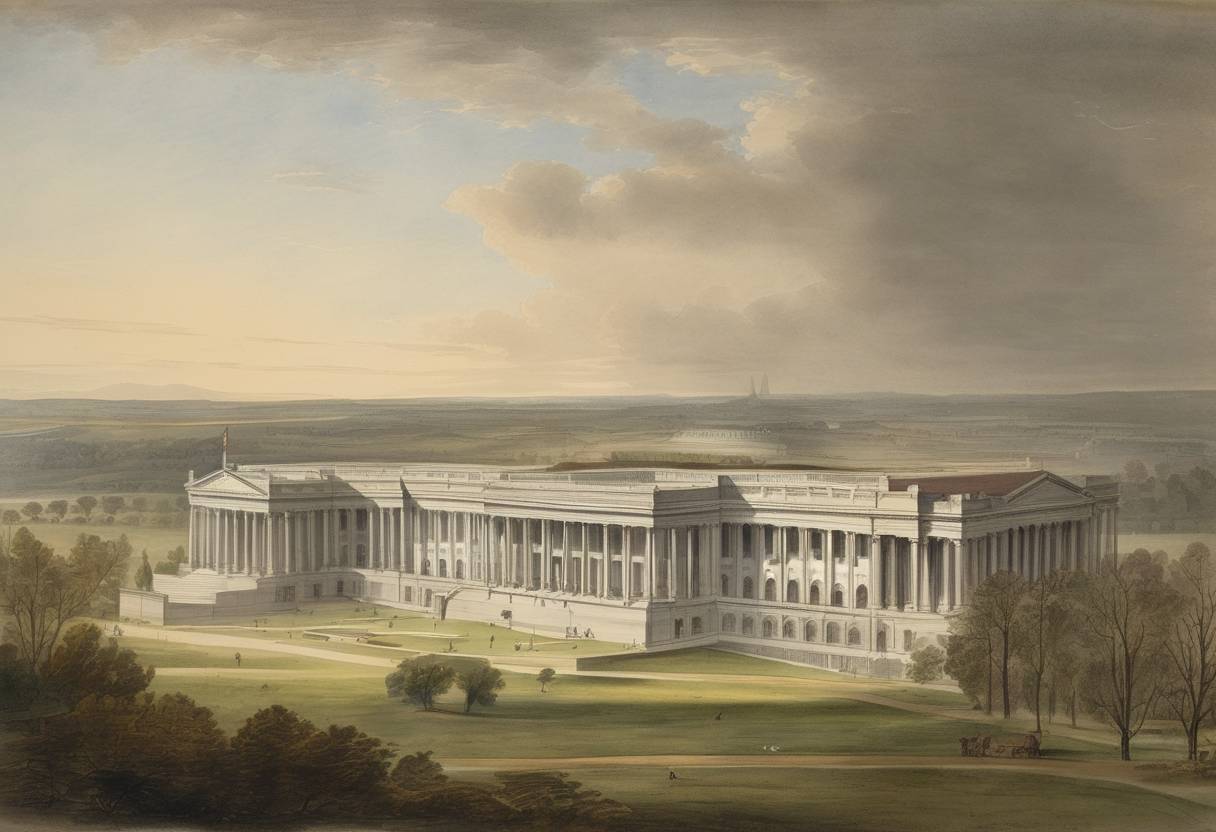
Establishment of the United States Library of Congress
On April 27, 1800, the United States Library of Congress was established by an act of Congress, marking a foundational moment in American cultural and intellectual history. The legislation was part of a larger congressional appropriations act that allocated a sum of $5,000 for the purchase of books necessary for the use of Congress and for fitting up a suitable apartment for containing them.
Context and Reasons for Establishment
The establishment of the Library of Congress came during a period of expansion and reorganization in the early years of the United States government. As the capital was preparing to move from Philadelphia to Washington, D.C., it was clear that Congress necessitated a central repository of knowledge and reference materials to assist in its legislative duties.
Key Provisions of the Act
- Budget Allocation: The act provided a budget of $5,000 for the acquisition of books.
- Location: It stipulated the creation of a suitable space within the new capital’s infrastructure to house the library.
- Selection of Materials: Efforts were intended to acquire key texts that would be pertinent to the governance and legislative processes of the new nation.
Initial Collection and Growth
The initial collection of the Library of Congress was ordered by President John Adams from London, and it focused on law, government, economics, and other essential topics for national governance. The original collection consisted of 740 books and three maps until the library expanded significantly over the subsequent decades.
Historical Significance
The Library of Congress has grown to become one of the largest libraries in the world, serving as a vital resource for Congress and the nation. It symbolizes the importance placed on knowledge, learning, and information in the American democratic system. The library’s establishment set the stage for a commitment to preserving knowledge and supporting legislative processes in the U.S.
Legacy
Over the years, the Library of Congress has developed into a leading repository of global cultural and intellectual resources. It has played a crucial role in the preservation of American and world history, continuing to expand its collection and services to support researchers, policymakers, and the public.
The foundation laid by the act of Congress on April 27, 1800, has ensured that the Library remains a pivotal institution in the United States and maintains its mission of making information and resources available to the public.