Wiley Post's Solo Flight Around the World
1933 · New York City, United States
Wiley Post became the first person to fly solo around the world, completing the journey in 7 days, 18 hours, and 49 minutes.
July 14, 1938
Howard Hughes set a new world record by completing a flight around the world in just 91 hours, a significant achievement in aviation history that demonstrated advancements in aircraft technology and navigation.
New York City, United States | Hughes Aircraft Company
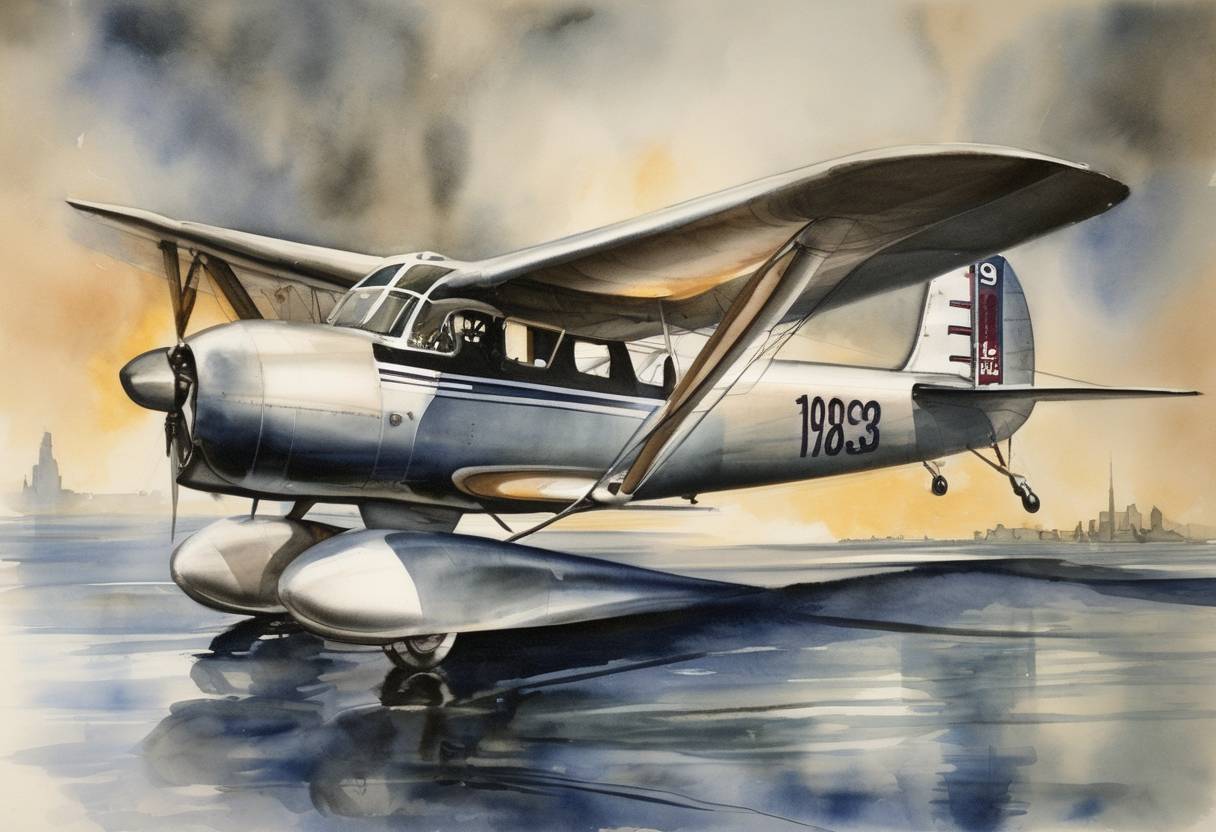
On July 14, 1938, Howard Hughes, the noted American aviator, industrialist, and filmmaker, completed a record-setting flight around the world in just 91 hours. This achievement marked a significant milestone in aviation history, demonstrating the rapid advancements in aircraft technology and navigation capabilities during the interwar period.
Hughes embarked on the ambitious global journey in a Lockheed 14 Super Electra, a twin-engine monoplane that he had specially modified for the journey. Accompanied by a skilled crew including copilot Harry Connor, navigator Thomas Thurlow, mechanic Edward Lund, and radio operator Dick Stoddart, Hughes took off from Floyd Bennett Field in Brooklyn, New York, on July 10, 1938.
The route covered approximately 14,672 miles, with stops in Paris, Moscow, Omsk, Yakutsk, Alaska, and Minneapolis before returning to New York. Each leg of the trip was meticulously planned to ensure precision in both timing and fuel consumption.
The flight involved overcoming numerous challenges, such as harsh weather conditions, particularly in the Siberian leg of the journey, and the need for precise navigation over remote and vast distances. The success of Hughes’s mission was attributed to a combination of advanced radio and navigation instruments, thorough planning, and the capabilities of the Lockheed aircraft.
Hughes’s enterprise illustrated the potential of modern aircraft to connect distant parts of the globe rapidly, laying the groundwork for future developments in commercial aviation.
Howard Hughes’s round-the-world flight in 1938 was more than a personal triumph; it represented a leap forward in aviation technology. It provided valuable insights into long-distance flight logistics and helped propel public interest in air travel. By achieving this feat, Hughes also contributed to the perception of the airplane not just as a tool of war or luxury but as a viable means of global transportation.
This event stands alongside other notable accomplishments of the era, showcasing how technological innovation of the early 20th century was beginning to shrink the world and redefine the possibilities of human interaction across continents.
Source: www.thisdayinaviation.com