Assassination of British Prime Minister Spencer Perceval
1812 · London, United Kingdom
British Prime Minister Spencer Perceval is assassinated by John Bellingham in the House of Commons.
March 30, 1979
Airey Neave, a British politician, was assassinated when a bomb exploded under his car as he drove out of the House of Commons car park.
London, United Kingdom | Irish National Liberation Army
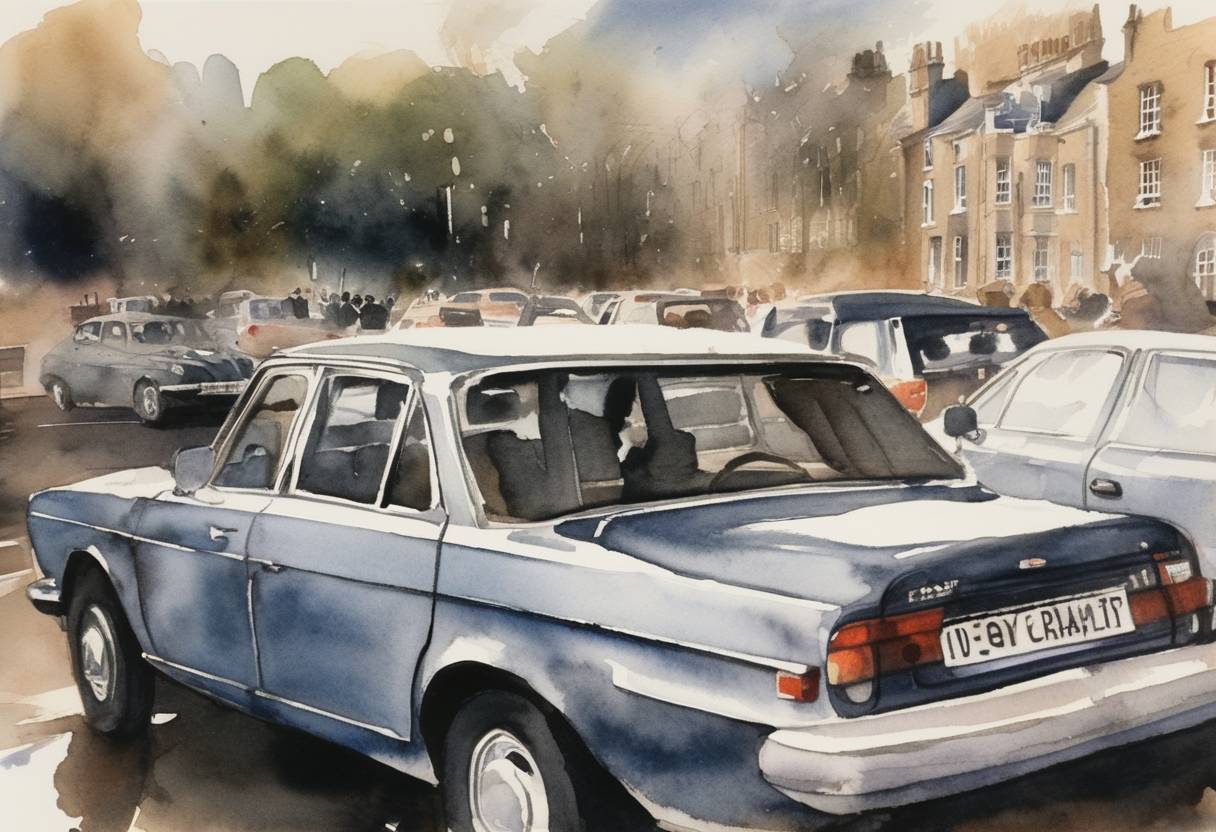
On March 30, 1979, Airey Neave, a British Conservative politician and prominent member of the British Parliament, was assassinated in a car bomb attack. He was killed as he drove out of the underground car park of the Palace of Westminster, the seat of the UK Parliament.
Airey Neave was born on January 23, 1916, and had a distinguished career before entering politics. During World War II, he served as a British Army officer and became notable for his escape from the high-security German POW camp, Colditz Castle. Post-war, Neave entered politics and was elected as the Member of Parliament (MP) for Abingdon in 1953. He was a staunch Conservative, known for his strong anti-terrorism stance and support of Northern Ireland as part of the United Kingdom.
On the afternoon of March 30, 1979, Neave was leaving the House of Commons in his car. Unbeknownst to him, a magnetic car bomb had been attached under his vehicle. As he departed the car park, the bomb exploded, resulting in severe injuries. He was quickly rushed to Westminster Hospital but succumbed to his wounds shortly afterward.
The attack was claimed by the Irish National Liberation Army (INLA), a paramilitary organization seeking to establish an independent socialist republic in Northern Ireland. Neave was targeted due to his outspoken support of British governance in Northern Ireland and his perceived hard-line stance against Irish nationalist groups.
Neave’s assassination occurred just days before the UK general election in May 1979, in which his close ally, Margaret Thatcher, became Prime Minister. His death was a severe blow to the Conservative Party, and he was remembered as an influential political strategist and dedicated public servant. The assassination underscored the volatile political situation regarding Northern Ireland at the time and intensified government efforts to address the ongoing conflict.
In remembrance of Neave, multiple tributes were paid from across the political spectrum, highlighting his commitment to his country and his character as both a war hero and a diligent politician. His assassination remains a stark reminder of the tensions and violence during the Troubles in Northern Ireland.
Source: en.wikipedia.org