Copenhagen Captured by Søren Norby - June 10, 1523
1523 · Copenhagen, Denmark
Copenhagen is taken by 3,000 Danish and Hanseatic soldiers led by Søren Norby, marking a critical moment in the Count's Feud.
January 20, 1523
Christian III is elected King of Denmark and Norway.
Viborg, Denmark | Danish monarchy
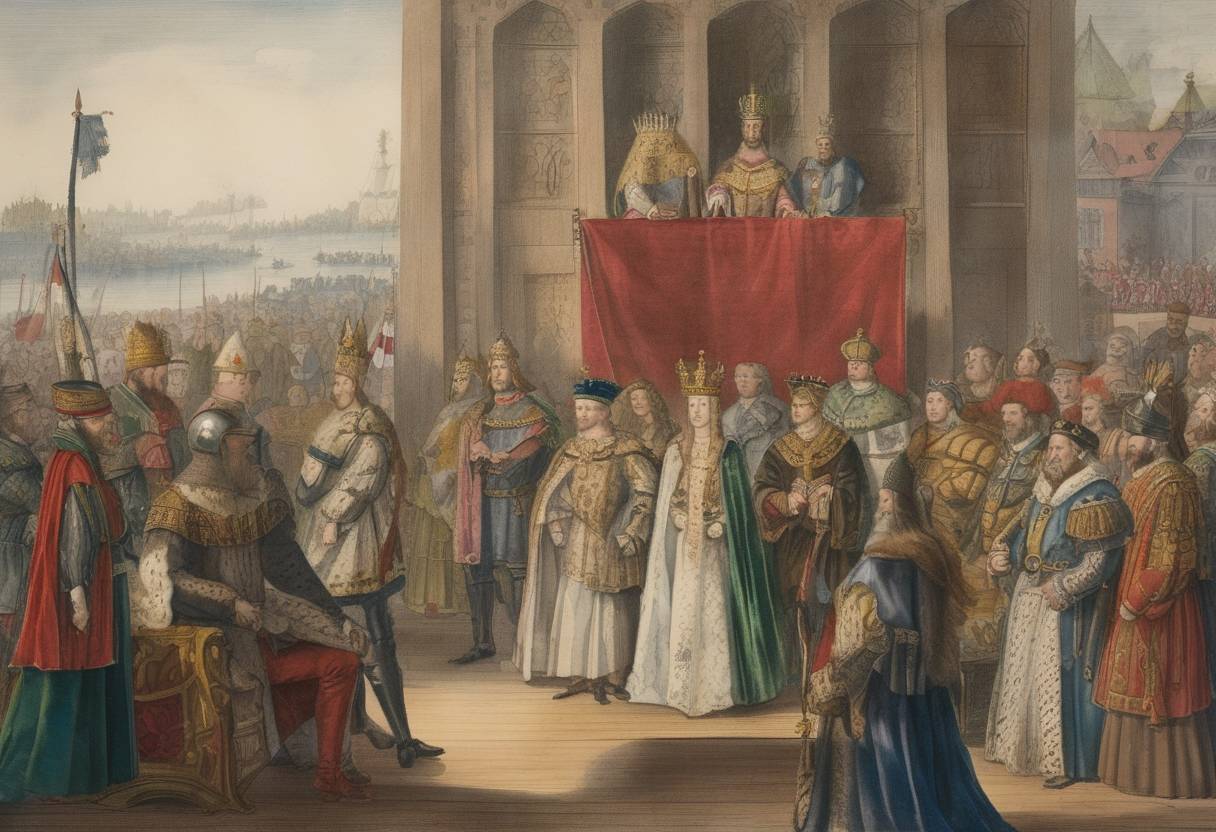
On January 20, 1523, Christian III was elected King of Denmark and Norway, marking a pivotal moment in Scandinavian history. The election occurred during a turbulent period characterized by significant political and religious shifts in the region.
Christian III, born on August 12, 1503, was the son of Frederick I, who had become King of Denmark and Norway in 1523 after the deposition of Christian II. The early 16th century was a time of considerable tension in Scandinavia, primarily due to the spread of the Protestant Reformation. The religious conflict between Catholics and Lutherans played a crucial role in the regional politics.
Tension Over the Protestant Reformation: The spread of Lutheranism posed a challenge to the Catholic establishments. Christian III was known for his Protestant sympathies, having been influenced by Martin Luther’s ideas during his travels in Germany.
Christian II’s Deposition: Christian II, a proponent of centralizing authority, was unpopular among the Danish nobility and clergy, leading to his deposition in 1523. His reign was marked by attempts to gain control over Sweden, which led to increased resentment.
The Influence of Frederick I: Christian III’s father, Frederick I, capitalized on the unpopularity of Christian II to secure his position as king. Frederick’s support for the Lutheran movement laid the initial groundwork for his son’s eventual succession.
The election of Christian III was conducted by the Danish nobility, who were swayed by his Protestant faith and his father’s legacy. His ascension to the throne was significant, as it signaled a move towards a more Protestant Danish state. However, his reign did not immediately stabilize the realm, facing resistance, particularly from the Catholic nobility.
Christian III’s reign was marked by the consolidation of Protestantism in Denmark and Norway. His efforts culminated in the establishment of the Church Ordinance of 1537, which institutionalized Lutheranism as the state religion. This transformation had long-lasting effects on Scandinavian society, culture, and governance, setting a precedent for religious reformation throughout the region.
Christian III’s leadership reflected a broader European trend towards Protestantism and highlighted the shifting dynamics of power in Northern Europe during the Reformation. His reign marked the end of Catholic influence in Denmark and Norway and set the stage for modern Protestant political foundations in the region.
Source: en.wikipedia.org