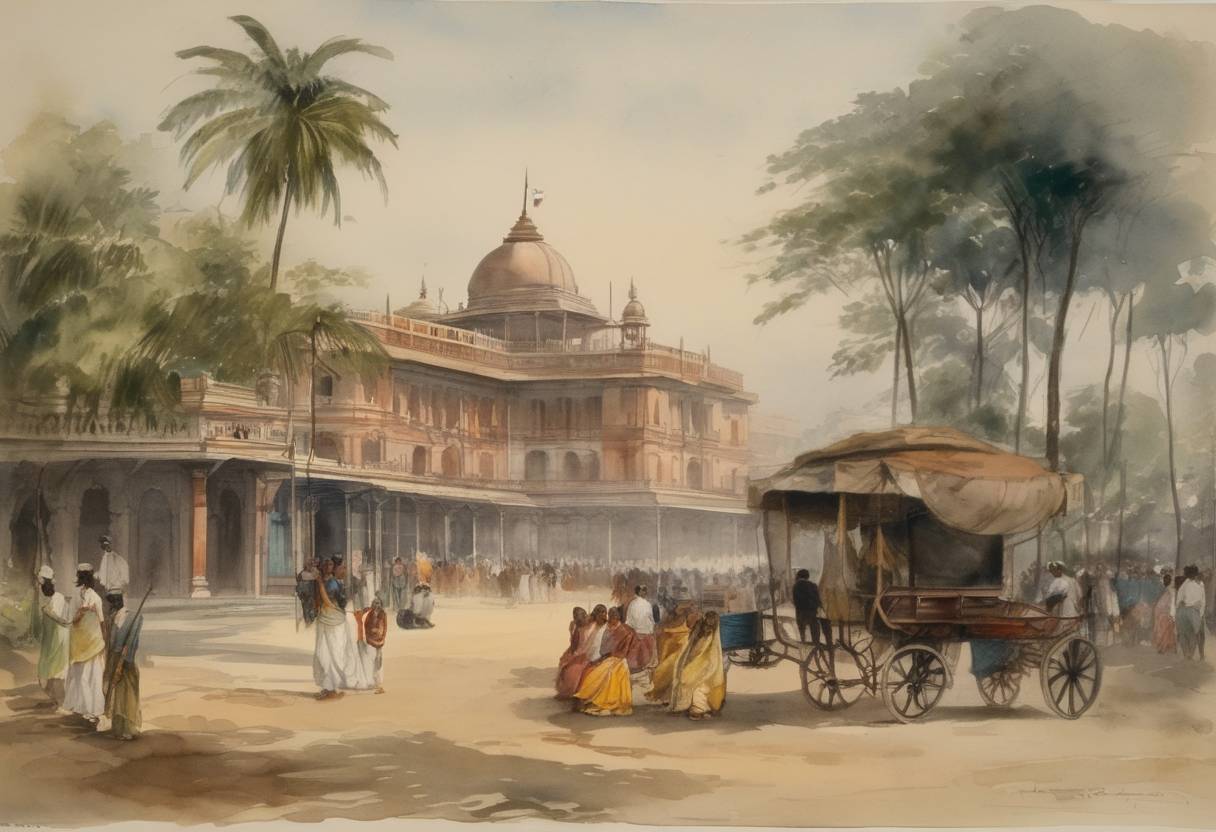
The Partition of Bengal (1905)
On October 16, 1905, the Partition of Bengal was implemented, marking a significant administrative and political reorganization within British India. The partition divided the large province of Bengal into two distinct regions: Eastern Bengal and Assam, and the western segment which retained the name Bengal. This event is a notable example of British colonial policy attempting to manage administrative challenges through geographical restructuring.
Context and Reasons
Bengal was one of the largest provinces in British India, with a population exceeding 78 million. The province encompassed vast linguistic and cultural diversities, and its sheer size posed administrative difficulties for colonial governance. The British administration, under Viceroy Lord Curzon, justified the partition primarily on administrative grounds. By creating a new province, the colonial authorities aimed to improve efficiency in governance and bolster economic development in the under-resourced eastern areas.
Implementation
Eastern Bengal and Assam became one region under the partition, with Dacca (now Dhaka, Bangladesh) as its capital. This new province comprised mainly of Muslim-majority areas, with a population of approximately 31 million. In contrast, the western region, made up mostly of Hindu-majority areas, continued to be administered from Calcutta (now Kolkata, India).
Reactions and Consequences
The partition was met with severe backlash, particularly from the educated middle-class Hindus in Western Bengal. Many perceived the move as an attempt by the British to “divide and rule” by exacerbating Hindu-Muslim divisions. The initial plausible objective of administrative efficiency was overshadowed by political ramifications, as the partition was seen as favoring Muslims and curbing the influence of the burgeoning nationalist movements centered in Calcutta.
The opposition culminated in widespread protests and the Swadeshi movement, which encouraged the boycott of British goods and the promotion of Indian-made products. This movement significantly contributed to the rise of Indian nationalism, laying groundwork for later independence efforts.
Aftermath
The protests and political unrest eventually compelled the British government to revoke the partition in 1911. The capital of British India was shifted from Calcutta to Delhi as part of a strategic move to placate the situation. The reversal was a testament to the potent unity and burgeoning nationalist sentiment among Indians, which continued to intensify in the subsequent decades leading to independence.
The Partition of Bengal in 1905 thus stands as a pivotal incident in colonial India’s history, illustrating the complexities of colonial governance and the unintended consequences of administrative policies on fostering nationalistic fervor.