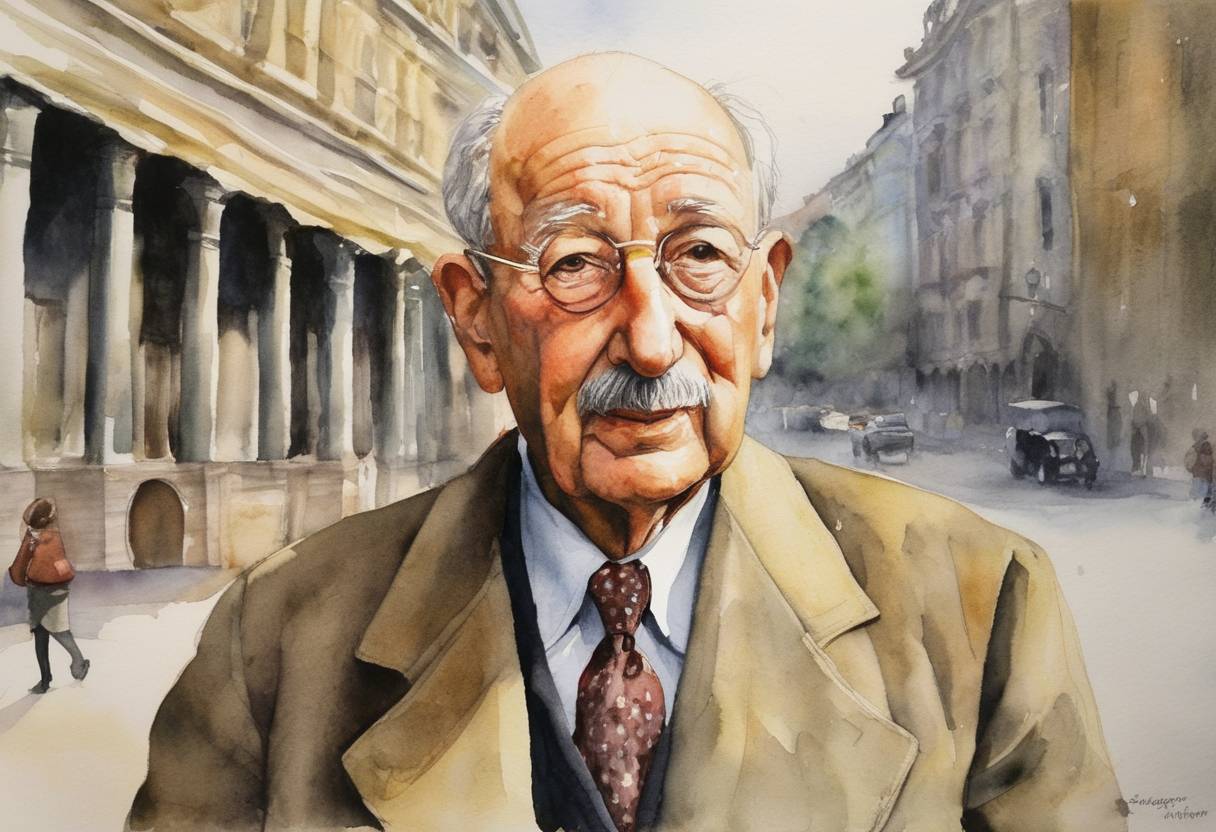
Simon Wiesenthal’s Death on September 20, 2005
On September 20, 2005, Simon Wiesenthal, the renowned Nazi hunter and Holocaust survivor, passed away in Vienna, Austria, at the age of 96. Wiesenthal dedicated his life to seeking justice for the victims of the Holocaust by tirelessly tracking down Nazi war criminals. His efforts led to the conviction of over 1,100 perpetrators, contributing significantly to historical justice and the preservation of Holocaust memory.
Early Life and Holocaust Experience
Born on December 31, 1908, in Buczacz, Galicia, then part of the Austro-Hungarian Empire, Wiesenthal survived the horrors of the Holocaust despite being imprisoned in multiple concentration camps. After World War II, he found himself among the few surviving members of his extended family, fueling his commitment to bring war criminals to justice.
Post-War Efforts and Achievements
In the aftermath of the war, Wiesenthal established the Jewish Documentation Center in Linz, Austria, with the goal of collecting information for future war crimes trials. His most notable achievement was assisting in the capture of Adolf Eichmann, a primary organizer of the Holocaust. The information Wiesenthal provided helped the Israeli intelligence agency, Mossad, locate Eichmann in Argentina, leading to his capture in 1960.
Legacy and Impact
In his relentless pursuit of justice, Wiesenthal became a moral figurehead and symbol of perseverance. He published several books, including his memoir “The Murderers Among Us,” sharing his experiences and the importance of remembrance and accountability. His work not only influenced the prosecution of war criminals but also contributed to raising global awareness about the Holocaust and the need to prevent future atrocities.
In 1977, the Simon Wiesenthal Center was established in Los Angeles to continue his mission of Holocaust research, education, and the defense of human rights, ensuring that his legacy endures.
Simon Wiesenthal’s death was widely mourned across the world. His unwavering dedication serves as a powerful reminder of the impact one individual can have on global justice and historical memory.