Capture of Calais: January 7, 1558
1558 · Calais, France
The French forces, led by Francis, Duke of Guise, captured Calais, the last English possession in mainland France, marking the end of England's territorial claims in France.
January 9, 1558
The city of Calais was recaptured by the French under the command of Francis, Duke of Guise, marking the end of English rule in the area.
Calais, France | Kingdom of France
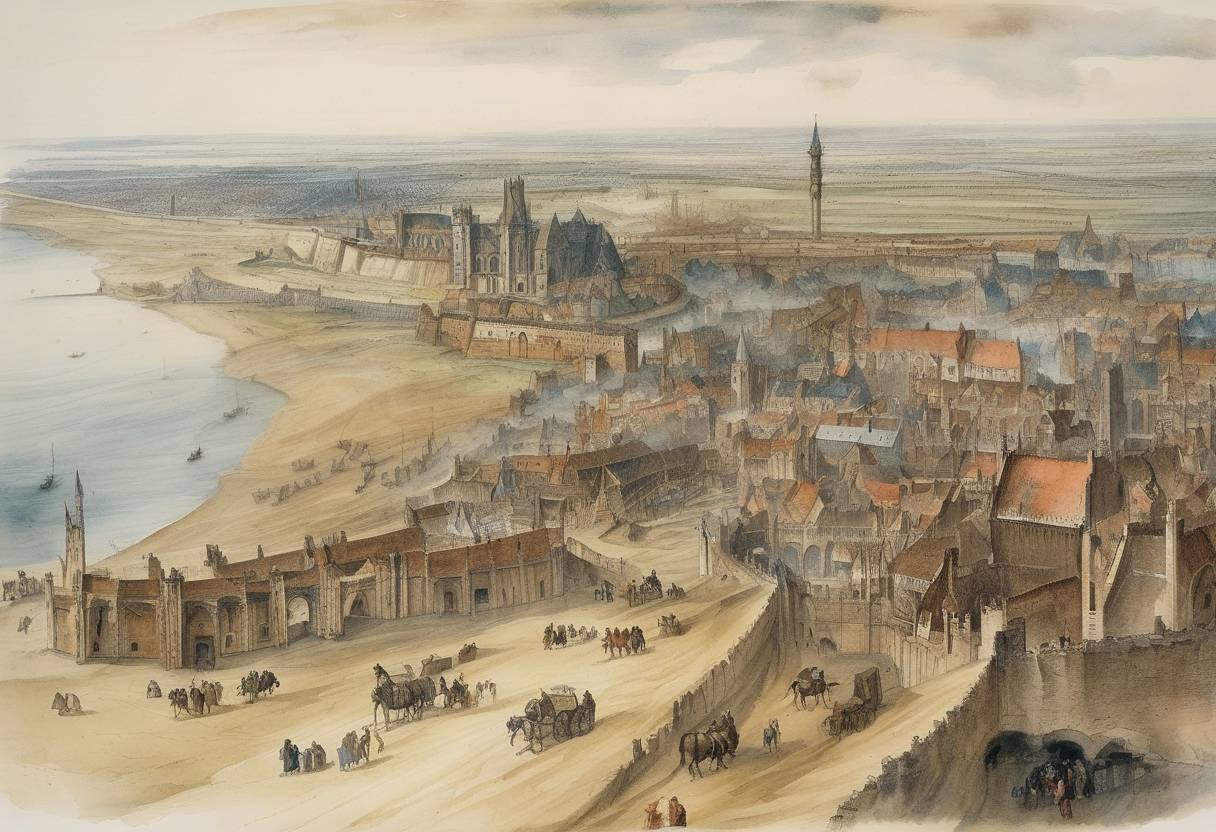
On January 9, 1558, the French forces, led by Francis, Duke of Guise, successfully recaptured the city of Calais from English control, marking a pivotal moment in the history of the region. This event brought an end to over two centuries of English rule in Calais, which had been one of the last remaining English possessions in France following the Hundred Years’ War.
Calais had been under English control since 1347, when it was seized by King Edward III of England. The city was strategically important due to its position on the French coast, serving as a vital gateway for English trade in continental Europe. Over the ensuing years, it became a symbol of English aspirations and military presence in France.
The geopolitical landscape of the mid-16th century saw increased tensions and hostilities between England and France, exacerbated by the overarching conflict known as the Italian Wars. Mutuations in European alliances, the ascension of new monarchs, and dynastic claims intensified rivalries, setting the stage for a renewed French effort to reclaim Calais.
Under the command of Francis, Duke of Guise, the French launched a military campaign to recapture Calais in late 1557. Guise, a prominent military commander and a leading figure at the French court, optimized the surprise element and strategic planning. The French forces laid siege to the city, rapidly overcoming English defenses through a combination of artillery bombardment and direct assaults.
The English garrison, led by Thomas Wentworth, 2nd Baron Wentworth, was ill-prepared for the sudden and intense offensive. Additionally, complications arose due to logistical issues and a lack of timely reinforcements from England. Consequently, the English defense quickly collapsed, and by January 9, 1558, Francis, Duke of Guise, and his forces had regained control of the city.
The loss of Calais was a significant blow to English prestige and represented the final end of England’s territorial possessions in France. For France, the recapture of Calais was both a military and symbolic triumph, consolidating national morale and fortifying King Henry II’s reign.
In England, the defeat prompted considerable political fallout. The loss of Calais was deeply lamented and marked an end to an era of medieval claim to French territories. It also contributed to shifts in English foreign policy, encouraging a more insular approach in the subsequent years and changing the dynamics of future Anglo-French relations.
Overall, the event stands out as a transformational moment altering the historical trajectory of both nations, profoundly impacting their respective political and cultural landscapes.
Source: en.wikipedia.org