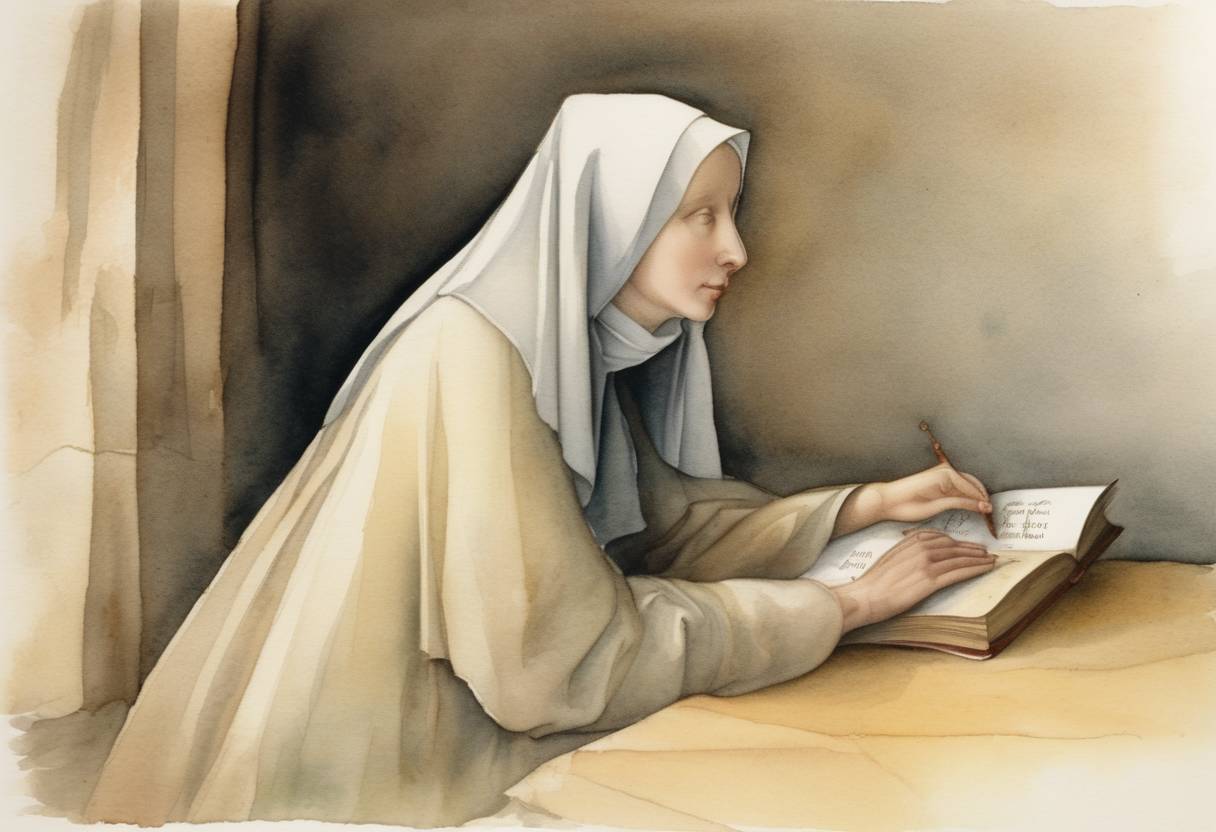
Julian of Norwich: The Revelations of Divine Love
On May 13, 1373, Julian of Norwich, an English anchoress and theologian, experienced a series of profound visions, commonly referred to as “shewings.” These mystical occurrences came to her during a severe illness when she was 30 years old, and she believed herself to be on the brink of death. Julian’s visions have since gained prominence for their depth and theological insights, ultimately becoming the basis for her seminal work, Revelations of Divine Love.
The Context of the Visions
The late 14th century in England was a period marked by social unrest, the bubonic plague, and religious upheaval. In this turbulent context, Julian’s revelations offered a message of hope and divine love. She claimed to have sixteen visions in total, all of which she believed to have been sent by God.
Content and Themes
The Revelations of Divine Love is notable not only because it is the earliest surviving book written in English by a woman, but also because of its radical depiction of God’s love and benevolence. Across her writings, Julian emphasizes themes such as divine love, compassion, and the maternal aspects of Jesus, a perspective not commonly recognized in medieval theology.
Julian’s reflections on her experiences were initially recorded shortly after her illness in what is known as the “Short Text.” Later, she expanded these into the “Long Text,” offering more detailed theological discourse on her visions and insights.
Significance and Legacy
Julian of Norwich’s work has left an indelible mark on Christian mysticism and literature. Her optimistic theology, especially her famous assertion that “All shall be well, and all shall be well, and all manner of thing shall be well,” continues to resonate with readers today.
Julian chose a life of solitude as an anchoress, which allowed her the contemplative space to reflect on her visions and share them with the world. Her influence extends beyond religious circles, impacting medieval studies, literature, and feminist theology. The Revelations of Divine Love remains a pivotal document in understanding medieval spirituality and mysticism.