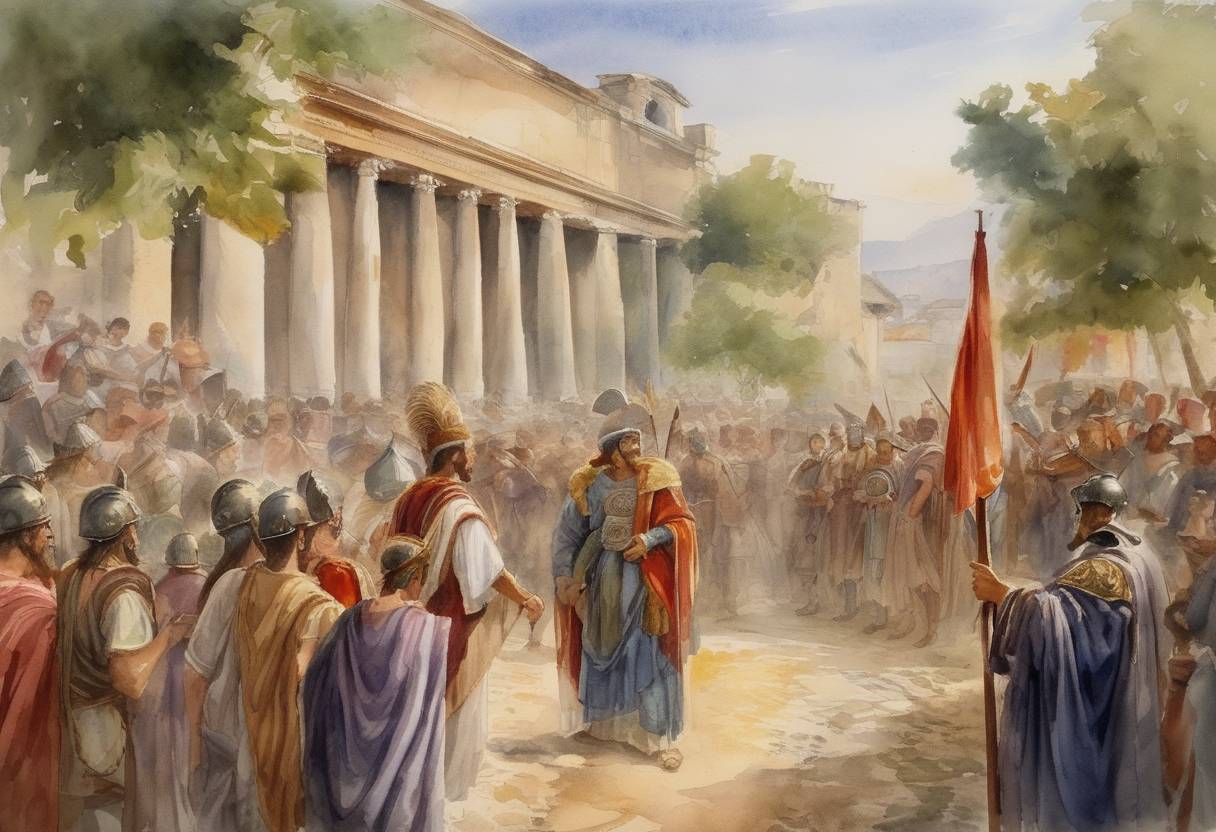
The Edict of Serdica: April 30, 311
On April 30, 311, Roman Emperor Galerius issued the Edict of Serdica, a momentous decree that marked the end of the Diocletianic Persecution of Christians in the Eastern Roman Empire. This decision was a crucial turning point for the Christian community and marked the beginning of a new era of religious tolerance in the Roman world.
Background
The Diocletianic Persecution, initiated by Emperor Diocletian in 303 AD, was the last and most severe persecution of Christians in the Roman Empire. It sought to suppress Christianity through the destruction of churches, scriptures, and the imprisonment or execution of Christians who refused to sacrifice to Roman gods.
Galerius, a staunch supporter of the persecution policies, succeeded Diocletian and continued the efforts to stamp out Christianity. However, following years of harsh measures and mounting resistance, a shift in policy became apparent under Galerius’s rule.
The Edict of Serdica
As Galerius lay on his deathbed, he recognized that the persecution had failed to eradicate Christianity and instead had fostered increased determination among Christians. Seeking to restore peace and order, Galerius issued the Edict of Serdica from the city of Serdica in modern-day Sofia, Bulgaria.
Provisions of the Edict
- Religious Toleration: The edict primarily granted Christians the right to practice their religion freely without fear of persecution.
- Restoration of Property: It called for the restitution of confiscated properties used for worship.
- Prayers for the Emperor: While allowing Christian worship, the edict also requested that Christians pray for the welfare of the emperor and the empire.
Significance and Aftermath
The Edict of Serdica officially ended the state-sponsored persecution of Christians in the Eastern Roman Empire. This decree is significant as it laid the groundwork for future policies of religious tolerance, eventually culminating in the more comprehensive Edict of Milan in 313, issued by Constantine the Great and Licinius, which went further to proclaim religious freedom across the empire.
Galerius’s acknowledgment of the resilience of the Christian faith and his decision to permit its practice without interference marked a turning point in the history of the Roman Empire, reflecting a shift in imperial attitudes toward Christianity that would have lasting implications for the Roman religious landscape.