The Battle of Gaugamela: October 1, 331 BCE
331 · Gaugamela, Persian Empire
The Battle of Gaugamela took place, where Alexander the Great decisively defeated Darius III of Persia, leading to the fall of the Achaemenid Empire.
May 22, 0334
The Battle of the Granicus took place, marking the first major battle of Alexander the Great's campaign against the Persian Empire. Alexander's forces defeated the Persian satraps of Asia Minor, establishing his control over the region.
near the Granicus River, Persian Empire (modern-day Turkey) | Macedonian Army
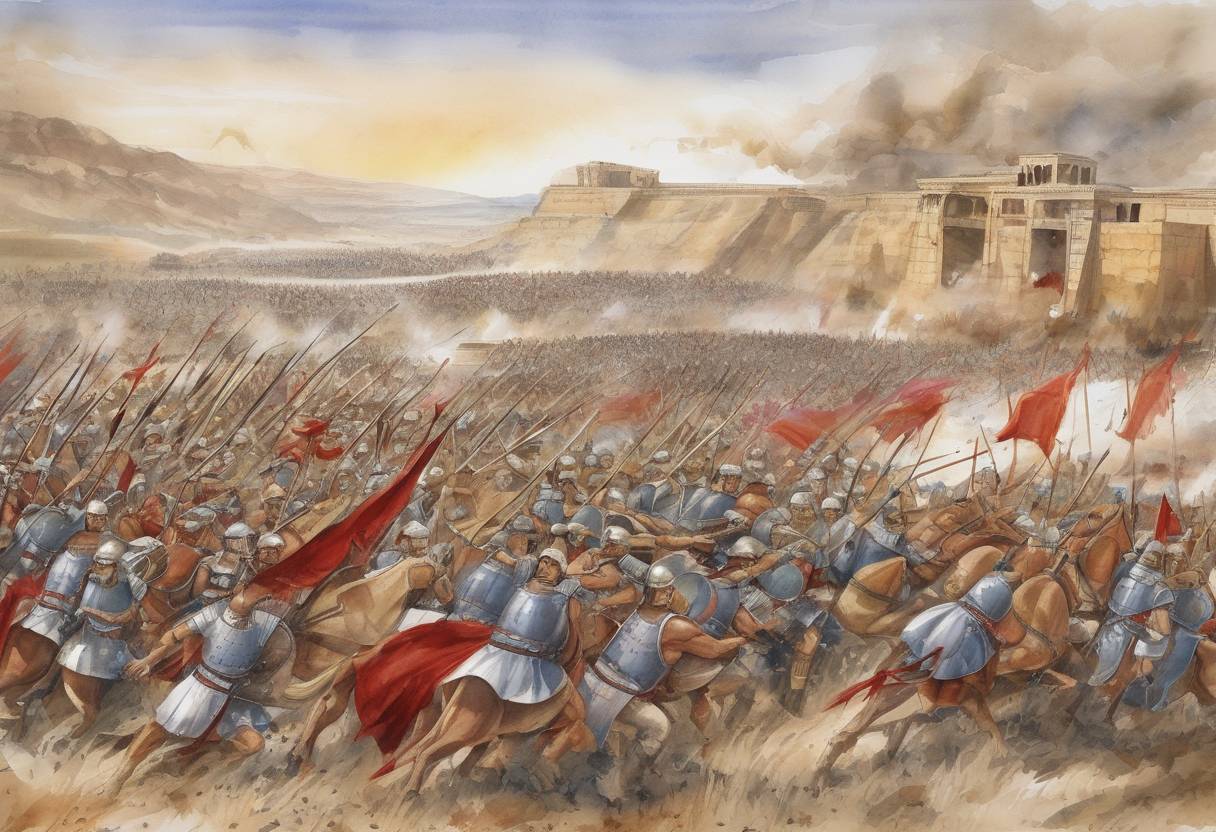
The Battle of the Granicus was a pivotal engagement marking the first major confrontation between Alexander the Great and the Persian Empire during his ambitious campaign to conquer Asia. This battle set the stage for Alexander’s subsequent victories and his eventual establishment as one of history’s most renowned military leaders.
Background: By 334 BCE, Alexander III of Macedon, known as Alexander the Great, had succeeded his father, King Philip II, and inherited a powerful and well-organized army. His ambition was to expand his empire by conquering the Persian Empire, which was then the largest empire in the world.
Strategic Importance: The Granicus River, located in Asia Minor (modern-day Turkey), was a strategic crossing point. Control over this region was crucial for Alexander to secure a foothold in Persian territory and to ensure a steady supply line for his advancing forces.
Forces Involved: Alexander’s army, consisting of approximately 32,000 infantry and 5,000 cavalry, faced a Persian force commanded by local satraps and Greek mercenaries. The Persian forces were estimated to be around 20,000 cavalry and 20,000 infantry.
Tactics and Execution: Alexander demonstrated his tactical brilliance by choosing to attack the Persian forces head-on, despite the challenging river terrain. He led a cavalry charge across the Granicus River, which caught the Persians off guard. His use of the Companion Cavalry, a highly trained elite unit, was instrumental in breaking the Persian lines.
Outcome: The battle resulted in a decisive victory for Alexander. The Persian cavalry was routed, and many Greek mercenaries fighting for the Persians were either killed or captured. This victory effectively opened Asia Minor to Alexander’s control.
Strategic Gains: The victory at the Granicus River allowed Alexander to secure the western part of Asia Minor. It also demonstrated his military prowess and boosted the morale of his troops.
Political Impact: The defeat weakened Persian authority in the region and encouraged many Greek city-states in Asia Minor to revolt against Persian rule and align with Alexander.
Legacy: The Battle of the Granicus set the tone for Alexander’s campaign, showcasing his boldness and strategic acumen. It was the first of several major battles against the Persian Empire, leading to his eventual conquest of the entire empire.
In summary, the Battle of the Granicus was not only a tactical victory but also a significant step in Alexander’s campaign to expand his empire. It demonstrated his ability to inspire and lead his forces against formidable odds, laying the groundwork for his future successes in the Persian territories.
Source: en.wikipedia.org