Execution of Cuauhtémoc: February 28, 1525
1525 · Tenochtitlan, Mexico
The Aztec king Cuauhtémoc was executed by Spanish conquistadors under Hernán Cortés, marking a significant moment in the Spanish conquest of the Aztec Empire.
July 7, 1520
The Spanish conquistadors, led by Hernán Cortés, defeat a numerically superior Aztec army at the Battle of Otumba.
Otumba, Mexico | Spanish Empire
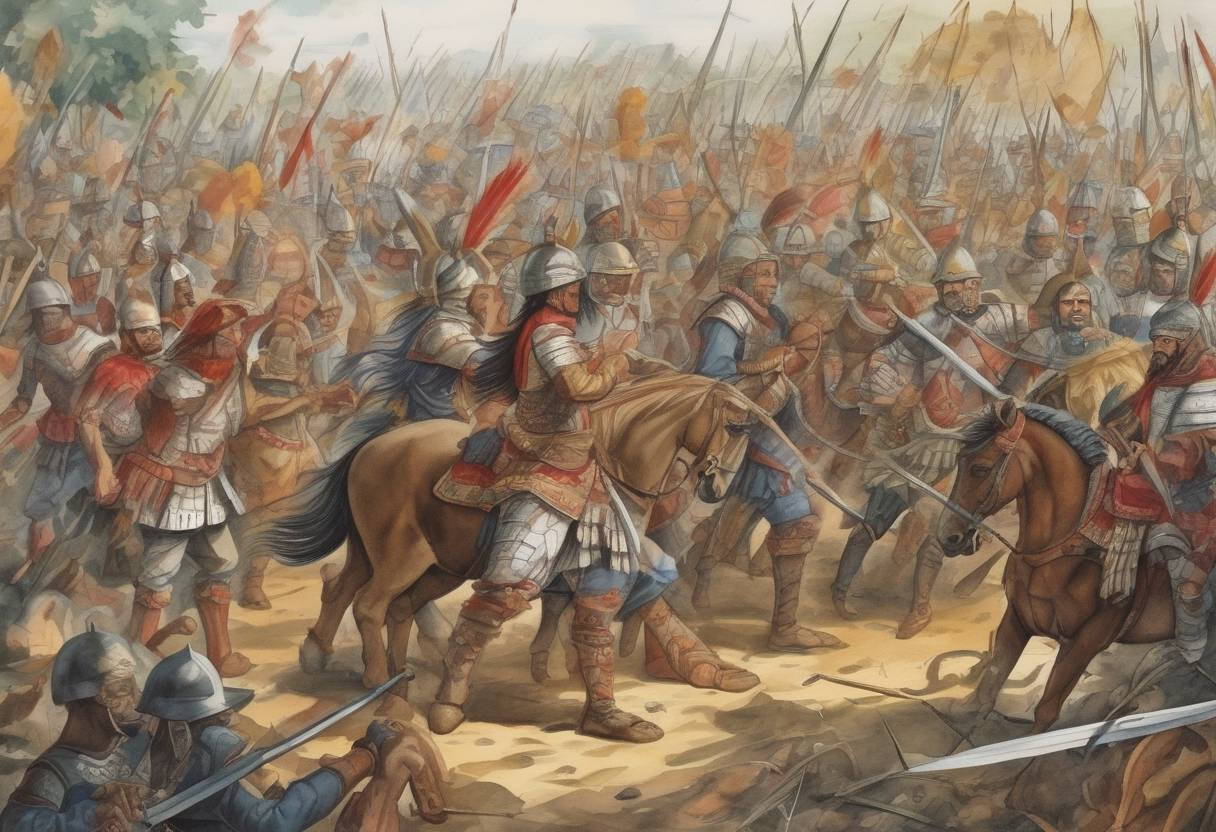
The Battle of Otumba, fought on July 7, 1520, was a pivotal encounter during the Spanish conquest of the Aztec Empire. This battle saw the Spanish conquistadors, led by Hernán Cortés, achieve a significant victory against a numerically superior Aztec force. The battle is notable for its strategic implications and the remarkable resilience displayed by the Spanish and their indigenous allies.
The Battle of Otumba occurred in the aftermath of the “La Noche Triste” (The Night of Sorrows), which took place on June 30, 1520. During this event, the Spanish forces and their Tlaxcalan allies suffered a severe defeat while attempting to retreat from Tenochtitlán, the Aztec capital. The retreat was marked by heavy casualties and the loss of much of their treasure and equipment.
Following this harrowing escape, Cortés and his men were pursued by Aztec forces as they made their way towards Tlaxcala, seeking refuge and reinforcements. The Spanish were in a precarious position, exhausted, and outnumbered, with morale at a low point.
The Aztec forces, eager to capitalize on their recent victory, engaged the Spanish at the plains of Otumba. Despite being heavily outnumbered, Cortés demonstrated his tactical acumen and leadership. The Spanish forces, numbering around 500, including a small cavalry contingent, faced thousands of Aztec warriors.
Cortés devised a bold strategy, focusing on the capture of the Aztec standard, which was a symbol of command and morale for the Aztec troops. During the battle, the Spanish cavalry, led by Cortés, charged directly at the Aztec command structure. In a decisive moment, Cortés and his men managed to kill the Aztec commander and capture the standard.
The fall of the Aztec commander and the capture of the standard caused disarray among the Aztec forces, leading to their retreat. This victory was crucial for the Spanish, as it allowed them to regroup and eventually reach Tlaxcala safely.
The Battle of Otumba was significant for several reasons:
The Battle of Otumba exemplifies the combination of military tactics, leadership, and the exploitation of indigenous alliances that characterized the Spanish conquest of the Americas.
Source: en.wikipedia.org