The Treaty of Venice: February 21, 1177
1177 · Venice, Italy
The Treaty of Venice was signed between Pope Alexander III and Emperor Frederick I Barbarossa, leading to the end of the schism and the recognition of Alexander as the legitimate pope.
January 20, 1156
The Treaty of Benevento is signed between Pope Adrian IV and King William I of Sicily, recognizing William's rule over Sicily.
Benevento, Italy | Catholic Church
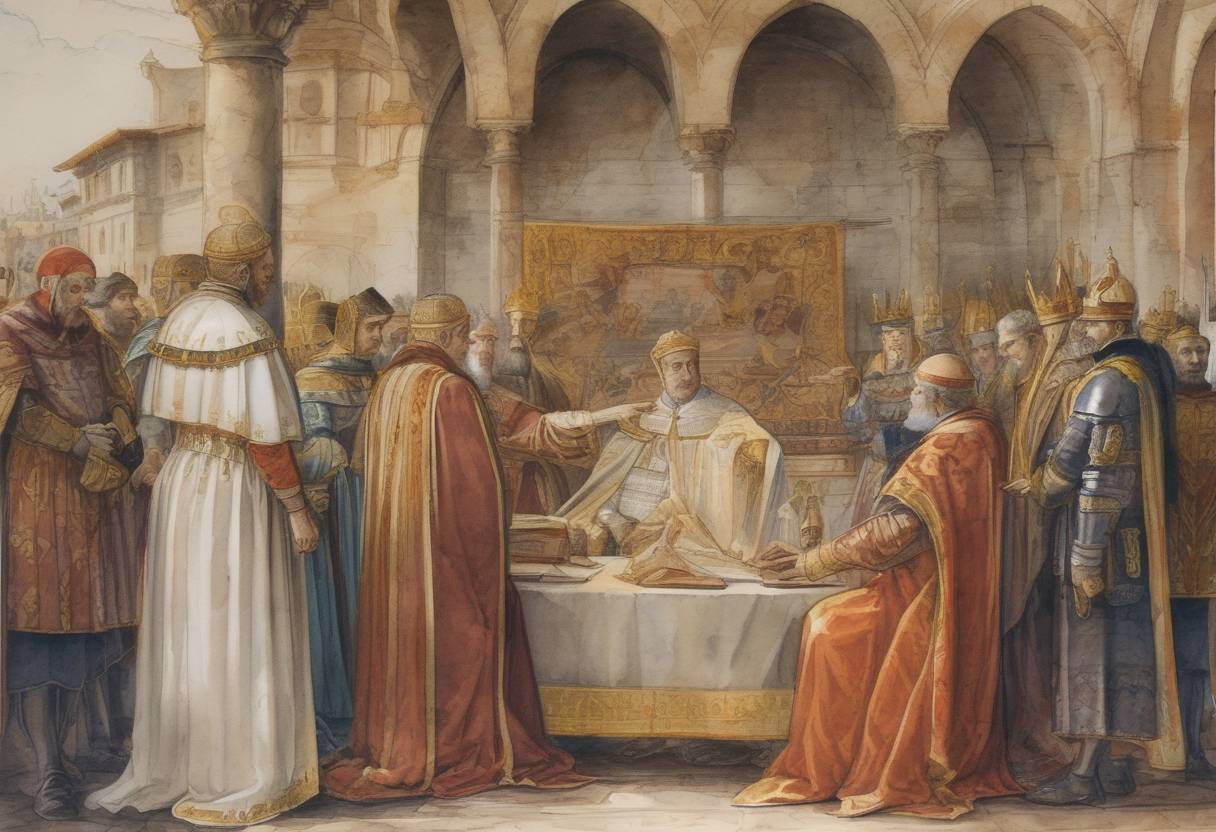
On January 20, 1156, a significant diplomatic agreement known as the Treaty of Benevento was signed between Pope Adrian IV and King William I of Sicily. This treaty marked a pivotal moment in the complex political landscape of 12th-century Italy, as it recognized William’s rule over Sicily and established a formal relationship between the Papacy and the Kingdom of Sicily.
The mid-12th century was a period of intense political maneuvering in Italy, characterized by the struggle for power among various factions, including the Papacy, the Holy Roman Empire, and regional rulers like the Normans in Southern Italy. The Normans, originally from Northern France, had established a powerful kingdom in Southern Italy and Sicily by the early 12th century.
William I, also known as William the Bad, ascended to the throne of Sicily in 1154 following the death of his father, Roger II. His reign was initially marked by internal strife and external threats, including opposition from the Papacy and the Byzantine Empire, both of which sought to curb Norman influence in the region.
Papal-Norman Tensions: The Papacy, under Pope Adrian IV, was wary of the growing power of the Norman Kingdom of Sicily. The Normans had previously been excommunicated by the Papacy, and relations were strained due to territorial disputes and the Normans’ expansionist policies.
Military Conflicts: Prior to the treaty, there were several military confrontations between the Papal States and the Normans. The most notable was the Battle of Brindisi in 1156, where William I successfully defended his territories against a coalition of forces, including those loyal to the Pope.
Diplomatic Negotiations: Realizing the futility of continued conflict, both parties entered into negotiations. The Papacy sought to stabilize its southern borders and secure a reliable ally, while William I aimed to legitimize his rule and gain papal recognition.
The Treaty of Benevento was a compromise that benefited both parties:
Recognition of Rule: Pope Adrian IV formally recognized William I as the legitimate ruler of Sicily, Calabria, and Apulia. This recognition was crucial for William’s consolidation of power.
Papal Authority: In return, William I acknowledged the Pope’s spiritual authority and agreed to pay an annual tribute to the Papacy. This arrangement reinforced the Pope’s influence in the region.
Mutual Defense: The treaty included provisions for mutual defense, ensuring that both parties would support each other against external threats.
The Treaty of Benevento had several important consequences:
Stabilization of Southern Italy: The treaty brought a period of relative peace and stability to Southern Italy, allowing William I to focus on internal governance and strengthening his kingdom.
Papal Influence: By securing a formal alliance with the Normans, the Papacy enhanced its political influence in Italy and reduced the threat of Norman aggression.
Precedent for Future Relations: The treaty set a precedent for future agreements between the Papacy and secular rulers, highlighting the importance of diplomacy in resolving conflicts.
In summary, the Treaty of Benevento was a landmark agreement that shaped the political dynamics of Italy in the 12th century. It exemplified the delicate balance of power between the Papacy and regional rulers and underscored the role of diplomacy in medieval European politics.
Source: en.wikipedia.org