795 · Rome, Italy
Pope Leo III is elected as the 96th pope of the Catholic Church.
February 1, 0772
Pope Adrian I began his papacy. His tenure was marked by his support of Charlemagne and the strengthening of the relationship between the papacy and the Frankish Empire.
Rome, Italy | Catholic Church
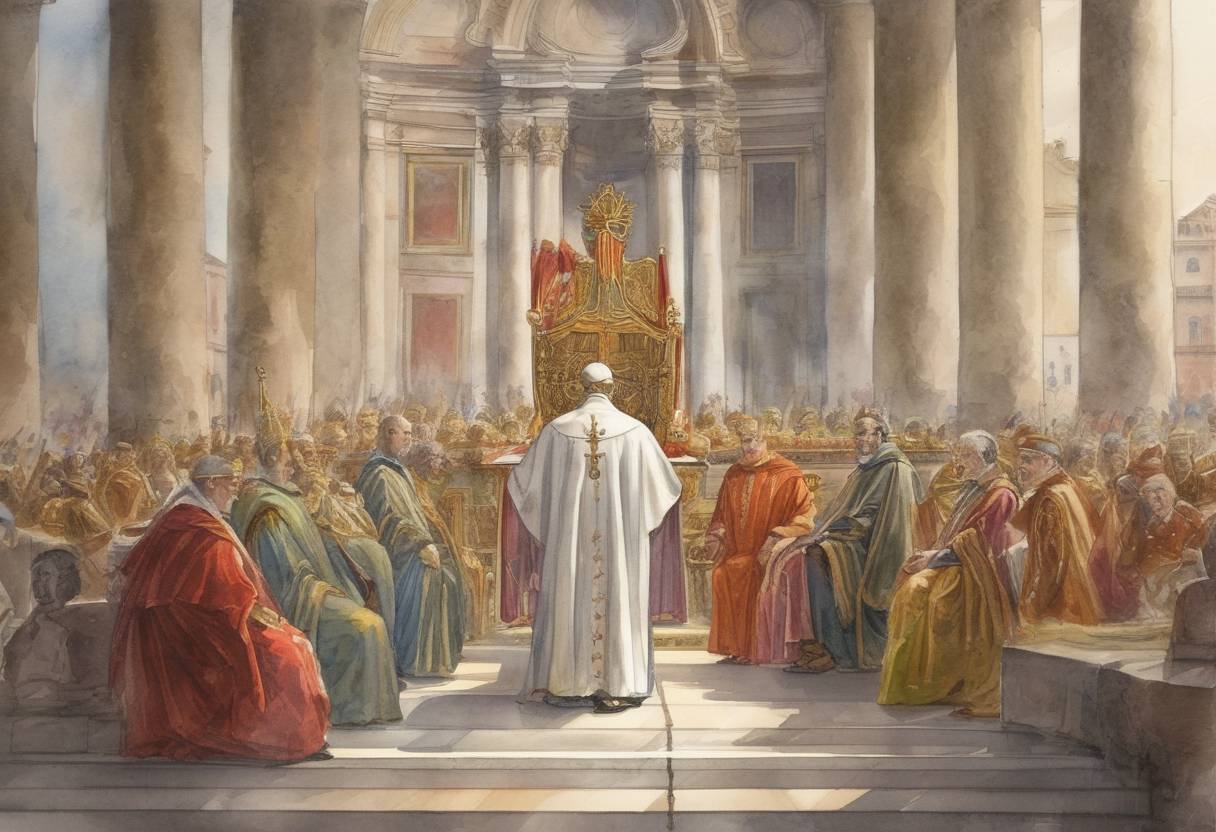
On February 1, 772, Pope Adrian I ascended to the papacy, marking the beginning of a significant era in the history of the Catholic Church and its relationship with the Frankish Empire. His papacy, which lasted until 795, was characterized by a strong alliance with Charlemagne, the King of the Franks, and played a crucial role in shaping the political and religious landscape of medieval Europe.
Before Adrian I’s election, the papacy was embroiled in political struggles, particularly with the Lombards, who controlled much of Italy and posed a threat to Rome. The papacy’s need for protection and support against external threats was a driving force behind Adrian’s policies.
Alliance with Charlemagne: One of Adrian I’s most significant achievements was solidifying the alliance with Charlemagne. This relationship was mutually beneficial: Charlemagne provided military support to the papacy, while Adrian I offered religious legitimacy to Charlemagne’s rule.
Lombard Threat: Early in his papacy, Adrian faced aggression from Desiderius, the King of the Lombards. In response, Adrian sought Charlemagne’s assistance, leading to Charlemagne’s invasion of Lombard territory and the eventual defeat of Desiderius. This victory significantly reduced the Lombard threat to the papacy.
Strengthening Papal Authority: Adrian I worked to strengthen the administrative and spiritual authority of the papacy. He was involved in various church councils and played a role in the development of canon law, which helped to consolidate papal influence across Christendom.
Cultural and Religious Contributions: Adrian I was a patron of the arts and architecture, contributing to the restoration and construction of churches in Rome. His papacy also saw the continuation of the Carolingian Renaissance, a revival of art, culture, and learning under Charlemagne’s reign.
The alliance between Pope Adrian I and Charlemagne had long-lasting effects on European history. It laid the groundwork for the Carolingian Empire and the eventual crowning of Charlemagne as Emperor of the Romans in 800, an event that marked the revival of the Western Roman Empire and the beginning of the Holy Roman Empire.
Adrian I’s papacy also set a precedent for the close relationship between the papacy and secular rulers, a dynamic that would continue to shape the political and religious landscape of Europe for centuries.
In summary, Pope Adrian I’s tenure was pivotal in strengthening the papacy’s political power and establishing a lasting alliance with the Frankish Empire, which had profound implications for the future of Europe.
Source: en.wikipedia.org