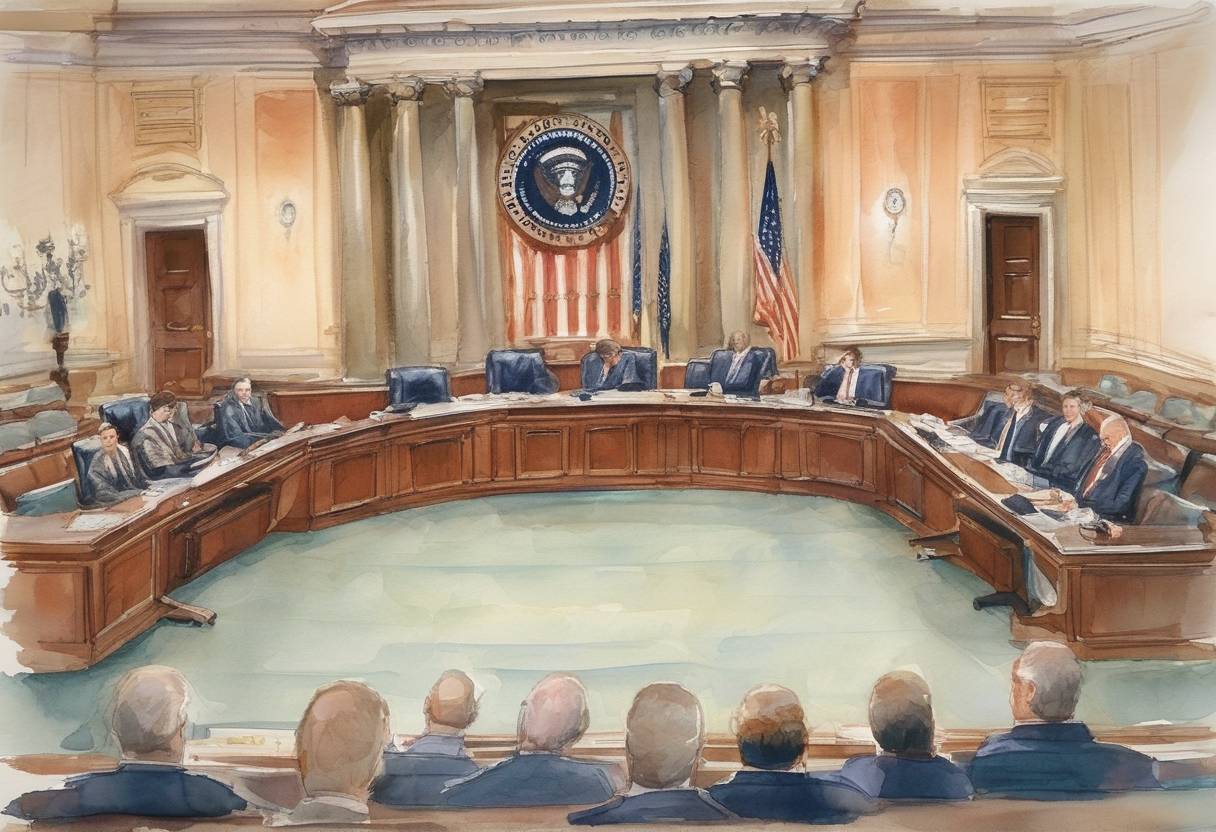
Impeachment Hearings Against President Bill Clinton
On November 19, 1998, the United States House of Representatives Judiciary Committee commenced impeachment hearings against President Bill Clinton. This marked a significant moment in American political history, as it was only the third time in U.S. history that a sitting president faced impeachment proceedings.
Background
The impeachment hearings were primarily centered around allegations of perjury and obstruction of justice. These charges stemmed from President Clinton’s extramarital affair with Monica Lewinsky, a White House intern, and his subsequent attempts to conceal the relationship. The controversy erupted into a national scandal following the release of the Starr Report, authored by Independent Counsel Kenneth Starr, which detailed the affair and alleged misconduct.
Key Events Leading Up to the Hearings
- January 1998: News of the affair between President Clinton and Monica Lewinsky broke, leading to widespread media coverage and public scrutiny.
- August 1998: President Clinton testified before a grand jury, admitting to an “inappropriate relationship” with Lewinsky but denying perjury.
- September 1998: The Starr Report was submitted to Congress, outlining 11 possible grounds for impeachment.
The Hearings
The Judiciary Committee, chaired by Republican Congressman Henry Hyde, began its hearings with the task of determining whether the evidence presented in the Starr Report warranted articles of impeachment. The hearings were characterized by intense partisan debate, with Republicans generally supporting the impeachment process and Democrats largely opposing it.
Key Points of the Hearings
- Legal and Constitutional Arguments: The committee examined whether Clinton’s actions constituted “high crimes and misdemeanors,” the constitutional standard for impeachment.
- Testimonies and Evidence: The hearings included testimonies from legal experts and the presentation of evidence from the Starr Report.
- Public and Political Reactions: The proceedings were closely followed by the public and media, with opinions divided along partisan lines.
Aftermath and Consequences
- December 1998: The House of Representatives voted to impeach President Clinton on charges of perjury and obstruction of justice.
- February 1999: The Senate trial concluded with President Clinton’s acquittal, as neither charge received the necessary two-thirds majority for conviction.
Historical Significance
The impeachment of President Bill Clinton was a pivotal moment in U.S. political history, highlighting the deep partisan divisions within the country. It also raised questions about the limits of presidential power and the role of personal conduct in public office. The proceedings had lasting implications for American politics, influencing subsequent discussions on impeachment and executive accountability.
Overall, the impeachment hearings against President Clinton underscored the complexities of the constitutional process and the intricate balance between legal standards and political considerations.