William Penn Receives Delaware - August 30, 1682
1682 · New Castle, American Colonies
William Penn receives the area that is now the state of Delaware from the Duke of York.
September 8, 1664
The Dutch surrender New Amsterdam to the English, who rename it New York.
New Amsterdam (now New York City), United States | English Crown
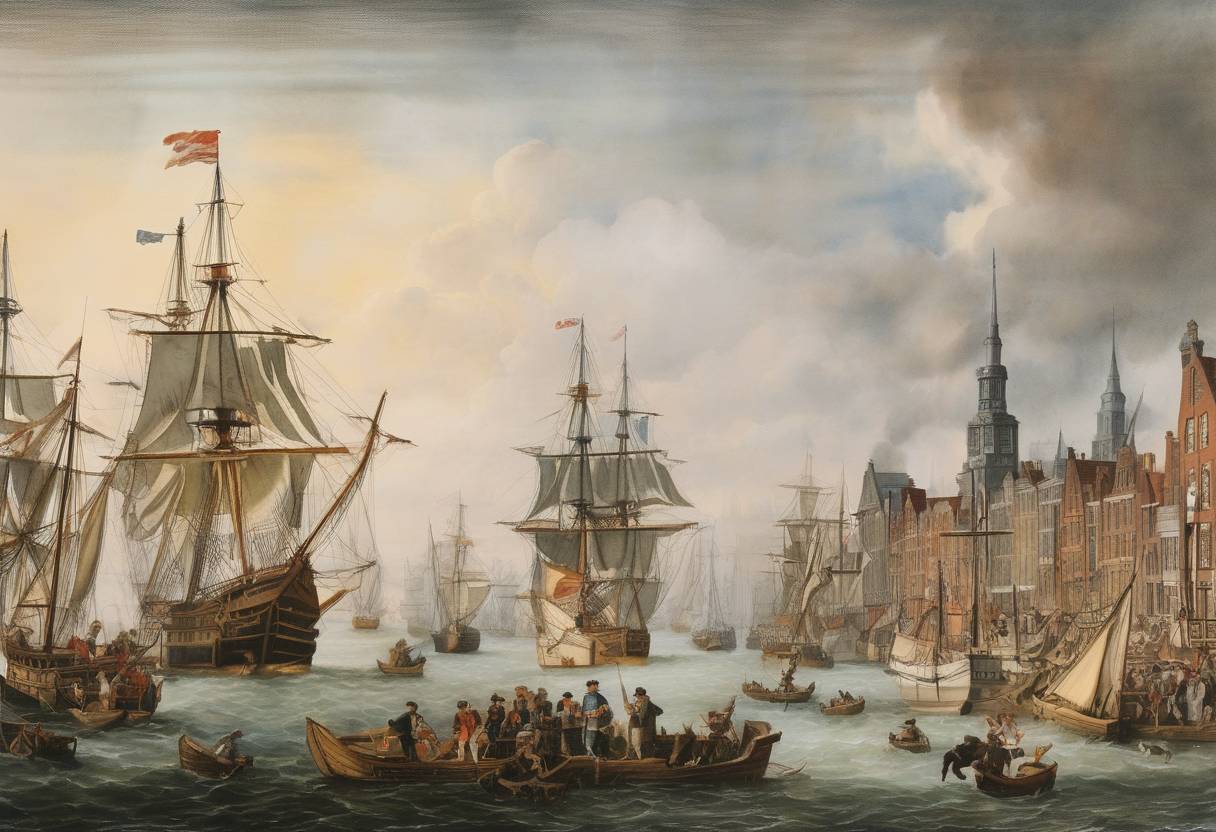
On September 8, 1664, a pivotal moment in colonial American history occurred when the Dutch surrendered New Amsterdam to the English, who subsequently renamed it New York. This event marked a significant shift in control over the strategically important region of the Hudson River and the surrounding areas.
New Amsterdam: Established by the Dutch West India Company in 1624, New Amsterdam was the capital of the Dutch colony of New Netherland. It was strategically located on the southern tip of Manhattan Island, serving as a vital trading post and a hub for commerce and immigration.
Anglo-Dutch Rivalry: The 17th century was characterized by intense rivalry between European powers, particularly between England and the Netherlands. Both nations were vying for dominance in global trade and colonial expansion.
English Ambitions: The English Crown, under King Charles II, sought to consolidate its holdings in North America. The English viewed the Dutch presence in New Netherland as an obstacle to their ambitions of unifying their colonies along the Atlantic seaboard.
The English Fleet: In August 1664, an English fleet commanded by Colonel Richard Nicolls arrived in New Amsterdam’s harbor. The fleet’s presence was a clear signal of England’s intent to seize control of the colony.
Governor Peter Stuyvesant: The Dutch governor, Peter Stuyvesant, initially sought to defend the settlement. However, facing overwhelming military force and lacking sufficient support from the Dutch West India Company, Stuyvesant was compelled to negotiate.
Terms of Surrender: On September 8, 1664, Stuyvesant formally surrendered New Amsterdam to the English. The terms of surrender were relatively generous, allowing the Dutch settlers to retain their property, continue their trade, and practice their religion freely.
Renaming to New York: Following the surrender, the English renamed New Amsterdam to New York in honor of the Duke of York, the future King James II of England, who had been granted the territory by his brother, King Charles II.
Impact on Dutch Influence: The loss of New Amsterdam marked a decline in Dutch influence in North America. However, the Dutch legacy persisted in the region’s cultural and architectural heritage.
Strategic Importance: The acquisition of New York was a strategic victory for the English, as it provided a crucial link between their northern and southern colonies, facilitating greater control over the Atlantic coast.
Long-term Consequences: The change in control laid the groundwork for New York’s emergence as a major economic and cultural center in the centuries to follow. It also exemplified the shifting dynamics of colonial power in North America.
The surrender of New Amsterdam to the English was a defining moment in the colonial history of North America, setting the stage for the future development of one of the world’s most iconic cities.
Source: en.wikipedia.org