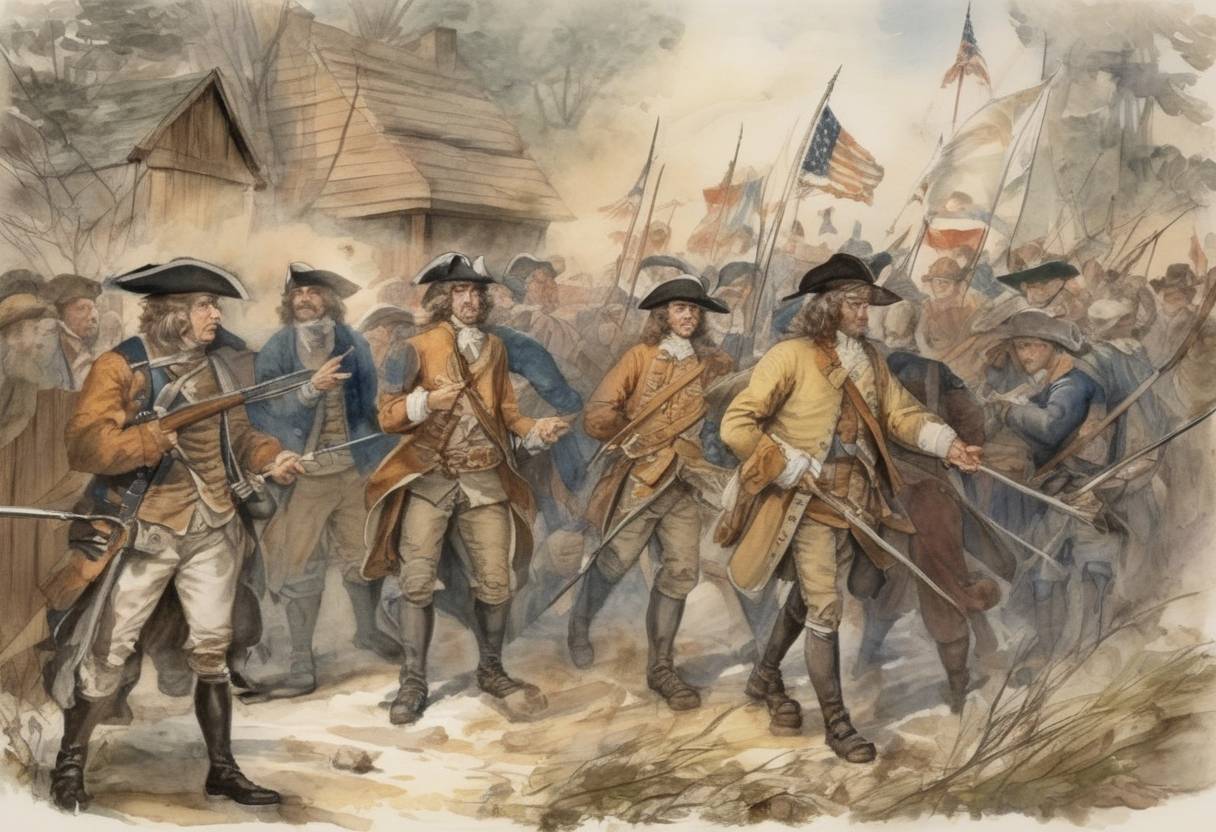
Josiah Winslow’s Raid Against the Narragansett - November 2, 1675
On November 2, 1675, during the tumultuous period of King Philip’s War, Josiah Winslow, the governor of Plymouth Colony, led a colonial militia in a significant raid against the Narragansett people. This event was a pivotal moment in the conflict between Native American tribes and English settlers in New England.
Context of King Philip’s War
King Philip’s War (1675–1678) was one of the most devastating conflicts in early American history. It was named after Metacomet, the Wampanoag leader known to the English as King Philip. The war was fueled by rising tensions over land, resources, and the encroachment of European settlers on Native American territories. The conflict involved several Native American tribes, including the Wampanoag, Nipmuc, Pocumtuc, and Narragansett, against the New England colonies.
The Raid on the Narragansett
Leadership: Josiah Winslow, who became the governor of Plymouth Colony in 1673, played a crucial role in organizing and leading colonial forces against Native American tribes during the war. His leadership was instrumental in the colonial military strategy.
Objective: The raid on November 2, 1675, was part of a broader strategy to neutralize the Narragansett, who were perceived as a significant threat due to their potential alliance with King Philip’s forces. The colonial militia aimed to preemptively strike and weaken the Narragansett before they could join the conflict in full force.
Execution: Winslow’s militia, comprising troops from Plymouth, Massachusetts Bay, and Connecticut, launched a surprise attack on Narragansett settlements. The raid was marked by its aggressive tactics, aiming to disrupt the Narragansett’s ability to support King Philip.
Aftermath and Significance
Impact on the Narragansett: The raid heightened tensions and led to the Narragansett formally entering the war against the English settlers. This escalation contributed to the broader conflict known as the Great Swamp Fight in December 1675, where a large Narragansett fort was attacked, resulting in significant casualties.
Broader Consequences: The raid and subsequent battles significantly impacted the Native American population in New England, leading to widespread devastation and loss of life. The war ultimately resulted in the decimation of several tribes and the expansion of colonial territories.
Legacy: King Philip’s War, including events like Winslow’s raid, is remembered for its brutality and the profound changes it brought to the region. It marked a turning point in the relationship between Native Americans and European settlers, setting a precedent for future conflicts and policies.
Josiah Winslow’s actions on November 2, 1675, exemplify the complex and often violent interactions between colonists and Native Americans during this period, highlighting the struggle for control and survival in early colonial America.