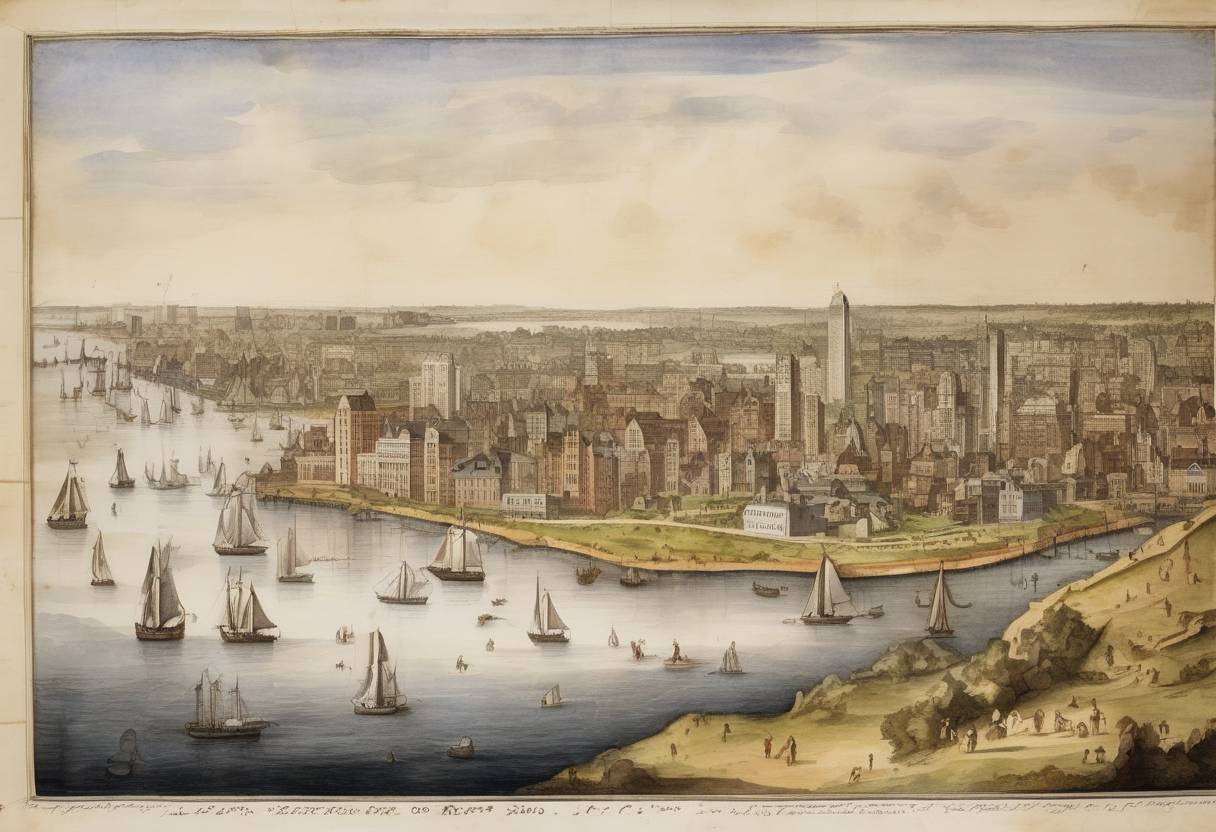
Founding of Boston, Massachusetts - September 17, 1630
On September 17, 1630, the city of Boston, Massachusetts, was officially founded by a group of Puritan colonists led by John Winthrop. This event marked a significant moment in the early colonial history of what would become the United States.
Context and Background
Puritan Migration: The founding of Boston was part of the larger Puritan migration to New England, which began in the early 17th century. The Puritans sought to escape religious persecution in England and aimed to establish a community based on their religious beliefs.
Massachusetts Bay Colony: The Puritans established the Massachusetts Bay Colony, receiving a royal charter in 1629. This charter allowed them to settle and govern a large area in New England, which included present-day Massachusetts.
Key Events Leading to the Founding
Arrival in New England: In 1630, a fleet of ships led by John Winthrop, including the flagship Arbella, arrived in New England. Winthrop and his fellow colonists initially settled in the area around present-day Salem and Charlestown.
Selection of Boston: The settlers soon found the Charlestown location unsuitable due to a lack of fresh water. They moved across the Charles River to the Shawmut Peninsula, where they found a more favorable site. This area was initially inhabited by Native American tribes, including the Massachusett people.
Naming of Boston: The new settlement was named Boston, after Boston, Lincolnshire, in England, which was the hometown of several prominent colonists, including the Reverend John Cotton.
Significance and Aftermath
Growth and Development: Boston quickly became the political, commercial, and religious center of the Massachusetts Bay Colony. Its natural harbor facilitated trade and commerce, contributing to its rapid growth.
Cultural and Historical Impact: As one of the oldest cities in the United States, Boston played a crucial role in American history. It was a focal point during the American Revolution and has continued to be a center for education, culture, and innovation.
Legacy of the Puritans: The Puritan influence shaped the social, political, and religious landscape of New England. Their emphasis on community, education, and governance left a lasting legacy on American society.
The founding of Boston on September 17, 1630, laid the groundwork for the city’s development into a major urban center and its pivotal role in the history of the United States.