Dartmouth College Chartering on December 13, 1769
1769 · Hanover, American Colonies
Dartmouth College is chartered by King George III of Great Britain on land provided by Royal Governor John Wentworth.
May 2, 1964
The first BASIC program was run on a computer at Dartmouth College, marking the beginning of widespread use of the BASIC programming language in education and business.
Hanover, United States | Dartmouth College
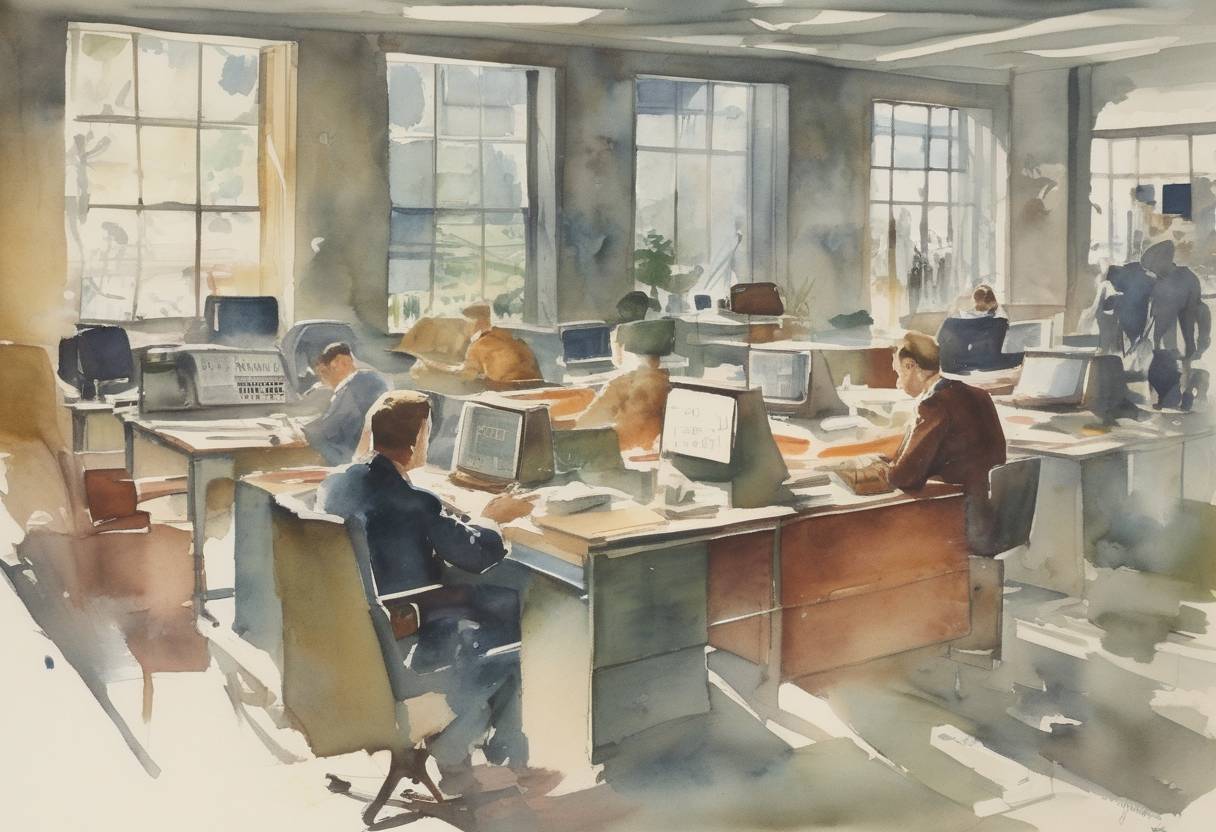
On May 2, 1964, a significant milestone in the history of computing was achieved at Dartmouth College in Hanover, New Hampshire. This date marks the first successful execution of a program written in the BASIC (Beginner’s All-purpose Symbolic Instruction Code) programming language. Developed by John G. Kemeny and Thomas E. Kurtz, BASIC was designed to provide an accessible and easy-to-learn programming language for students and educators, as well as for use in business applications.
During the early 1960s, programming was primarily the domain of scientists and engineers, requiring knowledge of complex languages like FORTRAN and assembly language. Kemeny and Kurtz, both professors at Dartmouth, recognized the need for a simpler language that could be used by students from various disciplines, not just those in technical fields. Their goal was to democratize computing and make it accessible to a broader audience.
The development of BASIC was part of a larger project at Dartmouth known as the Dartmouth Time-Sharing System (DTSS). This system allowed multiple users to access a single computer simultaneously, a revolutionary concept at the time. BASIC was specifically designed to work within this time-sharing environment, enabling users to write and execute programs interactively.
On May 2, 1964, the first BASIC program was successfully run on a GE-225 mainframe computer at Dartmouth College. This event marked the beginning of BASIC’s widespread adoption in educational institutions and businesses around the world. The success of BASIC was instrumental in the proliferation of computer literacy, as it became a standard teaching tool in schools and universities.
The introduction of BASIC had a profound impact on the computing world:
In summary, the first execution of a BASIC program at Dartmouth College on May 2, 1964, was a pivotal moment in computing history. It not only transformed how programming was taught and learned but also laid the groundwork for the widespread use of computers in education and business. BASIC’s legacy continues to be felt in the ongoing efforts to make programming accessible to all.
Source: en.wikipedia.org