The Death of Harry Houdini: October 31, 1926
1926 · Detroit, United States
Harry Houdini, the famous magician and escape artist, dies of peritonitis in Detroit, Michigan.
August 5, 1926
Harry Houdini performed his greatest feat, spending 91 minutes underwater in a sealed tank before escaping.
Worcester, United States | Houdini's Magic Show
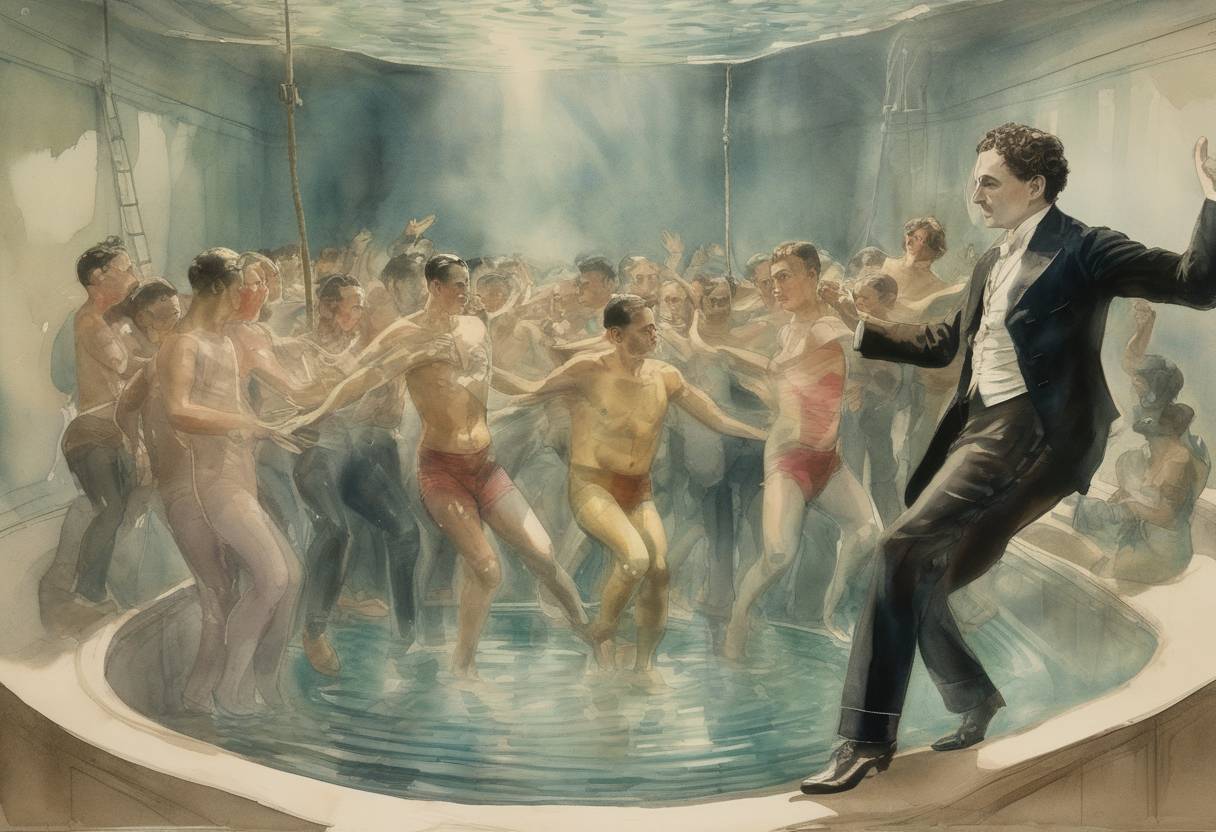
On August 5, 1926, the legendary escape artist Harry Houdini performed one of his most remarkable feats, which involved spending 91 minutes underwater in a sealed tank before making his escape. This performance is often cited as a testament to Houdini’s extraordinary skills and his ability to captivate audiences with seemingly impossible escapes.
Harry Houdini, born Erik Weisz in 1874, was an American illusionist and stunt performer, renowned for his sensational escape acts. By the 1920s, Houdini had already established himself as a master of escapology, having performed numerous daring escapes from handcuffs, straitjackets, and locked containers. His acts often involved a high degree of risk, which only added to his allure and the public’s fascination with his performances.
The underwater escape performed on August 5, 1926, was a culmination of Houdini’s career-long exploration of escape artistry. The stunt involved Houdini being submerged in a sealed tank filled with water. The challenge was not only to escape from the confines of the tank but also to survive the extended period underwater without any apparent means of breathing.
Houdini’s underwater escape on August 5, 1926, reinforced his reputation as the world’s greatest escape artist. It demonstrated his unparalleled ability to push the boundaries of human capability and to captivate audiences with his daring and seemingly impossible acts.
In conclusion, Harry Houdini’s underwater escape on August 5, 1926, remains one of the most celebrated feats in the history of magic and escapology. It highlights Houdini’s extraordinary talents and his enduring impact on the world of entertainment.
Source: en.wikipedia.org