Establishment of Fort Pontchartrain du Détroit
1701 · Detroit, United States
Antoine de la Mothe Cadillac establishes Fort Pontchartrain du Détroit, which later becomes Detroit, Michigan.
August 25, 1718
The French founded the city of New Orleans, which would become a major port and cultural center in the United States.
New Orleans, France (now USA) | French colonial government
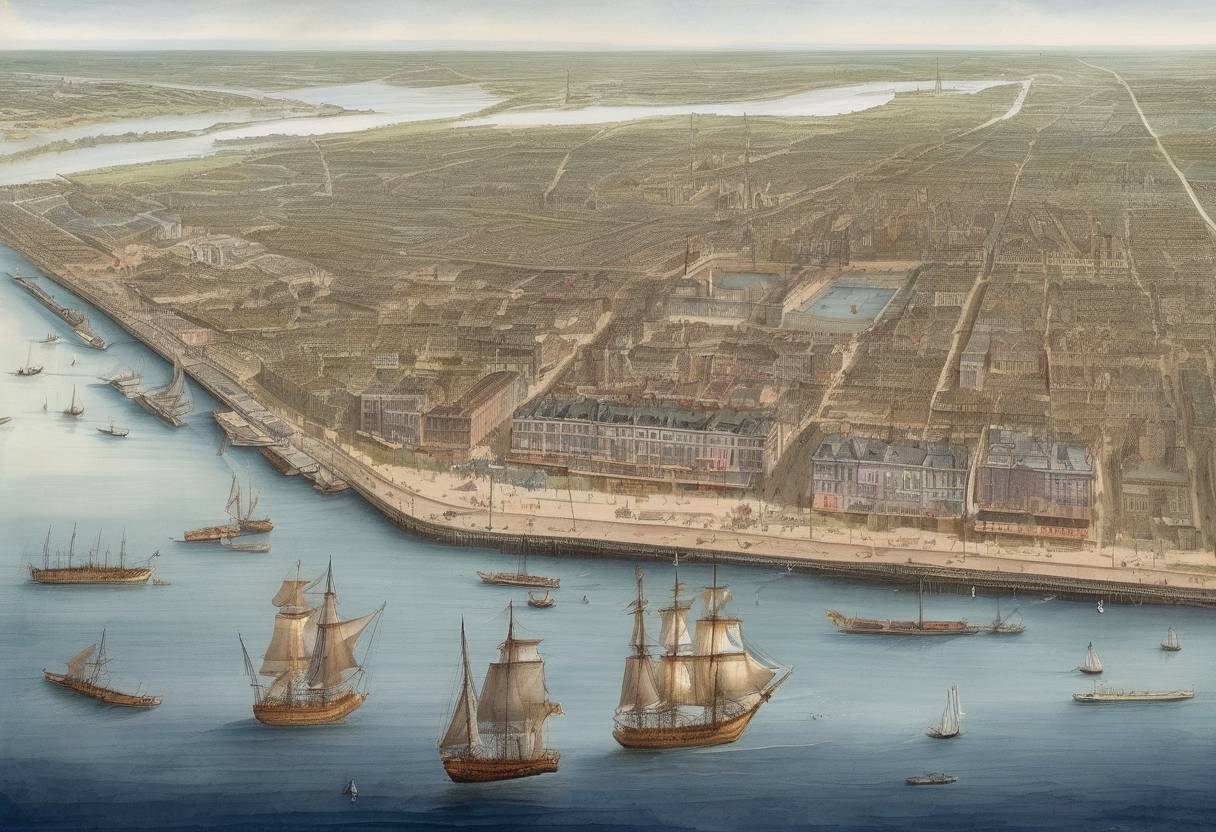
On August 25, 1718, the city of New Orleans was founded by the French, marking the beginning of what would become one of the most culturally rich and economically significant cities in the United States. The establishment of New Orleans was a strategic move by the French to strengthen their presence in North America and to control the Mississippi River, a vital artery for trade and transportation.
French Colonial Ambitions: In the early 18th century, France was keen on expanding its colonial empire in North America. The Mississippi River Valley was of particular interest due to its potential for trade and its strategic location.
Jean-Baptiste Le Moyne de Bienville: The founding of New Orleans is credited to Jean-Baptiste Le Moyne de Bienville, a French-Canadian explorer and colonial administrator. Bienville recognized the strategic importance of the location, which was situated on a crescent bend of the Mississippi River, providing natural protection and a vantage point for controlling river traffic.
Location and Naming: The site chosen for New Orleans was approximately 100 miles upriver from the Gulf of Mexico. It was named in honor of Philippe II, Duke of Orléans, who was the Regent of France at the time.
Early Challenges: The early years of New Orleans were fraught with challenges, including flooding, hurricanes, and disease. Despite these difficulties, the city grew due to its advantageous position for trade and its fertile surrounding lands.
Cultural Melting Pot: Over the years, New Orleans became a melting pot of cultures, influenced by French, Spanish, African, and later American traditions. This cultural diversity is reflected in the city’s unique architecture, cuisine, music, and festivals, most notably Mardi Gras.
Economic Hub: As a major port city, New Orleans played a crucial role in the economic development of the region. It became a key hub for the export of goods such as cotton and sugar, particularly during the 19th century.
Louisiana Purchase: In 1803, New Orleans became part of the United States through the Louisiana Purchase, a pivotal moment in American history that doubled the size of the nation and secured control of the Mississippi River.
Civil War and Beyond: During the American Civil War, New Orleans was a significant strategic target due to its port. It was captured by Union forces in 1862, which had a substantial impact on the Confederacy.
New Orleans’ founding laid the groundwork for its evolution into a vibrant city known for its rich cultural heritage and economic importance. Its history is a testament to the complex interplay of geography, culture, and politics in shaping the development of the United States.
Source: en.wikipedia.org