The Battle of Rio de Janeiro: January 20, 1567
1567 · Rio de Janeiro, Brazil
The Battle of Rio de Janeiro takes place during the French-Portuguese conflict over the Guanabara Bay area.
March 1, 1565
The city of Rio de Janeiro was founded by the Portuguese as a strategic defense against French privateers who were attempting to control the area.
Rio de Janeiro, Brazil | Portuguese Empire
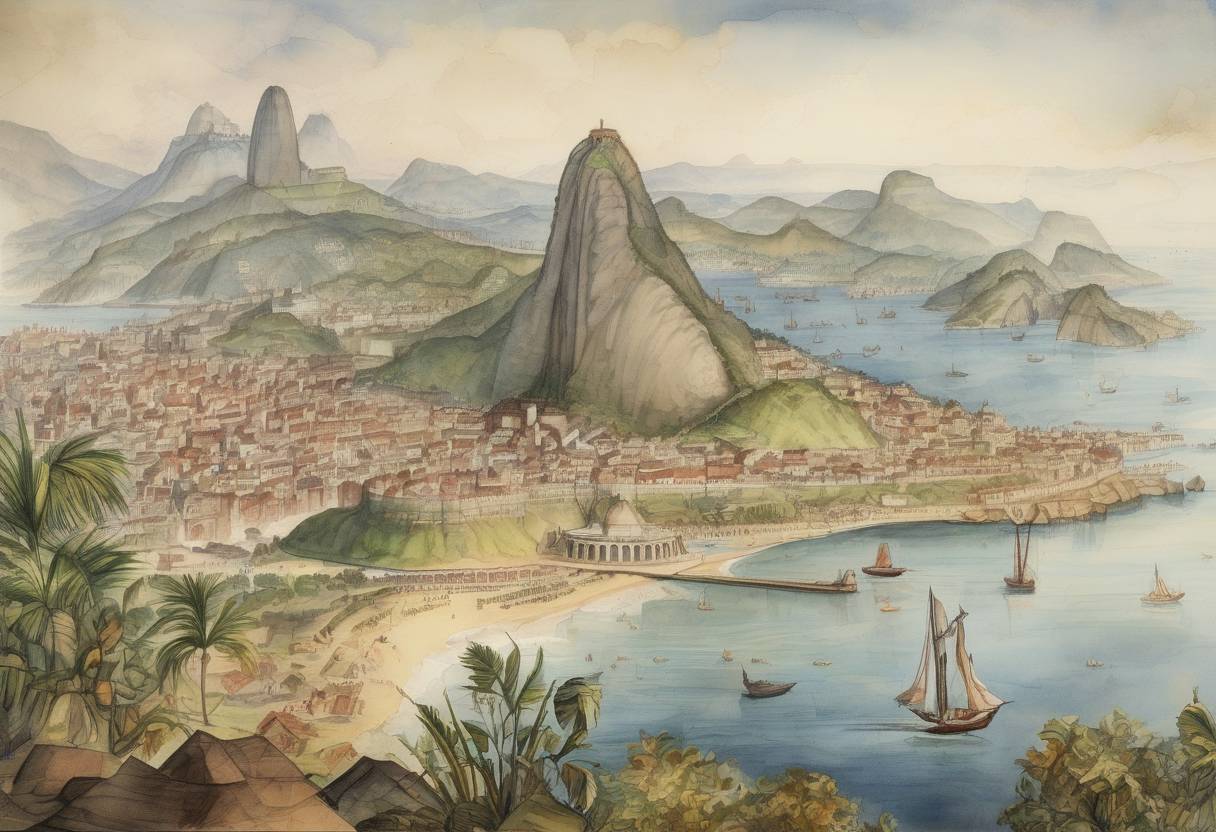
On March 1, 1565, the city of Rio de Janeiro was officially founded by the Portuguese as a strategic measure to defend against French incursions in the region. This event marked a significant moment in the colonial history of Brazil, reflecting the intense European competition for control over the lucrative territories of the New World.
During the mid-16th century, the coast of Brazil was a focal point of European interest due to its potential for economic exploitation, particularly in the trade of brazilwood and sugar. The Portuguese, who had claimed Brazil following the Treaty of Tordesillas in 1494, faced challenges in maintaining control over their vast territories. One of the most persistent threats came from French privateers and settlers, who sought to establish a foothold in the region.
In 1555, French Huguenots, led by Nicolas Durand de Villegaignon, established a colony called France Antarctique on the island of Serigipe, in Guanabara Bay, near present-day Rio de Janeiro. This settlement posed a direct challenge to Portuguese claims and was part of a broader French strategy to expand their influence in the Americas.
To counter the French presence, the Portuguese Crown dispatched Estácio de Sá, a military officer and nephew of the Governor-General of Brazil, Mem de Sá, to expel the French and secure the area. On March 1, 1565, Estácio de Sá founded the city of São Sebastião do Rio de Janeiro at the foot of the Sugarloaf Mountain. The location was strategically chosen for its defensible position and its proximity to the French settlement.
The establishment of Rio de Janeiro was not the end of the conflict. A series of battles ensued between the Portuguese and the French, culminating in the decisive Battle of Guanabara Bay in 1567. Estácio de Sá, although mortally wounded in the conflict, succeeded in driving the French out, securing Portuguese control over the region.
The successful expulsion of the French solidified Portuguese dominance in southeastern Brazil and allowed for the expansion and development of Rio de Janeiro. Over time, the city grew into a major colonial hub, eventually becoming the capital of Brazil in 1763.
The founding of Rio de Janeiro exemplifies the broader European struggle for dominance in the Americas during the Age of Exploration. It highlights the strategic importance of military and colonial outposts in securing territorial claims and resources. The city’s establishment also set the stage for its future growth into one of Brazil’s most important cultural and economic centers.
In summary, the founding of Rio de Janeiro on March 1, 1565, was a pivotal event in the colonial history of Brazil, reflecting the geopolitical dynamics of the 16th century and the enduring legacy of European colonization in shaping the modern world.
Source: en.wikipedia.org