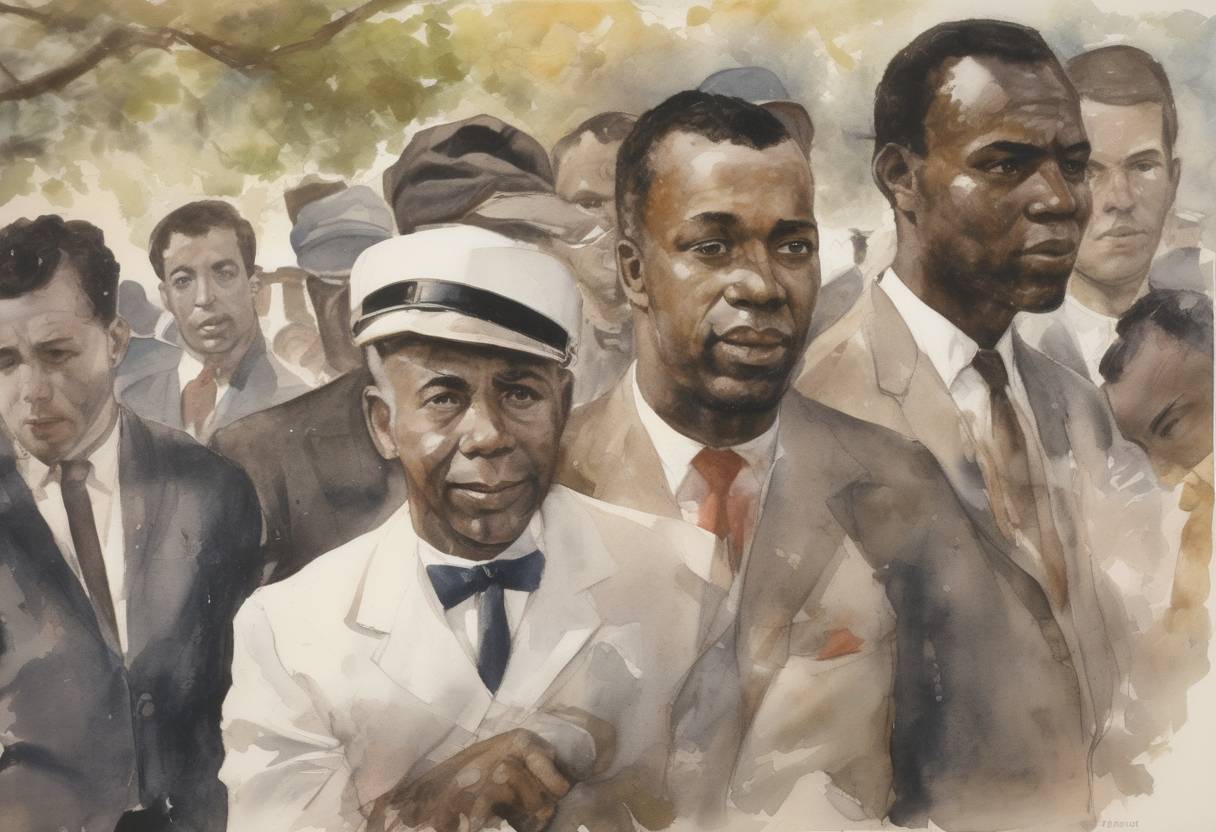
James Meredith Graduates from the University of Mississippi
On August 18, 1963, James Meredith became the first African American to graduate from the University of Mississippi, marking a significant milestone in the American Civil Rights Movement.
Background
James Meredith’s journey to integrate the University of Mississippi, also known as “Ole Miss,” was fraught with challenges and resistance. Born in Kosciusko, Mississippi, in 1933, Meredith was a veteran of the United States Air Force. He applied to the University of Mississippi in 1961, a time when the institution was still segregated.
Legal Battle and Integration
Meredith’s application was initially rejected, but with the support of the National Association for the Advancement of Colored People (NAACP), he filed a lawsuit alleging racial discrimination. The case, Meredith v. Fair, eventually reached the U.S. Supreme Court, which ruled in his favor, mandating his admission.
Despite the court’s decision, Meredith faced significant opposition from the state government and violent protests from segregationists. On September 30, 1962, when Meredith arrived on campus to register, riots erupted, resulting in two deaths and numerous injuries. President John F. Kennedy intervened by sending federal troops to ensure Meredith’s safety and uphold the court’s ruling.
Graduation and Significance
Meredith’s graduation on August 18, 1963, was a momentous event, symbolizing the progress of the Civil Rights Movement and the ongoing struggle for racial equality in the United States. His perseverance and courage in the face of adversity inspired many and highlighted the federal government’s role in enforcing civil rights laws.
Aftermath
Following his graduation, Meredith continued to be an active figure in the Civil Rights Movement. He embarked on the “Meredith March Against Fear” in 1966 to encourage African American voter registration in the South. Although he was shot and wounded during the march, it continued with the support of other civil rights leaders, further galvanizing the movement.
Meredith’s legacy is a testament to the power of individual determination and the impact of legal and federal support in advancing civil rights. His actions helped pave the way for future generations of African American students seeking equal educational opportunities.
Conclusion
James Meredith’s graduation from the University of Mississippi was not just a personal achievement but a pivotal moment in American history. It underscored the importance of legal action and federal intervention in dismantling institutionalized racism and set a precedent for the integration of educational institutions across the United States.