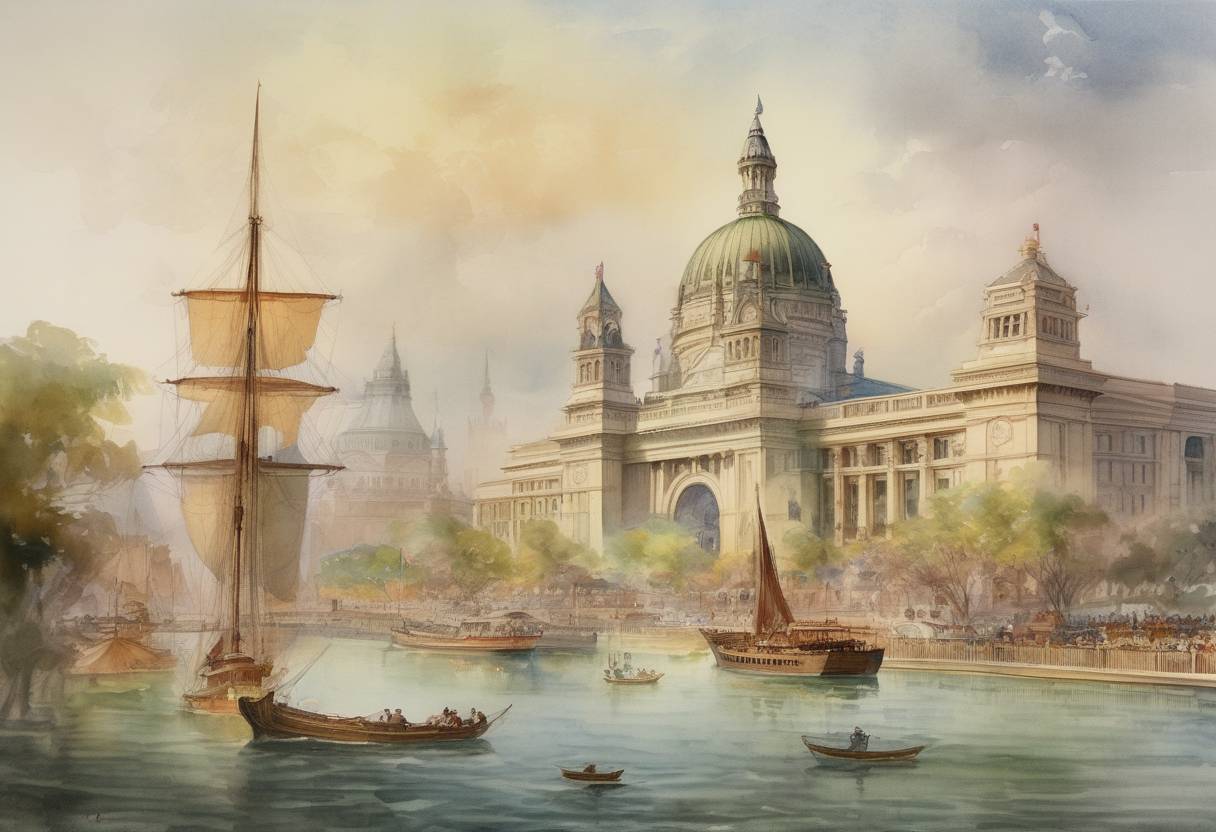
The World’s Columbian Exposition: Opening on May 1, 1893
The World’s Columbian Exposition, also known as the Chicago World’s Fair, officially opened on May 1, 1893. This grand event was organized to commemorate the 400th anniversary of Christopher Columbus’s arrival in the New World in 1492. Held in Chicago, Illinois, the exposition was a pivotal moment in American history, showcasing the nation’s industrial prowess and cultural achievements.
Context and Planning
The idea for the exposition was conceived in the late 1880s, with several cities, including New York, Washington D.C., and St. Louis, vying for the honor of hosting the fair. Chicago was ultimately chosen in 1890, largely due to its strategic location and burgeoning status as a major American city. The fair was designed to highlight the progress of the United States since Columbus’s voyage, emphasizing technological innovation, cultural diversity, and economic growth.
Key Features of the Exposition
Location and Architecture: The exposition was held in Jackson Park, covering over 600 acres. The fairgrounds were designed by renowned landscape architect Frederick Law Olmsted and architect Daniel Burnham. The architectural style, known as the “Beaux-Arts,” featured grandiose buildings with neoclassical facades, earning the fairgrounds the nickname “The White City.”
Exhibits and Innovations: The exposition featured over 200 buildings and numerous exhibits from 46 countries. It introduced many technological innovations, including the first-ever Ferris Wheel, designed by George Washington Gale Ferris Jr., and the widespread use of alternating current (AC) electricity, which powered the fairgrounds.
Cultural Impact: The fair was a cultural melting pot, showcasing art, music, and performances from around the world. It also hosted the first Parliament of the World’s Religions, promoting interfaith dialogue and understanding.
Notable Figures: The exposition attracted millions of visitors, including notable figures such as Thomas Edison, Nikola Tesla, and Susan B. Anthony. It provided a platform for influential speeches and presentations that shaped public discourse.
Aftermath and Legacy
The World’s Columbian Exposition had a lasting impact on American society and culture. It spurred urban development in Chicago and inspired the City Beautiful movement, which aimed to introduce beautification and monumental grandeur in American cities. The fair also left a cultural legacy, influencing art, architecture, and public events for decades to come.
Despite its successes, the exposition also faced criticism for its exclusionary practices, particularly towards African Americans and other minority groups, highlighting the racial and social tensions of the era.
In summary, the World’s Columbian Exposition was a landmark event that celebrated American achievements while also reflecting the complexities of its time. Its influence is still evident in various aspects of modern American life, from urban planning to cultural exhibitions.