The Annexation of the Papal States: October 2, 1870
1870 · Rome, Italy
The papal states were annexed by the Kingdom of Italy, completing the unification of Italy.
March 17, 1861
The Kingdom of Italy was proclaimed, with Victor Emmanuel II as its first king, marking the unification of Italy.
Turin, Italy | Kingdom of Italy
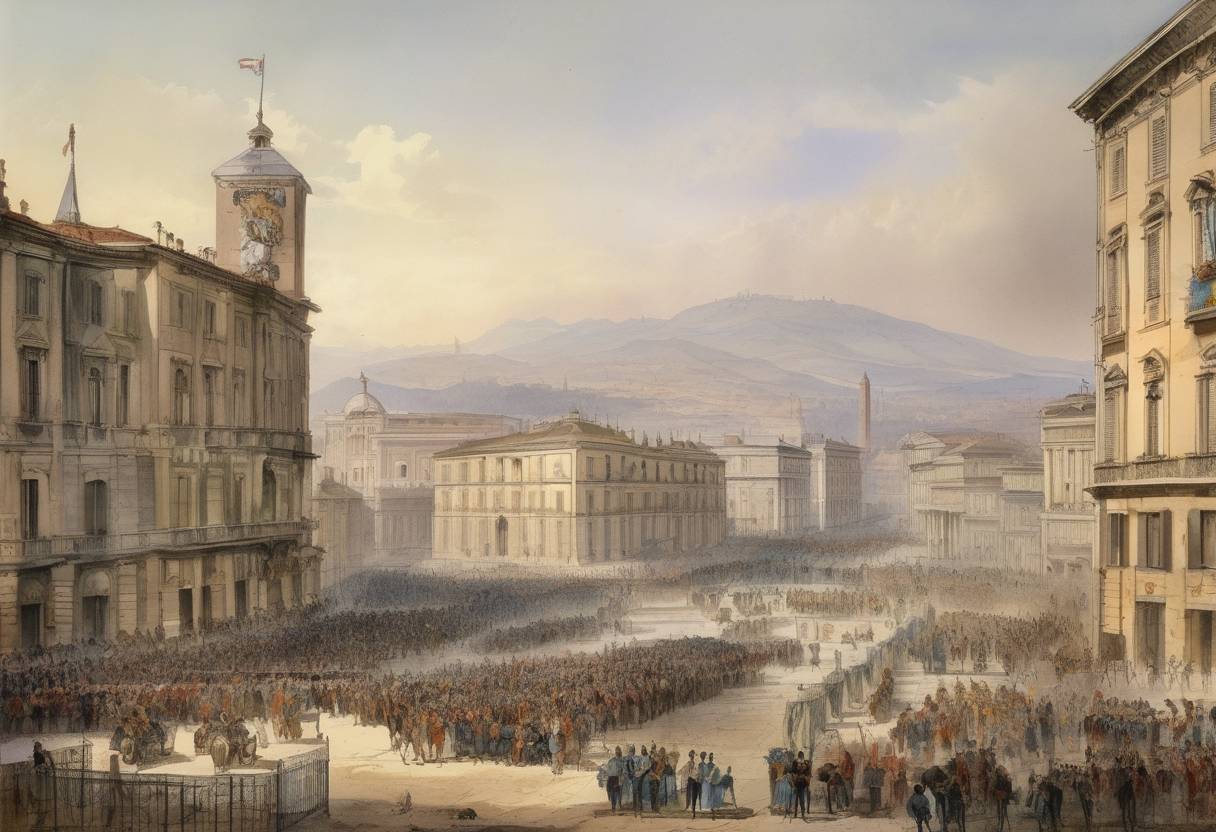
On March 17, 1861, a pivotal moment in European history unfolded with the proclamation of the Kingdom of Italy. This event marked the culmination of the Italian unification process, known as the Risorgimento, and established Victor Emmanuel II as the first king of a unified Italy.
The unification of Italy was a complex process that spanned several decades, driven by a combination of political, social, and military efforts. Prior to unification, the Italian peninsula was fragmented into multiple states, including the Kingdom of Sardinia, the Papal States, the Kingdom of the Two Sicilies, and various duchies and city-states. The movement for unification was fueled by a growing sense of nationalism and the desire for independence from foreign rule, particularly Austrian influence in the north.
The unification process involved a series of wars, diplomatic negotiations, and popular uprisings:
On March 17, 1861, the Italian Parliament, convened in Turin, declared Victor Emmanuel II as the King of Italy. This proclamation symbolized the official unification of most of the Italian peninsula under a single monarchy. However, it is important to note that Rome and Venetia were not yet part of the kingdom; Rome would be annexed in 1870, and Venetia in 1866.
The unification of Italy had profound implications:
The proclamation of the Kingdom of Italy on March 17, 1861, stands as a testament to the enduring power of nationalist aspirations and the complex interplay of diplomacy, warfare, and popular movements in shaping modern nation-states.
Source: en.wikipedia.org