Pioneer 10 Launch: March 2, 1972
1972 · Cape Canaveral, United States
The Pioneer 10 spacecraft was launched from Cape Canaveral, becoming the first spacecraft to travel through the asteroid belt and make a flyby of Jupiter.
July 15, 1975
The Apollo-Soyuz Test Project, the first international human spaceflight mission, is launched, marking a significant moment of cooperation between the United States and the Soviet Union during the Cold War.
Cape Canaveral, United States | NASA and Soviet space program
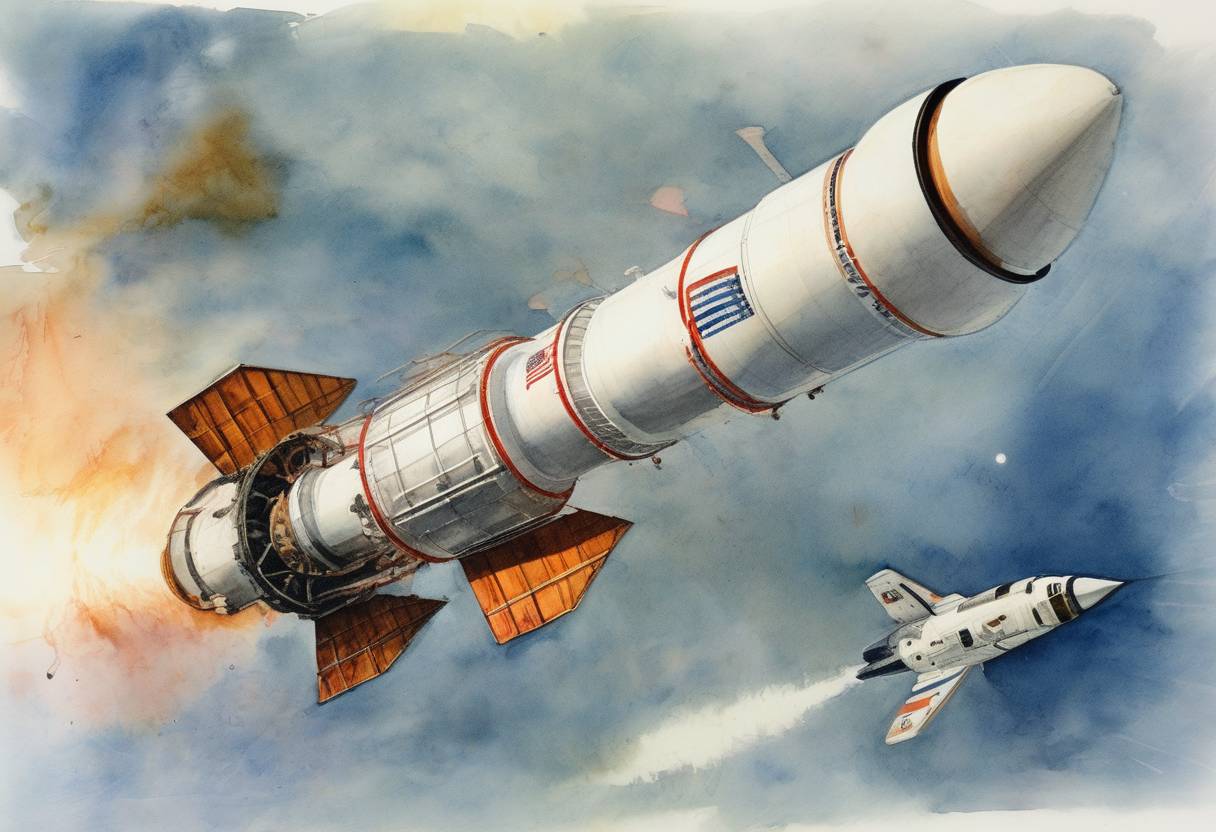
On July 15, 1975, the Apollo-Soyuz Test Project (ASTP) was launched, marking the first international human spaceflight mission. This groundbreaking event symbolized a significant thaw in Cold War tensions between the United States and the Soviet Union, showcasing the potential for cooperation in space exploration despite geopolitical rivalries.
The Apollo-Soyuz Test Project emerged from a period of détente, a relaxation of strained relations between the two superpowers. The project was conceived as a means to improve U.S.-Soviet relations and to demonstrate the feasibility of international collaboration in space. It was also intended to test the compatibility of rendezvous and docking systems for future joint missions.
The Apollo-Soyuz Test Project was a resounding success, achieving all its objectives and setting a precedent for future international collaborations in space. It paved the way for subsequent cooperative efforts, such as the Shuttle-Mir Program and the International Space Station (ISS).
The Apollo-Soyuz Test Project remains a landmark event in the history of space exploration, demonstrating that even amidst political rivalry, nations can unite for the common good of advancing human knowledge and exploration.
Source: en.wikipedia.org