1805 · Derna, Libya
The United States Marines and Berbers attacked the Tripolitan city of Derna during the First Barbary War, marking the first recorded land battle of the United States military on foreign soil.
May 9, 1805
The city of Derna, in present-day Libya, falls to the United States' Marines and Arab mercenaries in the First Barbary War during the Battle of Derna.
Derna, Libya | United States Marine Corps
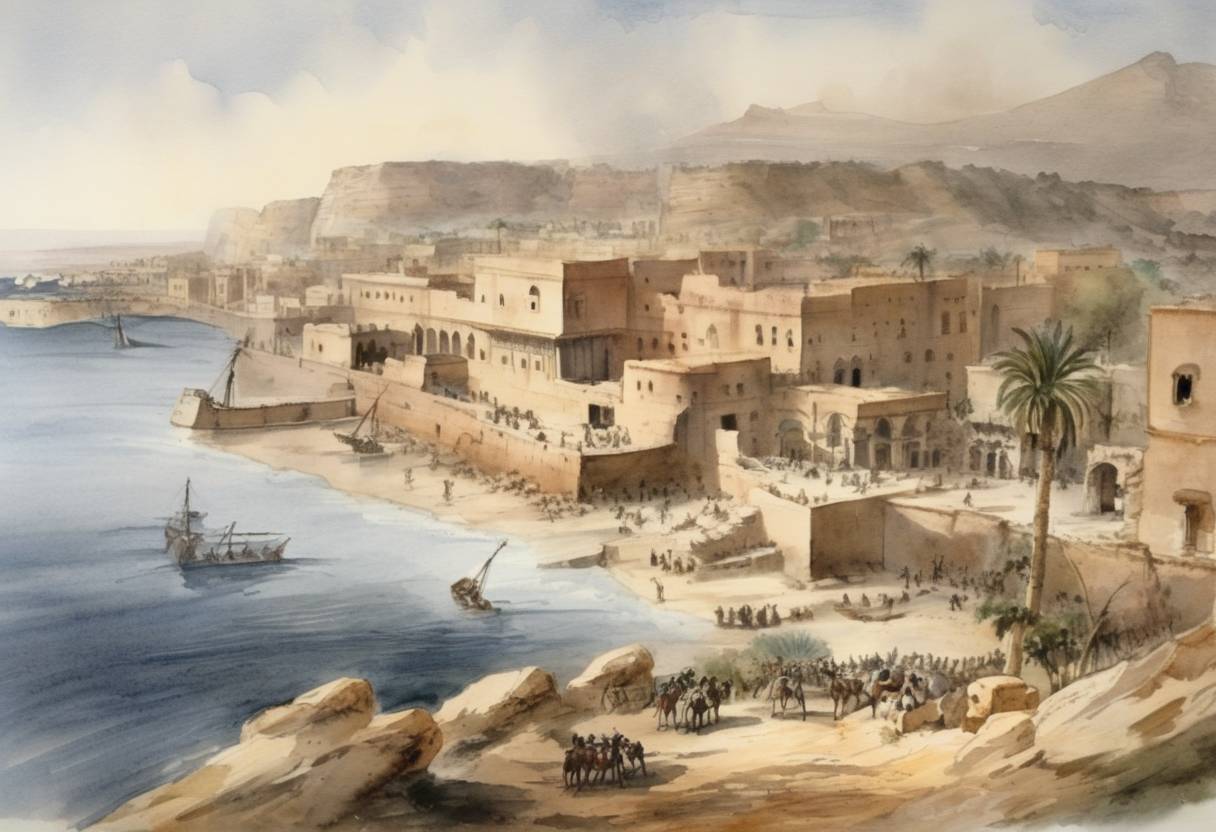
On May 9, 1805, during the First Barbary War, the city of Derna in present-day Libya fell to U.S. Marines and allied Arab mercenaries. This marked a significant turning point in the conflict between the United States and the Barbary States, which were North African pirate states from the Ottoman Empire, known for attacking and capturing ships in the Mediterranean Sea.
The First Barbary War originated from demands by the Barbary States for tribute from American merchant vessels traversing the Mediterranean. In refusal, President Thomas Jefferson deployed naval forces to protect U.S. interests. The conflict intensified in the early 1800s as American forces sought to suppress piracy and secure safe passage for their shipping.
The campaign against Derna was part of a broader strategy masterminded by William Eaton, the U.S. consul to Tunis. His plan involved installing Hamet Karamanli, the brother of the ruling Bashaw Yusuf Karamanli of Tripoli, as the rightful leader. This plan required a land assault on the city of Derna.
Eaton, who was appointed as an unofficial general, led a small ground force consisting of about eight U.S. Marines, joined by an assortment of Arab, Greek, and Berber mercenaries. Despite logistical challenges and the diverse makeup of the forces, Eaton managed to march the group across the Libyan desert to Derna.
The battle commenced with Eaton leading a direct assault on the city on April 27, 1805. The U.S. naval forces provided artillery support from the USS Nautilus, USS Hornet, and USS Argus. Following two days of fierce fighting, the coalition forces successfully breached Derna’s walls, paving the way for Eaton’s troops and Hamet’s supporters to take control of the city on May 9.
The capture of Derna was the first recorded land action of the United States on foreign soil and a significant victory. It demonstrated the potential of the United States to project military power overseas and established a sense of prestige and confidence.
Despite this victory, Eaton’s campaign to place Hamet Karamanli in power was ultimately short-lived, as diplomatic negotiations led to a treaty with Tripoli in 1805, effectively ending the First Barbary War. The treaty did not oust Yusuf but did result in more favorable terms for American shipping.
Maintaining control of Derna bolstered the reputation of the U.S. Marine Corps, leading to the famous line in the Marine Corps Hymn: “to the shores of Tripoli.” The operation underscored the importance of coalition building and demonstrated early American foreign policy efforts in tumultuous geopolitical landscapes.
Source: www.history.navy.mil