Rescission of Executive Order 9066
1976 · Washington, D.C., United States
Executive Order 9066, authorizing the internment of Japanese Americans during World War II, is formally rescinded by President Gerald Ford.
November 23, 1981
President Ronald Reagan signed the Executive Order 12333, which extended powers of the United States intelligence services on intelligence collection in foreign nations.
Washington, D.C., United States | U.S. Government
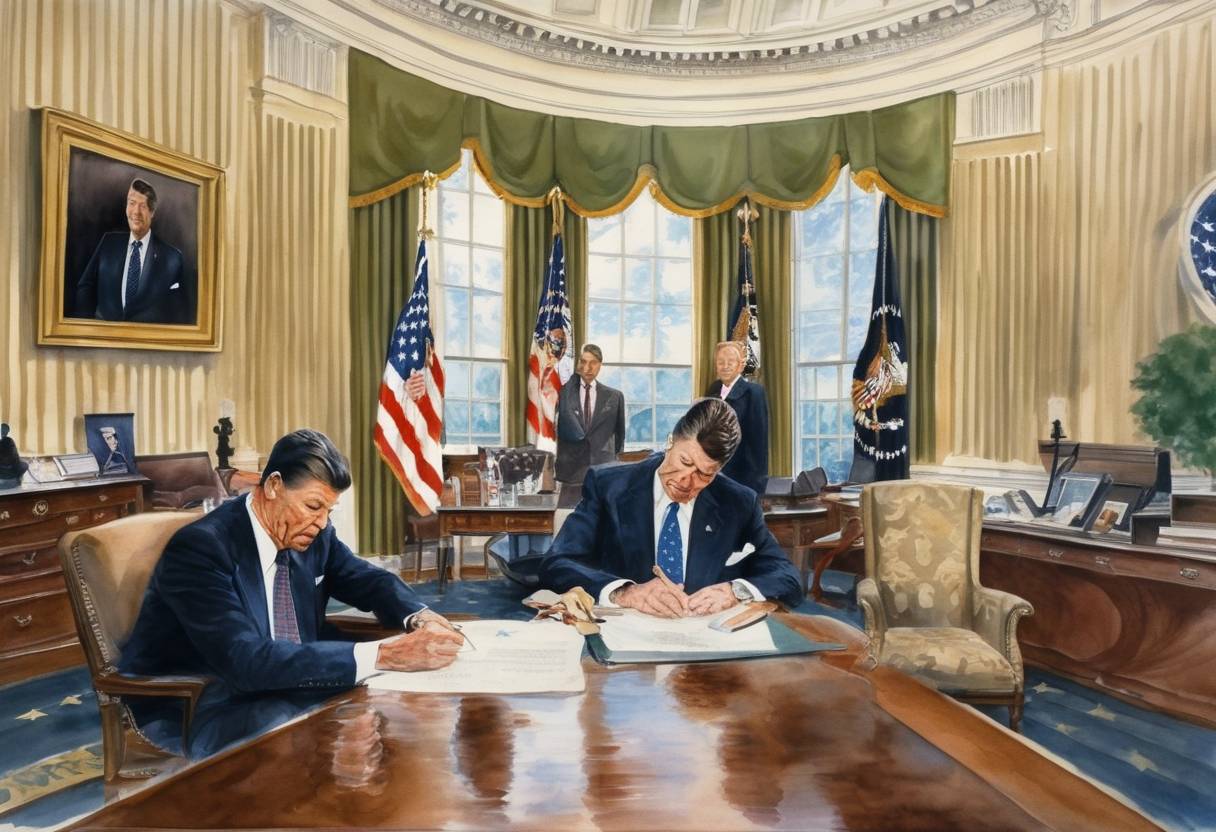
On November 23, 1981, President Ronald Reagan signed Executive Order 12333, entitled “United States Intelligence Activities.” This directive significantly expanded the scope and authority of U.S. intelligence agencies, particularly in terms of their capacity to collect and analyze intelligence from foreign nations.
The late 1970s and early 1980s were characterized by growing concern over national security and the effectiveness of U.S. intelligence operations. The intelligence community had faced intense scrutiny and criticism following revelations of abuses and overreach highlighted by the Church Committee investigations in the mid-1970s. Consequently, the need to rebuild trust and enhance the capabilities of intelligence agencies became a priority for the Reagan administration.
Scope Expansion: Executive Order 12333 broadened the mandate of intelligence agencies, enabling them to engage more freely in activities pertinent to foreign intelligence collection.
Coordination and Responsibility: The order outlined clear directives for the coordination between various intelligence agencies, including the CIA, NSA, and FBI. It emphasized efficient collaboration to improve the overall intelligence-gathering efforts.
Presidential Control: E.O. 12333 established that the President of the United States held ultimate authority over intelligence activities, reinforcing the role of the executive branch in directing and managing intelligence operations.
Human Rights Considerations: While the order expanded operational capacities, it also mandated adherence to relevant U.S. laws and the balance of human rights concerns, reflecting an acknowledgment of past abuses.
Executive Order 12333 marked a turning point in U.S. intelligence policy, setting the foundational framework for intelligence operations still relevant today. It affirmed the necessity of intelligence in safeguarding national security, particularly during the Cold War era, when the geopolitical landscape posed significant challenges to U.S. interests.
In the years following its signing, E.O. 12333 has undergone various amendments to address emerging challenges, such as technology advancements and the evolving nature of global threats. Despite its expansions, it continues to generate debate over the balance between national security and civil liberties.
Executive Order 12333 remains a cornerstone in the framework of modern U.S. intelligence operations. Its enactment highlighted both the challenges of adapting to new threats and the enduring tension between effective intelligence capabilities and the protection of individual rights.
Source: www.archives.gov