1447 · Rome, Papal States
Nicholas V is elected as the new pope, succeeding Pope Eugene IV.
February 22, 1288
Pope Nicholas IV was elected as head of the Catholic Church.
Rome, Papal States | Catholic Church
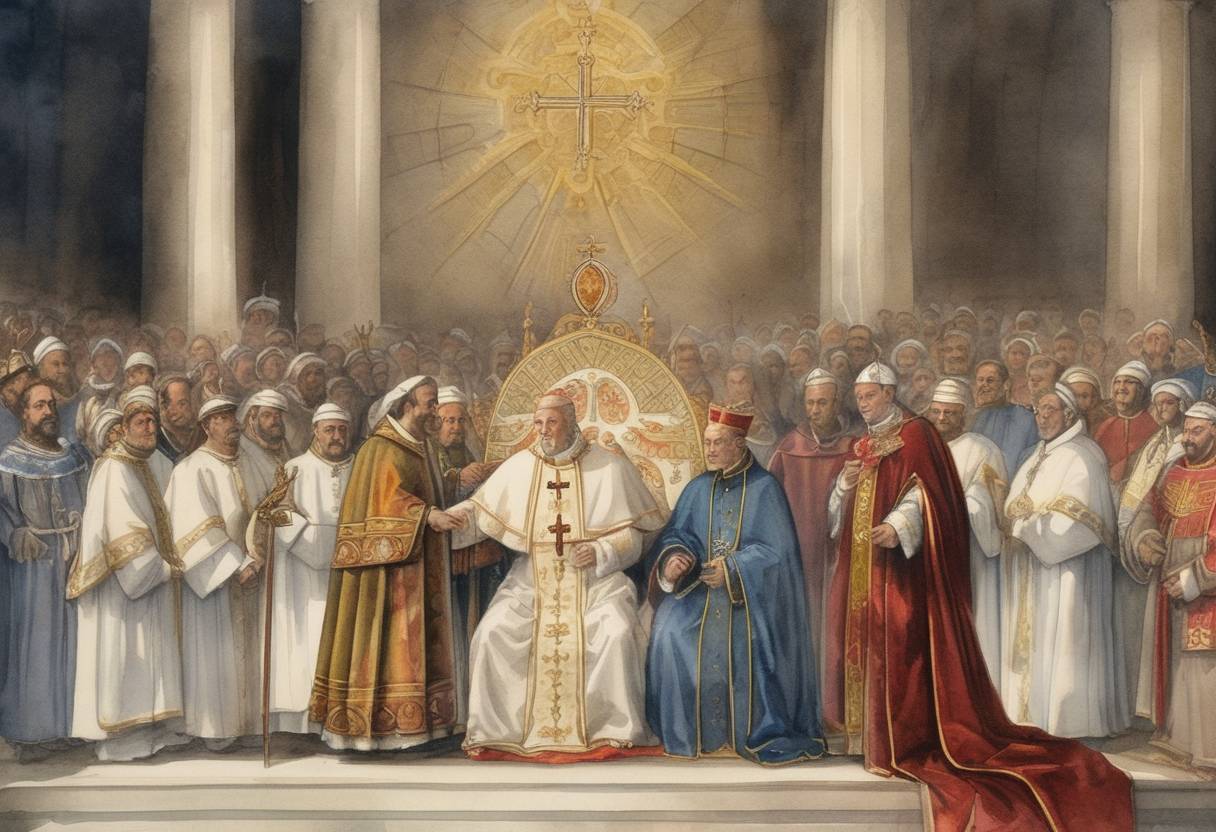
On February 22, 1288, Jerome Masci was elected Pope Nicholas IV, becoming the Supreme Pontiff of the Catholic Church. He was the first Franciscan to assume the papacy.
Before his election as pope, Jerome Masci was a respected cardinal and diplomat, known for his dedication to the Franciscan Order and his scholarly pursuits. He served as a legate to several significant regions, including the Byzantine Empire, where he worked to reunite the Eastern and Western churches.
The papal election of 1288 was influenced by the complex political landscape of the time. The previous pope, Honorius IV, had died in 1287, and the papal seat remained vacant for almost a year due to internal conflicts and shifting alliances among the cardinals. The election of Nicholas IV marked the end of this interregnum.
During his papacy, Nicholas IV faced numerous challenges, including ongoing tensions between the Papal States and secular rulers. He endeavored to mediate conflicts within Italy and sought to restore papal influence in the region. His tenure also dealt with issues concerning the Crusades, showing a commitment to Christian solidarity against external threats.
A significant aspect of his papacy was his promotion of missionary activities, particularly in Asia, following the travels of figures like Marco Polo. Nicholas IV’s papacy established several new bishoprics in areas like India and China to bolster the Church’s presence.
Pope Nicholas IV’s election is historically significant as it reinforced the evolving relationship between the Church and the burgeoning Franciscan movement. His leadership is remembered for his support of missionary endeavors and his attempts to unify the Christian world amid political and religious fragmentation. His papacy, albeit brief, set a precedent for balancing ecclesiastical responsibilities with global outreach. Nicholas IV served until his death on April 4, 1292.
Source: www.britannica.com