Bridget Bishop: The First Execution of the Salem Witch Trials
1692 · Salem, United States
Bridget Bishop became the first person executed for witchcraft during the Salem witch trials.
May 26, 1647
Alse Young, the first person in the American colonies known to be executed for witchcraft, was hanged in Hartford, Connecticut.
Hartford, American Colonies (now United States) | Puritan judicial system
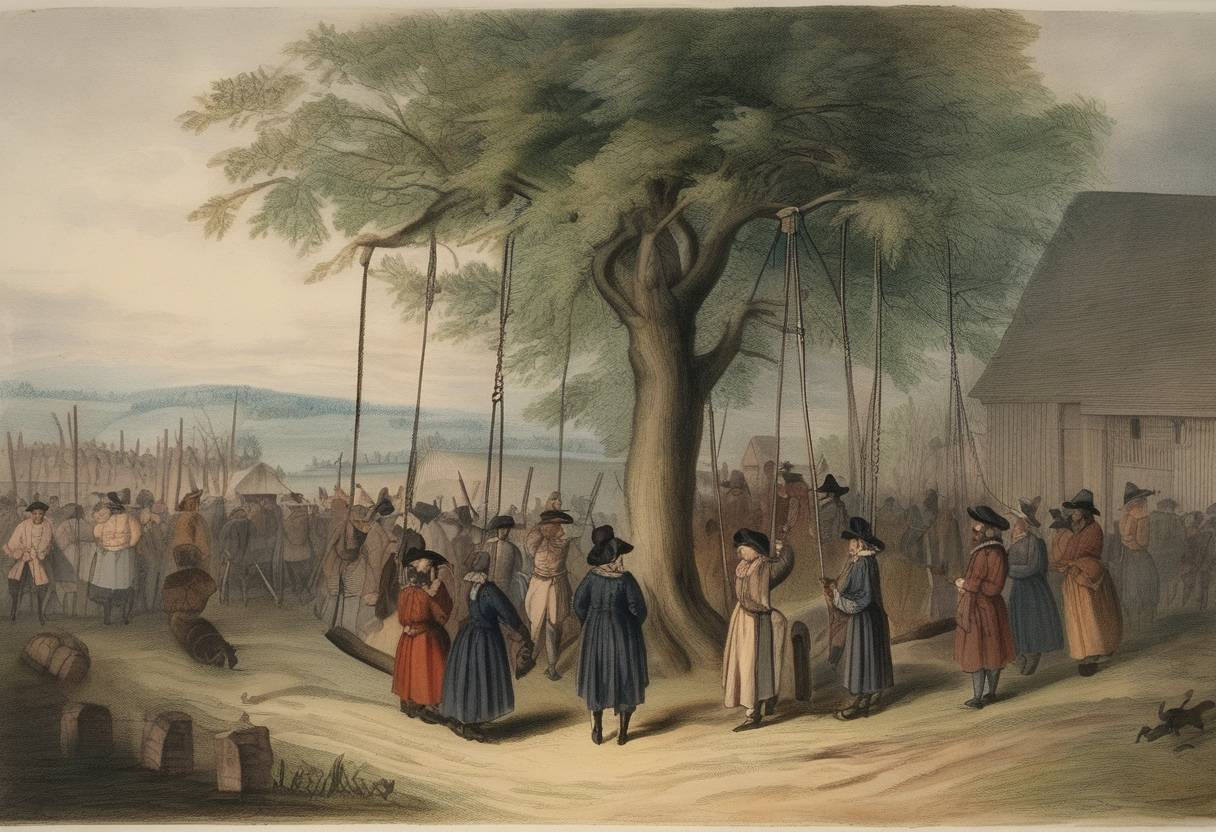
On May 26, 1647, Alse Young, a resident of Windsor, Connecticut, became the first person in the American colonies known to have been executed for witchcraft. Her execution by hanging marked the beginning of a series of witch trials in New England that would culminate in the notorious Salem witch trials.
The context for Young’s execution rested on the widespread fear of witchcraft in 17th-century Europe and its colonies. Belief in witches and their purported ability to harm others through supernatural means was pervasive, fueled by religious, social, and economic tensions. In the New England colonies, Puritanical views and a strong belief in the Devil’s influence made the fear of witchcraft particularly potent.
Specific details about the accusations against Alse Young, including the evidence used to condemn her, are scarce. The records of her trial have not survived, leaving historians to piece together her story from fragmented historical documents. What is known is that the Connecticut Colony court in Hartford found her guilty, leading to her execution on the town’s meeting house square.
Alse Young’s execution was the first recorded instance of such a trial and execution in the American colonies, setting a precedent for how witchcraft accusations were handled. Her case initiated a wave of similar accusations throughout Connecticut, which persisted into the 17th century. It also foreshadowed the Salem witch trials of 1692 and 1693 in Massachusetts, where a larger and more infamous series of prosecutions would occur.
The era of witch trials in New England eventually waned as the colonial justice system shifted towards a legal framework less influenced by theological interpretations. By the early 18th century, executions for witchcraft in the colonies had ceased.
Alse Young’s grim legacy remains a poignant reminder of the dangers of mass hysteria and the historical consequences of unchecked societal fears. Her story symbolizes the beginning of a dark chapter in colonial history and serves as a cautionary tale about the perils of superstition and persecution.
Source: www.britannica.com