The Camp Fire: A Historical Account
2018 · Paradise, United States
The Camp Fire, the deadliest and most destructive wildfire in California's history, began in Butte County, eventually killing 85 people and destroying thousands of structures.
June 10, 2008
Lightning sparks over 800 wildfires in Northern California, which will stretch fire response resources and lead to significant damage.
Various Locations, United States | Cal Fire
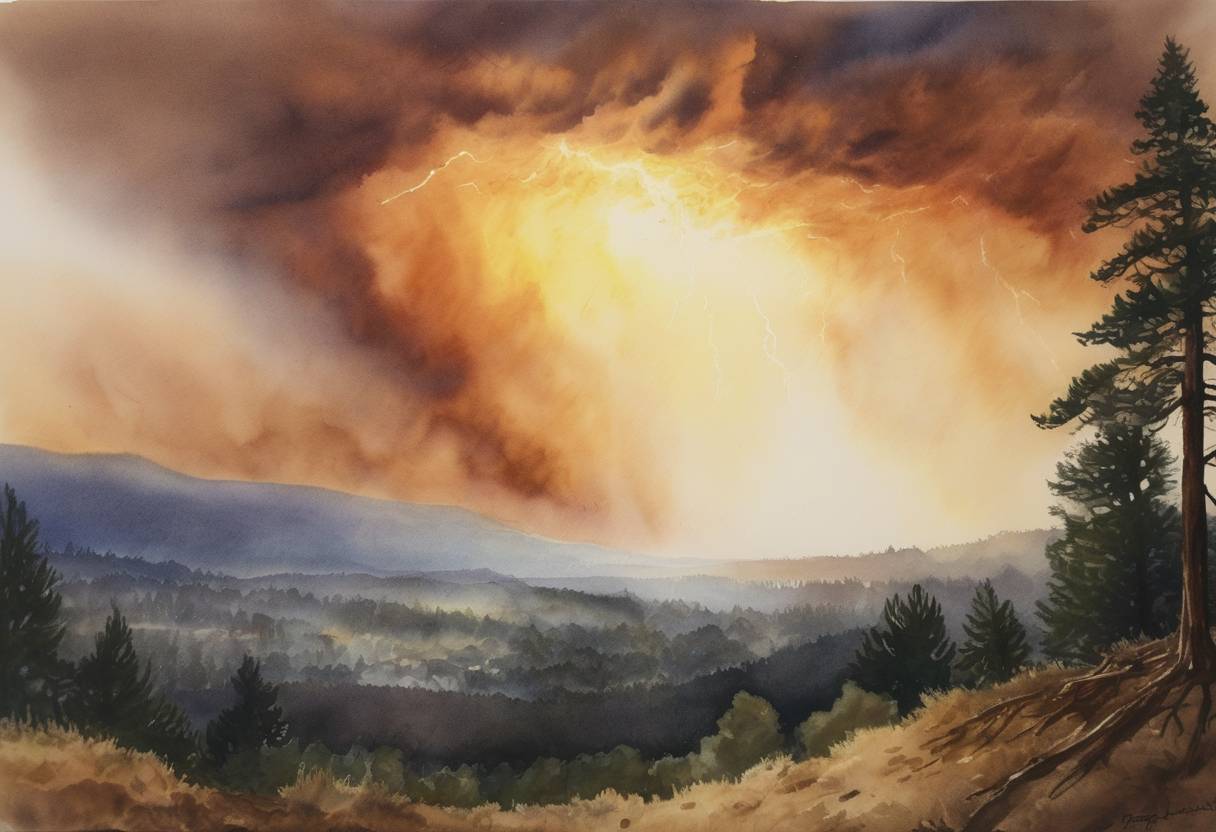
On June 10, 2008, an extraordinary meteorological event resulted in an eruption of over 800 wildfires across Northern California. These fires were predominantly sparked by an unusually intense lightning storm, which rapidly overwhelmed the state’s firefighting resources and culminated in significant destruction and environmental impact.
Earlier in June 2008, Northern California experienced extremely dry and hot conditions, creating the perfect environment for wildfires. This period of low humidity and high temperatures culminated in a dry lightning storm on June 10, which is relatively rare for the region. This storm generated thousands of lightning strikes across numerous counties, igniting fires in heavily forested and densely vegetated areas.
The scale of the wildfires posed significant challenges for emergency responders. California’s firefighting resources were stretched thin, trying to cover the vast number of fires simultaneously, many of which were in remote and difficult-to-access areas. The fires resulted in widespread devastation:
In the wake of these fires, the state of California, with federal support, undertook a massive fire suppression effort. The National Guard and additional firefighting units from other states and countries provided assistance. Financial aid for rebuilding and recovery was mobilized, reflecting the disaster’s severity and the response’s scale.
The incident highlighted the increasing risks posed by climate change, particularly the likelihood of more frequent and severe wildfires due to warming temperatures and prolonged drought conditions. It underscored the need for enhanced preparedness and resource allocation for natural disasters in the state’s disaster management strategy.
The fires of June 10, 2008, stand as a stark reminder of the changing environmental conditions and their capacity to wreak havoc on human and natural environments alike. It triggered policy discussions and reforms focused on bolstering future fire prevention and response strategies.
Source: www.nifc.gov