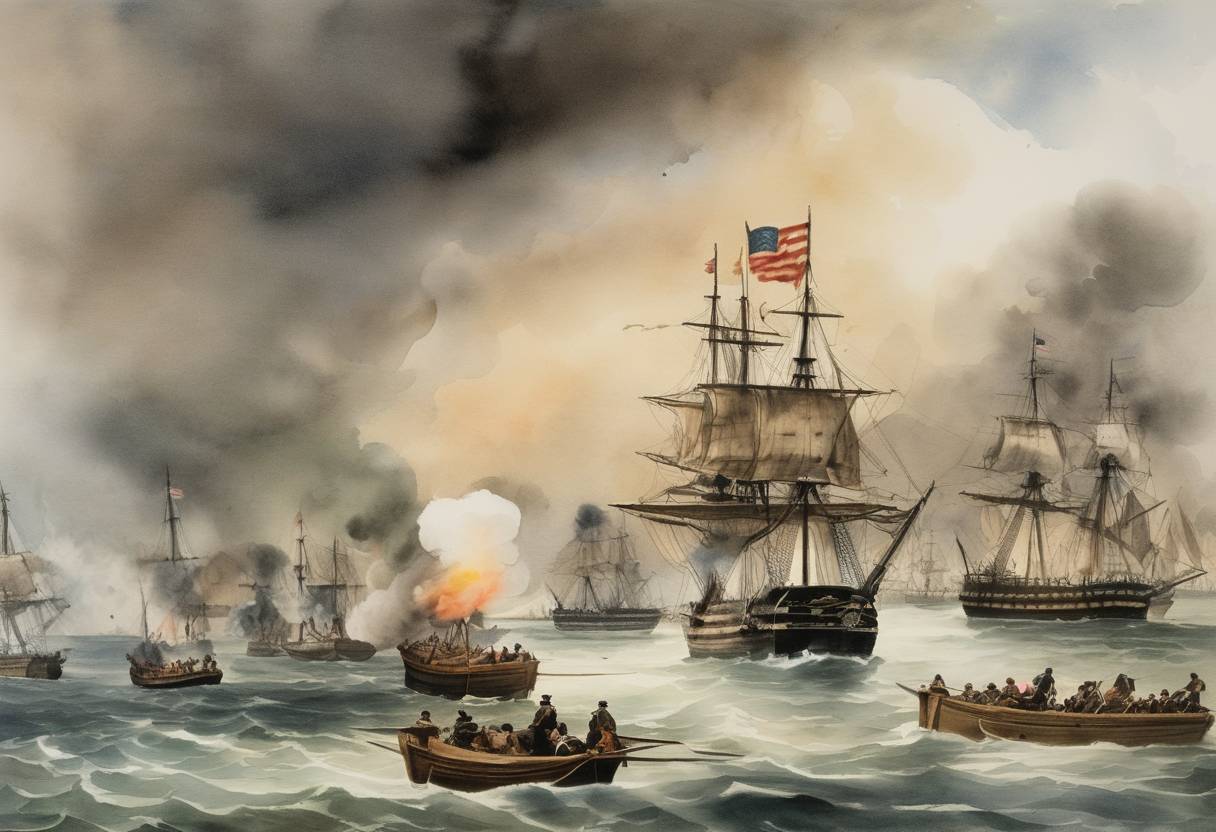
The Battle of Sullivan’s Island: June 28, 1776
The Battle of Sullivan’s Island was a critical engagement during the American Revolutionary War where patriot forces, commanded by Colonel William Moultrie, successfully repelled a British naval attack. The battle occurred on June 28, 1776, near Charleston, South Carolina, and marked a significant early victory for the American forces.
Background
As part of the British strategy to regain control over rebellious American colonies, a large expedition was dispatched in early 1776. Commanded by General Henry Clinton and Admiral Sir Peter Parker, the British aimed to capture Charleston, South Carolina, one of the most important southern port cities. The city was strategically important due to its economic resources and its position as a gateway to the southern colonies.
Fort Sullivan
Defending Charleston was Fort Sullivan, a hastily constructed fort made primarily of palmetto logs and sand. It was built on Sullivan’s Island at the entrance to Charleston Harbor. Its walls were famously resilient, as the soft wood absorbed cannon fire rather than splintering.
The Battle
On June 28, 1776, the British fleet, consisting of a number of warships including HMS Bristol and HMS Experiment, moved into position to bombard Fort Sullivan and force a surrender. However, the fort’s defenders, led by Colonel Moultrie, were well-prepared and responded with effective artillery fire.
Key Moments
- Naval Bombardment: The British began their assault with their ships’ powerful broadsides. However, the fort’s palmetto log construction absorbed much of the impact.
- American Defense: Under Moultrie’s leadership, the fort’s men skillfully returned fire with canon, inflicting significant damage on the British ships.
- Fortitude and Resilience: Despite a sustained bombardment that lasted much of the day, the Americans held their ground. Notably, the British ships struggled with maneuverability due to shallow waters and tides.
- Tide and Visibility: The rising tides and smoke from cannon fire reduced visibility and challenged British efforts further.
Aftermath and Significance
The failed British attempt to take Charleston at Sullivan’s Island delayed their southern campaign by years. The victory bolstered American morale tremendously, becoming a symbol of defiance and resilience. It demonstrated effective American resistance and contributed to the growing spirit of independence that would culminate in the Declaration of Independence just days later on July 4, 1776.
Colonel Moultrie emerged as a hero, and Fort Sullivan was later renamed Fort Moultrie in his honor. The battle is remembered today as a testament to the strategic and tenacious nature of early American resistance during the Revolution.