The Treaty of Guadalupe Hidalgo: February 2, 1848
1848 · Guadalupe Hidalgo, Mexico
The Treaty of Guadalupe Hidalgo was signed, ending the Mexican-American War and ceding large territories to the United States.
June 4, 1845
Mexican General Mariano Arista mobilized his troops to break the American blockade at the Rio Grande during the Mexican-American War. This event was one of the youkey military actions that set the stage for hostilities leading to larger battles.
Rio Grande, Mexico | Mexican Army
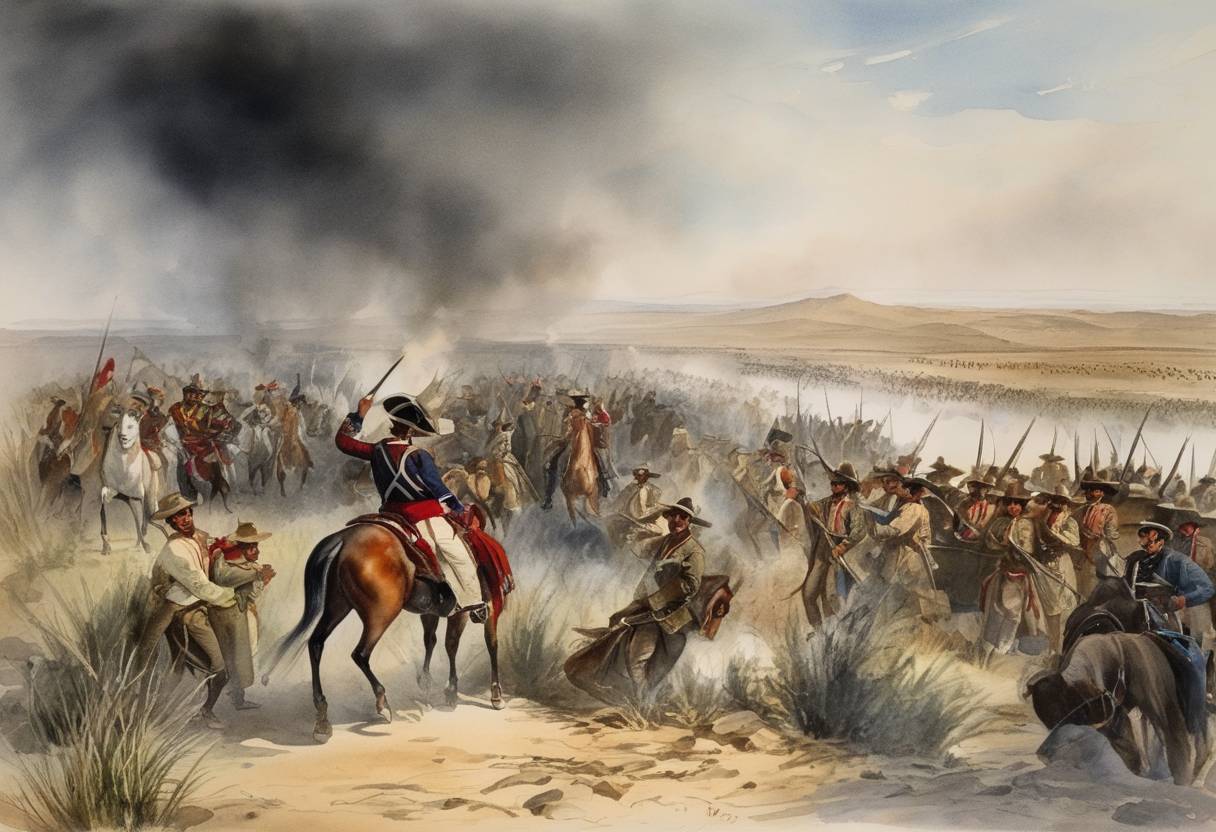
On April 6, 1845, Mexican General Mariano Arista began mobilizing his troops in a decisive effort to challenge the American military presence at the Rio Grande, which was a significant action leading up to the Mexican-American War. This mobilization was part of the growing tensions between Mexico and the United States over territorial disputes.
The central issue triggering these tensions was the annexation of Texas by the United States in 1845. Texas had declared independence from Mexico in 1836 and existed as an independent republic. Mexico, however, did not recognize the independence of Texas and viewed the annexation as an act of aggression. The U.S., meanwhile, saw the Rio Grande as the southern boundary of Texas—a claim Mexico disputed, asserting the boundary was further north at the Nueces River.
On April 6, 1845, anticipating conflict and in defense of Mexican territorial integrity, General Mariano Arista was assigned to lead Mexican troops to the disputed region. This deployment was an attempt to assert control and protect what Mexico considered as its rightful territory.
This mobilization increased the already high tensions between the nations, setting the stage for the outbreak of hostilities. In the following months, minor skirmishes occurred, escalating to larger conflicts. These early moves by Mexico were critical in the prelude to the Mexican-American War, which was formally declared by the U.S. Congress on May 13, 1846.
Arista’s mobilization is significant as it marked a clear stance by Mexico to defend its claims against the advancing military presence of the United States. This event underscored the profound impact of territorial disputes on international relations and the eventual escalation to full-scale war. The actions of April 6, 1845, displayed the complex interplay of diplomacy and military readiness that characterized the period, and it was a precursor to the initial battles that would soon follow in the conflict.
Source: www.britannica.com