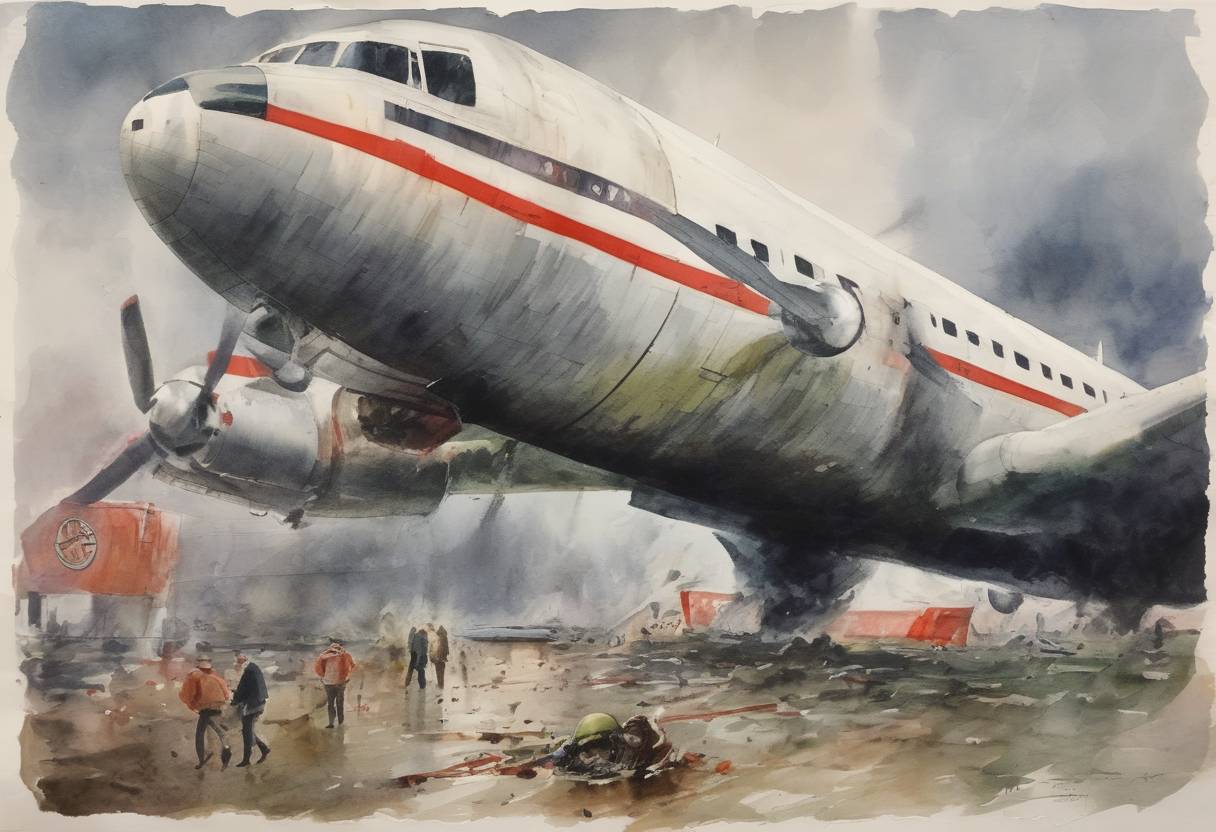
The Munich Air Disaster: February 6, 1958
The Munich Air Disaster is a tragic event in aviation and sports history that occurred on February 6, 1958. It involved the crash of British European Airways Flight 609, which resulted in the deaths of 23 people, including eight players from the Manchester United football team, known as the “Busby Babes.”
Background
Manchester United was returning from a European Cup match against Red Star Belgrade in Yugoslavia. The team had secured a 3-3 draw, which allowed them to advance to the semi-finals. The flight was scheduled to refuel in Munich, West Germany, before continuing to Manchester.
The Crash
- Date: February 6, 1958
- Location: Munich-Riem Airport, Munich, West Germany
- Aircraft: Airspeed Ambassador, operated by British European Airways
- Flight Number: 609
Sequence of Events
Refueling Stop: The aircraft landed in Munich for refueling. After refueling, the plane attempted to take off twice but was aborted due to boost surging in the left engine.
Third Takeoff Attempt: On the third attempt, the aircraft failed to gain adequate speed and crashed through a fence at the end of the runway, hitting a house and a fuel shed, which caused the wreckage to catch fire.
Casualties: Of the 44 people on board, 23 died, including:
- Eight Manchester United players
- Three club staff members
- Eight journalists
- Two crew members
- Two other passengers
Notable Victims
Aftermath and Impact
Survivors: Notable survivors included manager Matt Busby, who was critically injured but recovered, and players like Bobby Charlton and Harry Gregg, who went on to have significant careers in football.
Rebuilding the Team: Despite the tragedy, Manchester United, under the leadership of Matt Busby, rebuilt the team. They went on to win the European Cup a decade later in 1968.
Legacy: The disaster had a profound impact on football, highlighting the risks associated with air travel for sports teams. It also led to increased safety measures in aviation.
Memorials: Various memorials have been established, including a clock at Old Trafford, Manchester United’s home ground, permanently set to the time of the crash.
The Munich Air Disaster remains a poignant chapter in sports history, symbolizing both the fragility of life and the resilience of the human spirit in the face of tragedy.