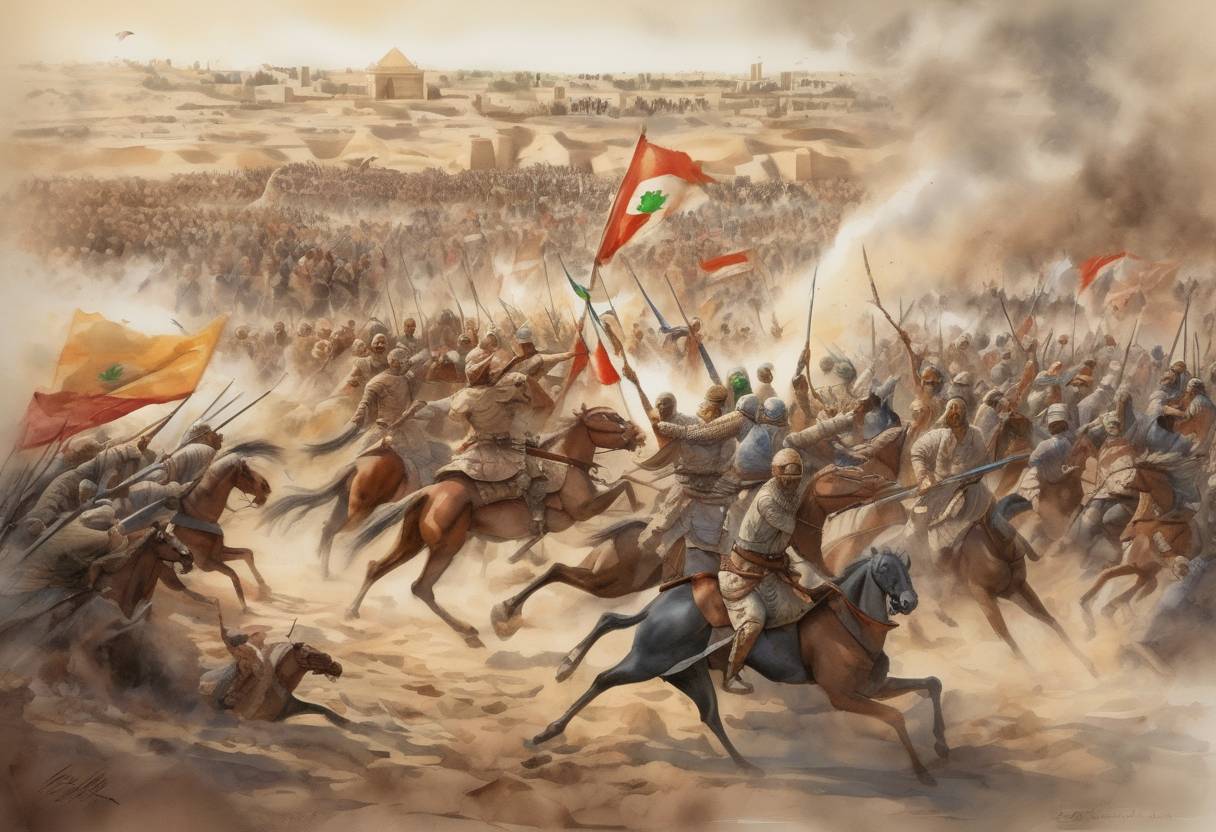
The Battle of Bakhamra: January 21, 763
The Battle of Bakhamra, which occurred on January 21, 763, was a significant conflict between the Abbasid Caliphate and Alid rebels led by Ibrahim ibn Abdallah. This battle was a pivotal moment in the early years of the Abbasid Caliphate, highlighting the internal strife and challenges the new dynasty faced in consolidating its power.
Historical Context
The Abbasid Caliphate had come to power in 750 CE, overthrowing the Umayyad Caliphate in a revolution that promised a more inclusive and just Islamic rule. However, the transition was not smooth, and the Abbasids faced numerous challenges from various factions, including the Alids, who were descendants of Ali, the cousin and son-in-law of the Prophet Muhammad. The Alids had a strong claim to leadership in the Islamic world and enjoyed considerable support among those who were dissatisfied with Abbasid rule.
The Alid Rebellion
The rebellion led by Ibrahim ibn Abdallah was part of a broader Alid uprising against the Abbasids. Ibrahim was the brother of Muhammad al-Nafs al-Zakiyya, who had previously led a revolt against the Abbasids but was defeated and killed in 762. Following his brother’s death, Ibrahim continued the struggle, rallying support among those who were discontent with the Abbasid administration.
The Battle
The Battle of Bakhamra took place near Kufa, a city that had been a center of support for the Alid cause. The Abbasid forces, determined to quash the rebellion and assert their dominance, engaged Ibrahim’s forces in a decisive confrontation. The battle ended in a victory for the Abbasids, with Ibrahim ibn Abdallah being killed in the conflict. This defeat effectively ended the Alid rebellion, at least for the time being, and solidified Abbasid control over the region.
Aftermath and Significance
The victory at Bakhamra was crucial for the Abbasid Caliphate as it helped to stabilize their rule and deter further immediate uprisings. However, the underlying tensions between the Abbasids and the Alids, as well as other factions within the Islamic world, persisted. The battle underscored the challenges the Abbasids faced in maintaining unity and control over a diverse and expansive empire.
In the broader historical context, the Battle of Bakhamra and the suppression of the Alid rebellion demonstrated the complexities of early Islamic politics and the difficulties inherent in establishing a new ruling dynasty. The Abbasids would continue to face internal and external challenges throughout their reign, shaping the political and cultural landscape of the Islamic world for centuries to come.