The Opening of the United Nations Headquarters in New York City
1951 · New York City, United States
The United Nations headquarters officially opened in New York City.
December 20, 1971
United Nations General Assembly ratifies the former Spanish colony of Equatorial Guinea's admission to the UN, following the end of colonial rule.
New York City, United States | United Nations
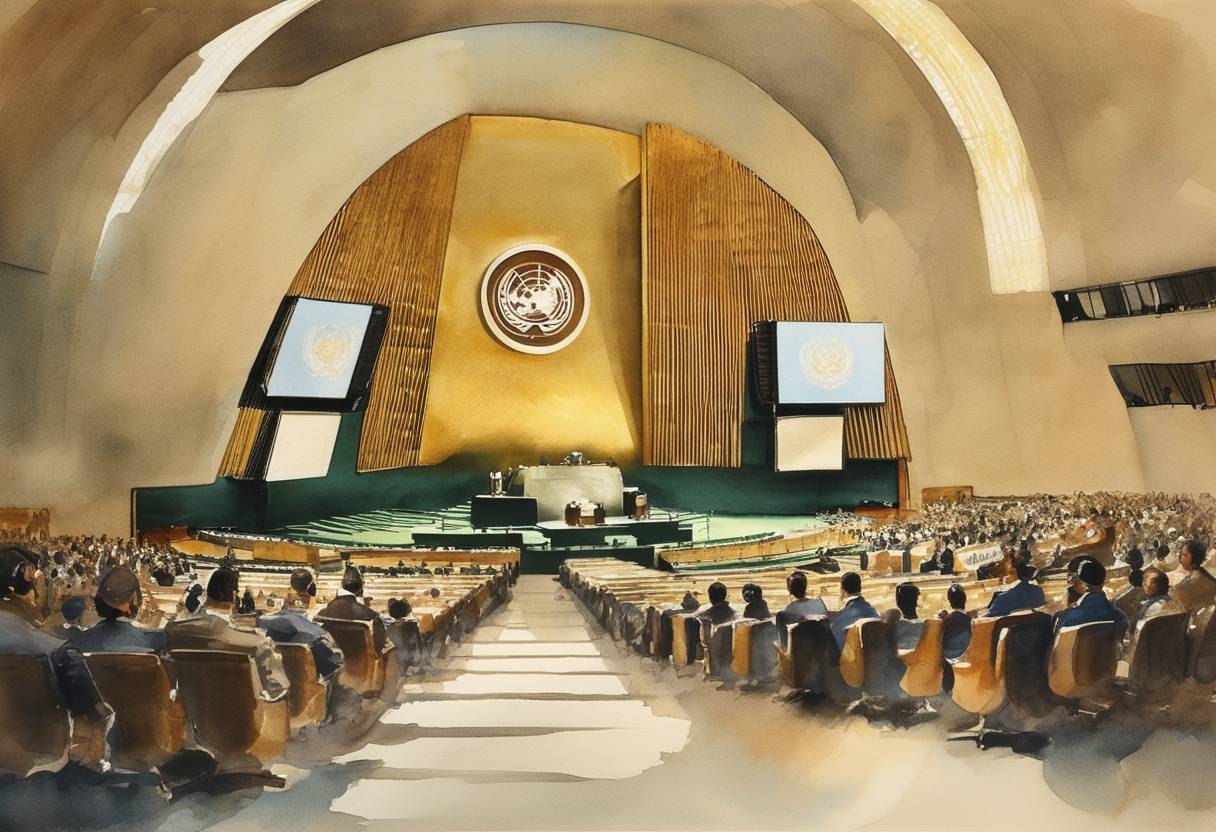
On December 20, 1971, the United Nations General Assembly ratified the admission of Equatorial Guinea as a member state. This significant moment followed the country’s recent liberation from Spanish colonial rule and signified its formal recognition on the international stage.
Equatorial Guinea, located on the west coast of Central Africa, was colonized by Spain during the late 18th century. It remained under Spanish control for nearly 200 years, enduring significant political and economic exploitation. The decolonization movements following World War II, alongside pressures from the international community, paved the way for a global reassessment of colonial empires.
In 1968, Equatorial Guinea gained independence from Spain, becoming the Republic of Equatorial Guinea. Francisco Macías Nguema was elected as the country’s first president, a position he would hold for over a decade.
Following independence, Equatorial Guinea sought to establish its presence and legitimacy among the community of nations. Admission to the United Nations was an essential step in achieving this status. The General Assembly’s ratification of its membership on December 20, 1971, came as part of a broader wave of emerging African states gaining entry into the UN, reflecting the ongoing decolonization of the continent.
Equatorial Guinea’s admission marked a critical phase in its post-colonial journey, granting it a platform to participate in international discussions and to seek global support for its developmental challenges. However, the following years saw significant internal challenges due to Macías Nguema’s increasingly repressive regime, culminating in widespread human rights abuses and economic decline.
The country’s eventual path to stability and economic growth would be driven by its vast natural resources, notably oil discovered off its coast in the 1990s. Today, despite past challenges, Equatorial Guinea remains a recognized member of the UN, actively participating in international diplomacy and cooperation.
Equatorial Guinea’s entry into the United Nations represented both a step towards asserting its sovereignty and a crucial building block for its future diplomatic relationships and development endeavors.
Source: www.un.org