June 18, 1913

The first successful parachute jump from an aircraft is made by Tiny Broadwick.


Los Angeles, United States | aviation history
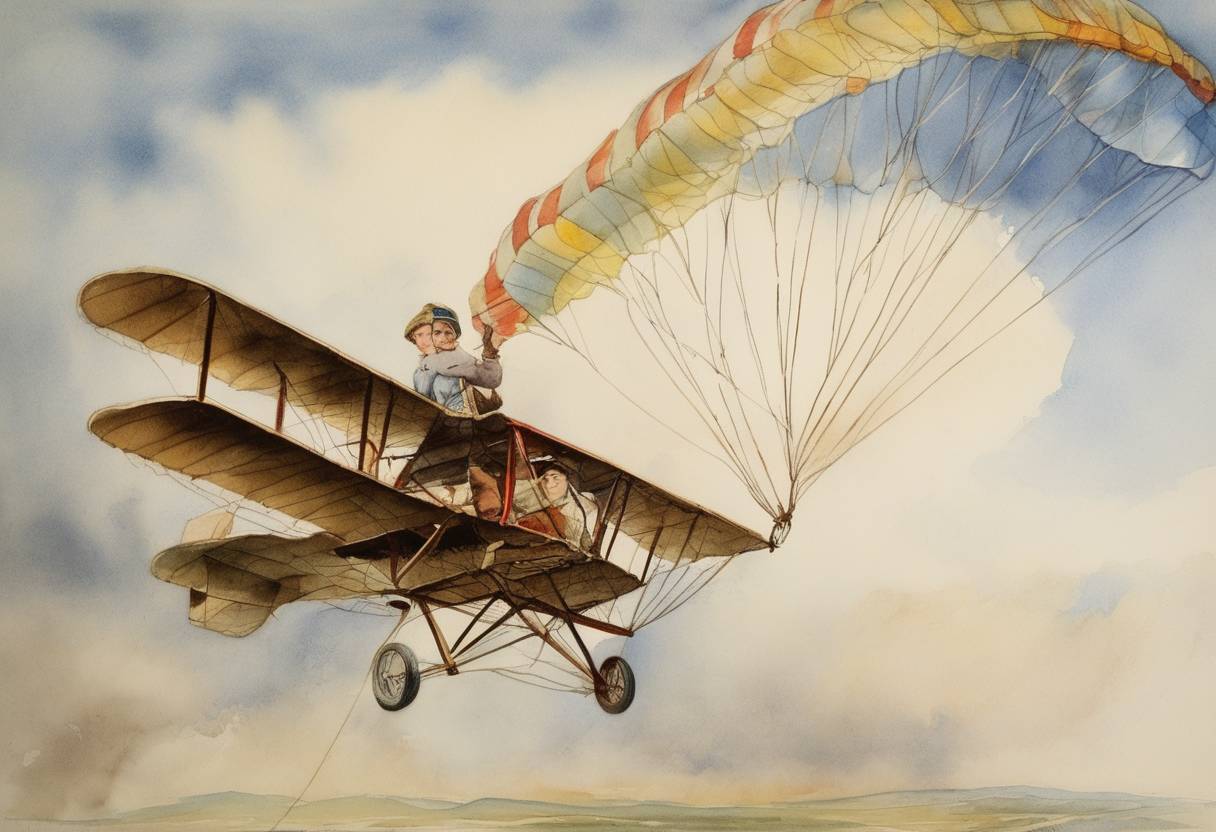
Watercolor painting based depiction of The first successful parachute jump from an aircraft is made by Tiny Broadwick. (1913)

The First Successful Parachute Jump by Tiny Broadwick

Overview

On June 18, 1913, Georgia “Tiny” Broadwick made aviation history by executing the first successful parachute jump from an aircraft. This landmark event took place over Los Angeles, California, redefining possibilities in aviation safety and technology.

Context

  • Aviation in 1913: The early 20th century was a period of intense innovation in aviation. Though powered flight had been achieved by the Wright brothers in 1903, much progress was needed in terms of safety and reliability.
  • Parachute Development: Prior to Broadwick’s jump, parachutes had been used in a limited capacity, often deployed from balloons. However, their application from heavier-than-air aircraft remained untested at the time.

The Jump

  • The Aircraft: The jump took place from a Glenn Martin biplane, a relatively novel aircraft design of the time.
  • Execution: Wearing a self-contained parachute pack, Broadwick successfully detached from the aircraft, deploying her parachute and landing safely.

Significance and Consequences

  • Innovation: Broadwick’s jump demonstrated the feasibility of parachute deployment from an aircraft, an advancement that would become crucial for both military and civilian aviation applications.
  • Legacy: Tiny Broadwick’s leap served as a critical milestone, inspiring further development of parachute technology and enhancing the safety measures available to aviators.
  • Recognition: Broadwick’s pioneering contributions to parachuting earned her considerable acclaim, influencing future generations of aviators and parachutists.

Broader Impact

This event underscored the potential for innovation in aviation safety and opened pathways for new safety standards in aircraft design and operation, ultimately playing a role in the future development of parachuting as a sport and a critical safety tool.