Toronto Stock Exchange Opens for Trading - October 25, 1861
1861 · Toronto, Canada
The Toronto Stock Exchange formally opened for trading.
April 19, 1904
The Great Toronto Fire of 1904 destroyed a significant portion of Toronto's downtown, leaving thousands homeless and causing millions of dollars in damages.
Toronto, Canada
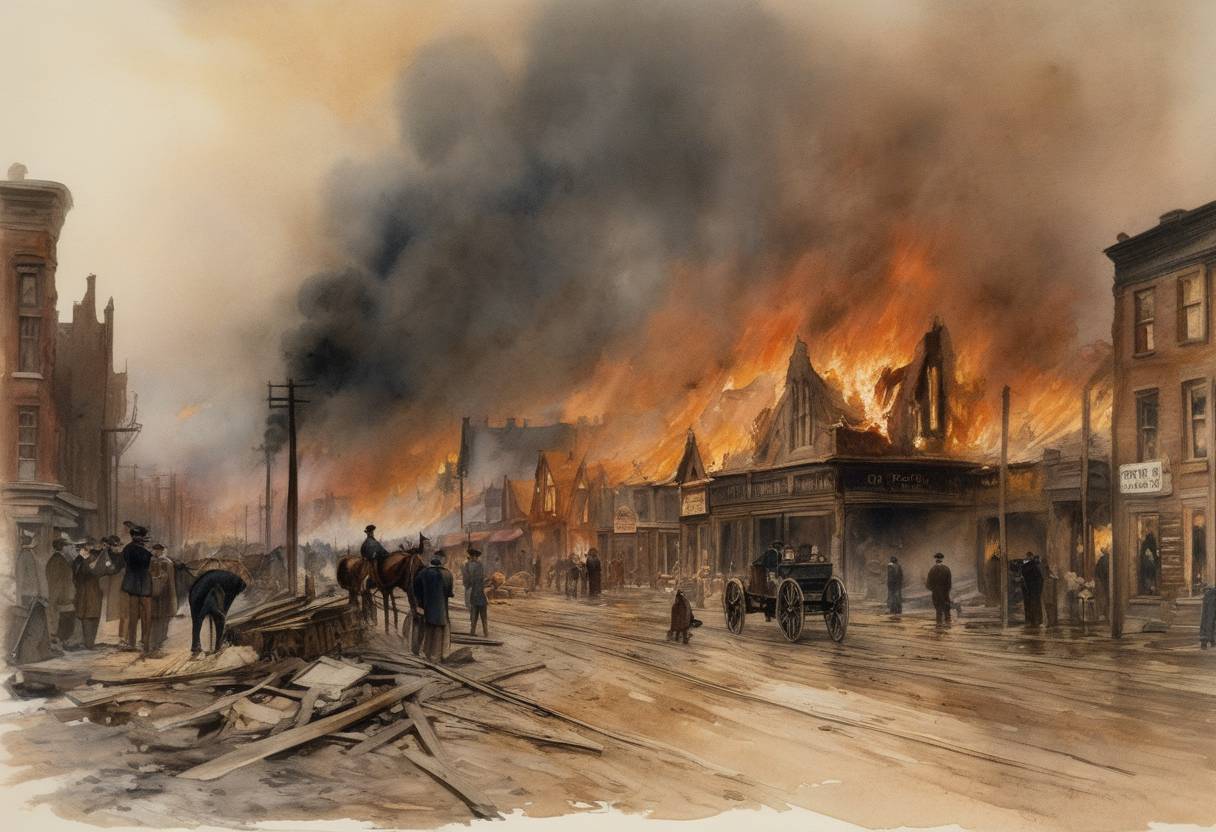
The Great Toronto Fire of 1904, a catastrophic event, struck Toronto’s bustling downtown on April 19, 1904. This devastating fire caused extensive damage to the city’s commercial core, dramatically altering its landscape and affecting the city’s economy and development for years to follow.
The fire began around 8:00 PM in the evening in the elevator shaft of the E. & S. Currie Limited’s neckwear factory located at 58 Wellington Street West. The precise cause remains unknown, but the conflagration was rapidly fueled by a combination of dry conditions, strong winds, and the wooden construction materials commonly used in the city’s architecture at the time.
Once the fire started, it spread quickly across 20 acres of central Toronto. Over the course of nine hours, more than 100 buildings were consumed by the flames. Prestigious business properties between Bay and Yonge Streets, south of Queen Street and north of the Toronto Harbour, were lost to the inferno.
Despite efforts made by approximately 250 firefighters from Toronto, reinforced by crews from neighboring cities including Hamilton and Buffalo, the fire was not declared under control until the early hours of April 20.
The economic impact of the fire was severe. It caused an estimated \(10 million in damages (equivalent to nearly \)300 million today when adjusted for inflation). Approximately 100 businesses were destroyed, leading to the loss of nearly 5,000 jobs—a significant blow to the city’s economy.
Remarkably, there were no fatalities reported, although several individuals suffered injuries while combating the blaze.
The disaster prompted changes in building codes and firefighting techniques. In the fire’s aftermath, Toronto implemented stricter controls on building materials, favoring fireproof construction. The National Fire Protection Association suggested new standards that prioritized reducing risks associated with urban fires.
The rebuilding efforts saw a more modern and robust downtown emerge in subsequent years, laying the groundwork for Toronto’s rapid growth into a major North American metropolis.
The Great Toronto Fire of 1904 remains a defining moment in Toronto’s history, illustrating the vulnerability of cities to natural and man-made disasters, and highlighting the need for urban planning and emergency preparedness in mitigating such risks. The resilience shown in the recovery process exemplified the determination of Toronto’s residents and officials to ensure a safer and more resilient city for future generations.
Source: www.thecanadianencyclopedia.ca