The First Public Reading of the Declaration of Independence in Quebec City
1776 · Quebec City, Canada
The Declaration of Independence was publicly read for the first time in Quebec City, Canada.
July 31, 1817
The immigrant ship HMS Chapman, transporting passengers from Cork, Ireland, arrived at Quebec City, Canada. This was a part of the broader wave of immigration to North America during the early 19th century, influenced by factors such as economic hardship and occasionally the promise of land or religious freedom.
Quebec City, Canada
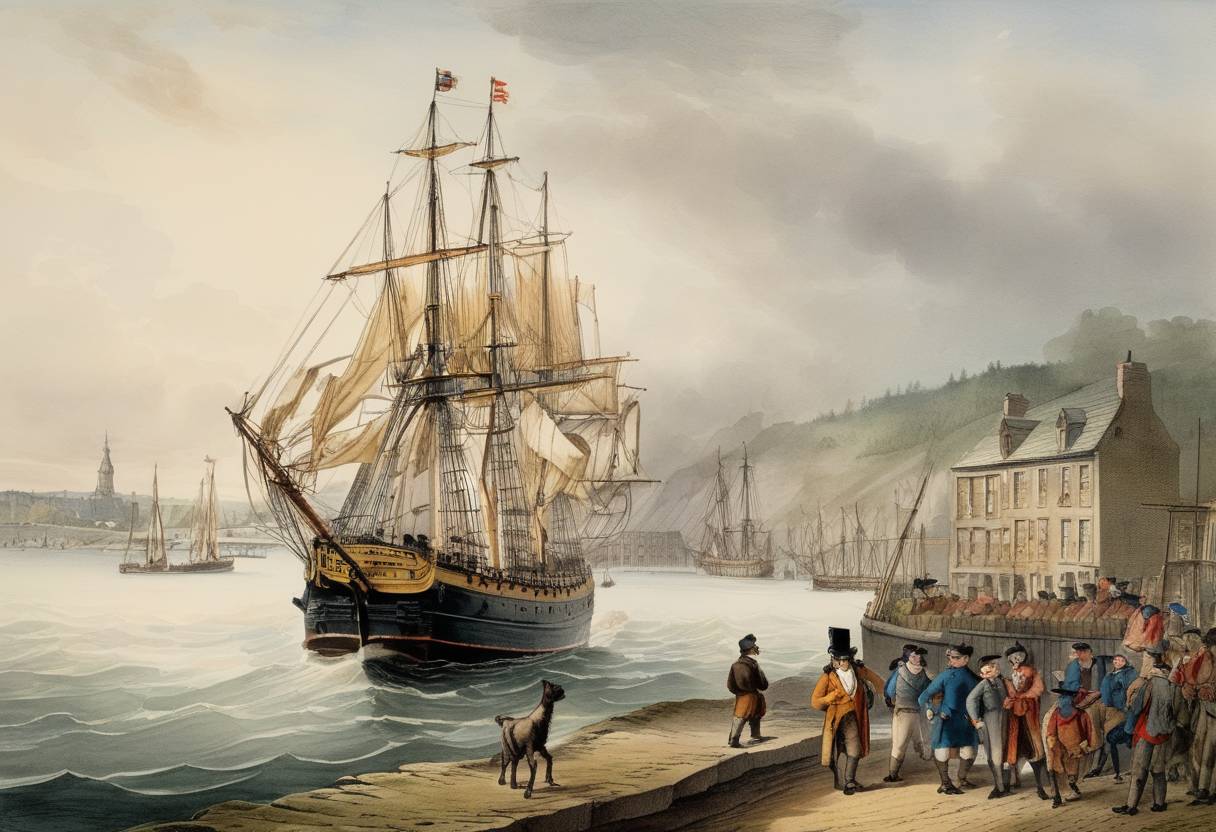
On July 31, 1817, the immigrant ship HMS Chapman reached Quebec City, Canada, after departing from Cork, Ireland. This event was part of a larger trend of immigration during the early 19th century, primarily influenced by economic hardship, famine, and the allure of potential opportunities and religious freedom in North America.
The early 19th century in Ireland was marked by difficult economic conditions, exacerbated by the Napoleonic Wars’ aftermath, agrarian distress, and discriminatory practices against Catholics. These factors motivated many to seek new lives abroad, particularly in North America, where land was often more readily available, and freedom from economic and religious oppression was a greater possibility.
The HMS Chapman was one of several vessels transporting Irish immigrants during this period. These journeys were long and arduous, typically taking a few weeks to several months, depending on weather conditions and the ship’s condition. Onboard, passengers often endured cramped and unsanitary conditions, with limited rations and the constant risk of disease.
The arrival of ships like the HMS Chapman was crucial in shaping the demographic makeup of Canada. Irish immigrants contributed significantly to the population growth and cultural landscape of areas such as Quebec and Ontario. Their presence aided in the development of new communities and helped populate the expanding frontier territories of Upper and Lower Canada.
The influx of Irish immigrants was part of a broader wave throughout the 19th century, contributing to complex socio-cultural dynamics in Canada. These immigrants often faced initial challenges, such as xenophobia and job scarcity, but they laid the groundwork for Irish-Canadian communities that persist to this day.
Their journey reflects the broader narrative of human migration, driven by the search for a better life amidst adversity, and underscores the pivotal role immigration played in shaping Canadian society.