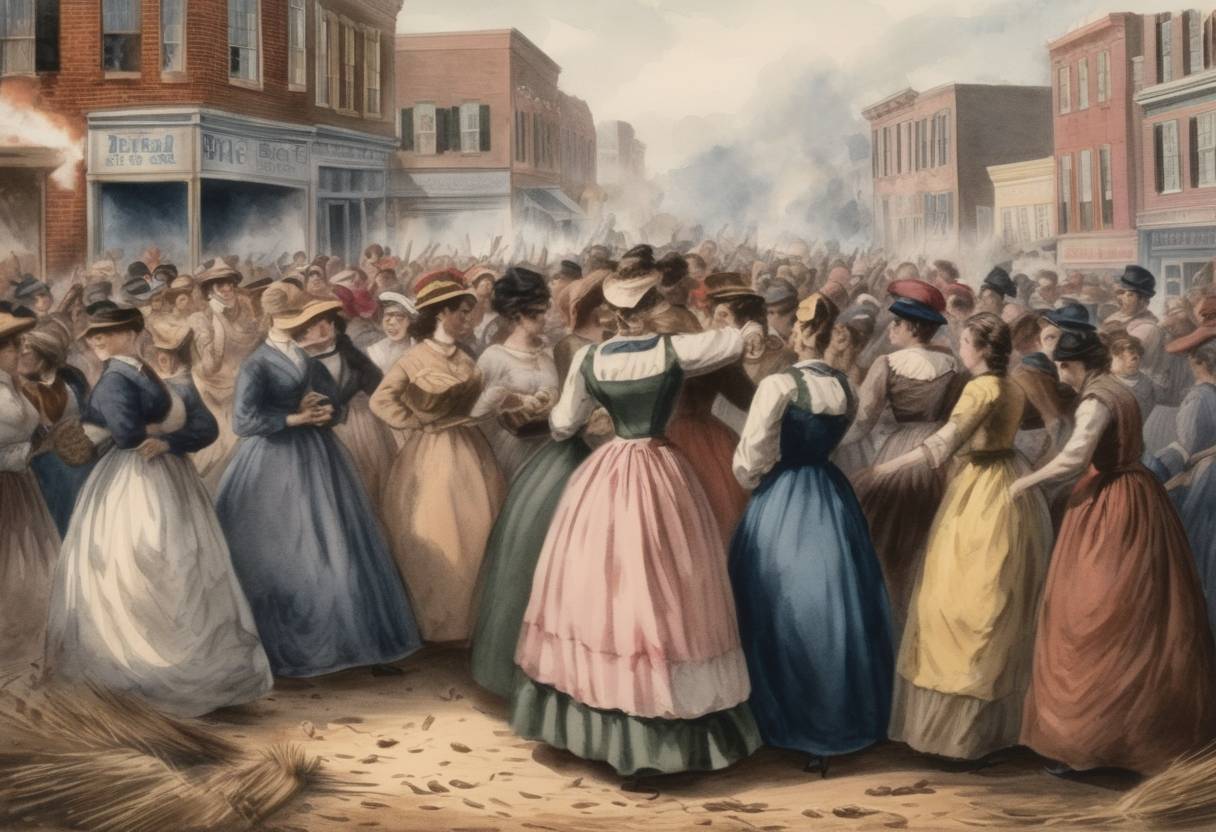
The Richmond Bread Riot of April 2, 1863
On April 2, 1863, Richmond, Virginia, witnessed a significant civil disturbance known as the Richmond Bread Riot. This event was a direct result of escalating economic hardships faced by Confederate civilians during the American Civil War.
Context and Causes
As the Confederate capital, Richmond was central to the Southern war effort. However, by 1863, the city was experiencing acute shortages of food and basic supplies due to the Union blockade and the ongoing conflict depleting resources and manpower. Inflation had soared, making essential goods unaffordable for many residents, particularly the poorer classes and the families of soldiers away at war.
Several factors contributed to the immediate tensions:
- Union Naval Blockade: It severely restricted the import of goods.
- Confederate Currency Inflation: The excessive printing of Confederate currency depreciated its value, causing prices to spike.
- Transportation Disruptions: Rail lines and road infrastructure were often targets in the war, further impeding the distribution of food and supplies.
- Urban Migration: Many displaced people from war-torn areas migrated to Richmond, putting additional strain on the city’s resources.
The Riot
The riot began as a peaceful protest led predominantly by women who were directly affected by the economic conditions, including soldiers’ wives and working-class women. Initially gathering at the Capitol, they sought to appeal to Governor John Letcher for relief. When promises of assistance failed to materialize and frustrations peaked, the protest transformed into a riot.
Hundreds of women took to the streets, marching to various commercial establishments in Richmond. They forcefully entered shops, confiscating bread, clothing, shoes, and other items in an act of desperation. Estimates suggest that as many as 1,000 individuals participated in the riot.
The situation escalated to the point where the local militia was called upon to restore order. President Jefferson Davis himself intervened by addressing the crowd and allegedly threw money to placate them, although accounts of this gesture vary.
Aftermath and Significance
Following the riot, the Confederate authorities were deeply shaken, revealing the internal instability caused by the war’s toll on the civilian population. Although measures were taken to prevent future disturbances, including increased welfare provisions, the Bread Riot underscored the severe economic and social pressures within the Confederacy.
The Richmond Bread Riot is historically significant as it highlighted the struggle of civilians on the home front and underscored the Confederacy’s growing internal dissent amidst the broader conflict of the American Civil War. The event is also indicative of how economic distress can lead to social unrest, emphasizing the importance of addressing civilian needs during times of war.