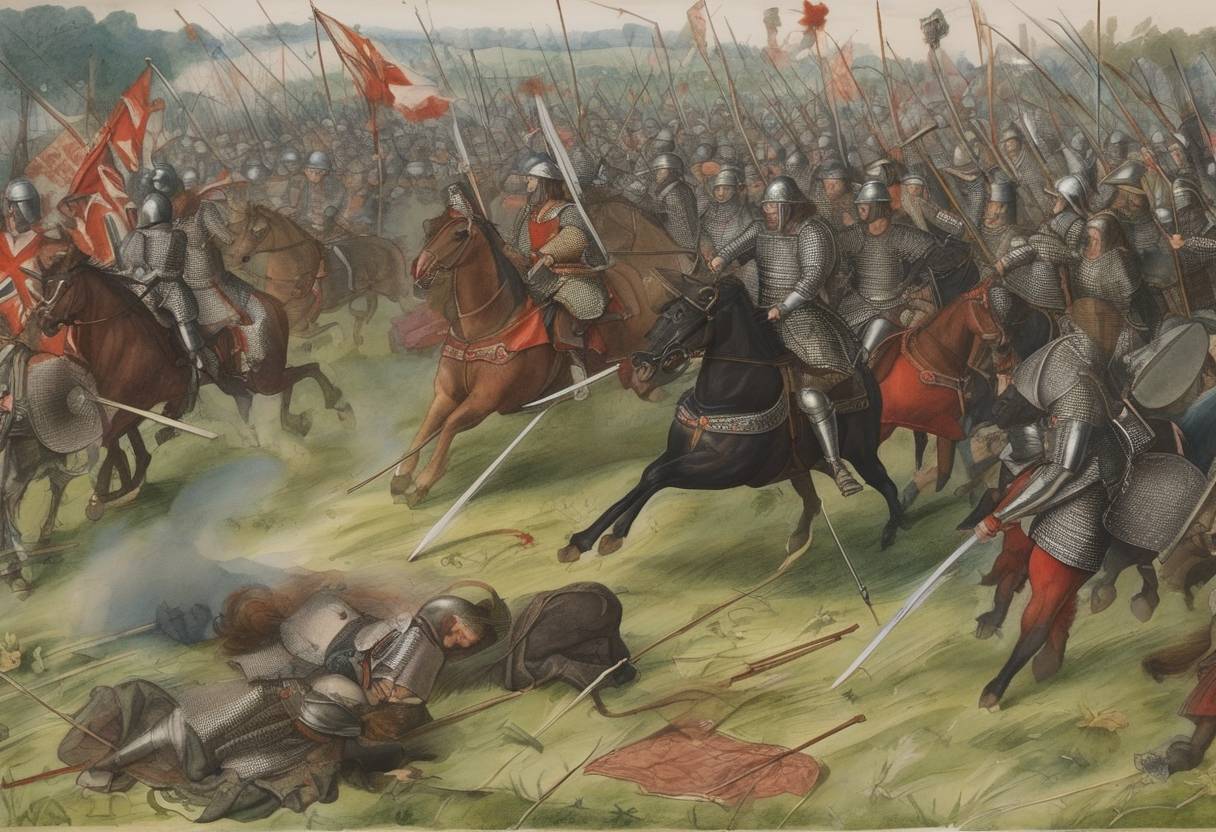
The Second Battle of Stoke Field did not occur on August 20, 1487. It actually took place on June 16, 1487. Below is a detailed account of the battle on that correct date.
The Battle of Stoke Field - June 16, 1487
The Battle of Stoke Field is often considered the final engagement of the Wars of the Roses, a series of dynastic conflicts that plagued England in the late 15th century.
Context
The Wars of the Roses primarily involved rival factions of the English nobility: the Lancastrians and the Yorkists. By 1487, Henry VII, a Lancastrian, had been king for approximately two years following his victory at the Battle of Bosworth Field in 1485, where he defeated and killed Richard III. Henry’s claim to the throne was shaky, however, and several Yorkist factions were not reconciled to his rule.
Leading up to the Battle
Yorkist loyalists supported the claim of Lambert Simnel, a pretender who claimed to be Edward Plantagenet, Earl of Warwick, the son of George, Duke of Clarence. Simnel attracted supporters, including John de la Pole, Earl of Lincoln, and fled to Ireland, where he was declared king by the Irish nobility. With support from Irish forces and mercenaries provided by Margaret of Burgundy, a Yorkist supporter, Lincoln launched an invasion of England.
The Battle
The Yorkist forces, numbering around 8,000 men, were met by Henry VII’s army, led by the king himself and organized by the Earl of Oxford. Henry’s forces numbered approximately 12,000 troops. The armies clashed near the village of East Stoke, in Nottinghamshire.
Despite the fierce resistance from the Yorkist army, which included an initial assault that caught the royal forces off guard, the superior numbers and better organization of Henry’s troops eventually prevailed. The Yorkist lines began to falter under pressure, and many soldiers were killed as they were forced into the River Trent.
Aftermath
The death toll for the Yorkists was heavy, with key leaders such as the Earl of Lincoln, Thomas Fitzgerald, and several others being killed in the battle. Lambert Simnel was captured but spared by Henry VII, who employed him as a servant in the royal kitchen.
The defeat at Stoke Field effectively ended major Yorkist challenges to Henry VII’s reign, consolidating his hold on the throne and marking the conclusion of the Wars of the Roses. Henry’s victory strengthened the fledgling Tudor dynasty, and he took measures to secure his reign, including a clever combination of marriage alliances, strategic claims to the throne, and the establishment of the Court of Star Chamber to manage over-mighty subjects.
Historical Significance
The Battle of Stoke Field reinforced Henry VII’s authority and diminished threats to his kingship. The battle symbolized the end of the medieval feudal conflicts that characterized the Wars of the Roses, leading to the rise of a more centralized and stable English monarchy under the Tudor dynasty.