Johann Sebastian Bach and the Brandenburg Concertos
1721 · Cöthen, Germany
Johann Sebastian Bach dedicated the Brandenburg Concertos to Christian Ludwig, Margrave of Brandenburg-Schwedt.
April 7, 1724
The premiere of Johann Sebastian Bach's Johannes-Passion (St. John Passion) BWV 245 took place in Leipzig.
Leipzig, Germany | St. Nicholas Church
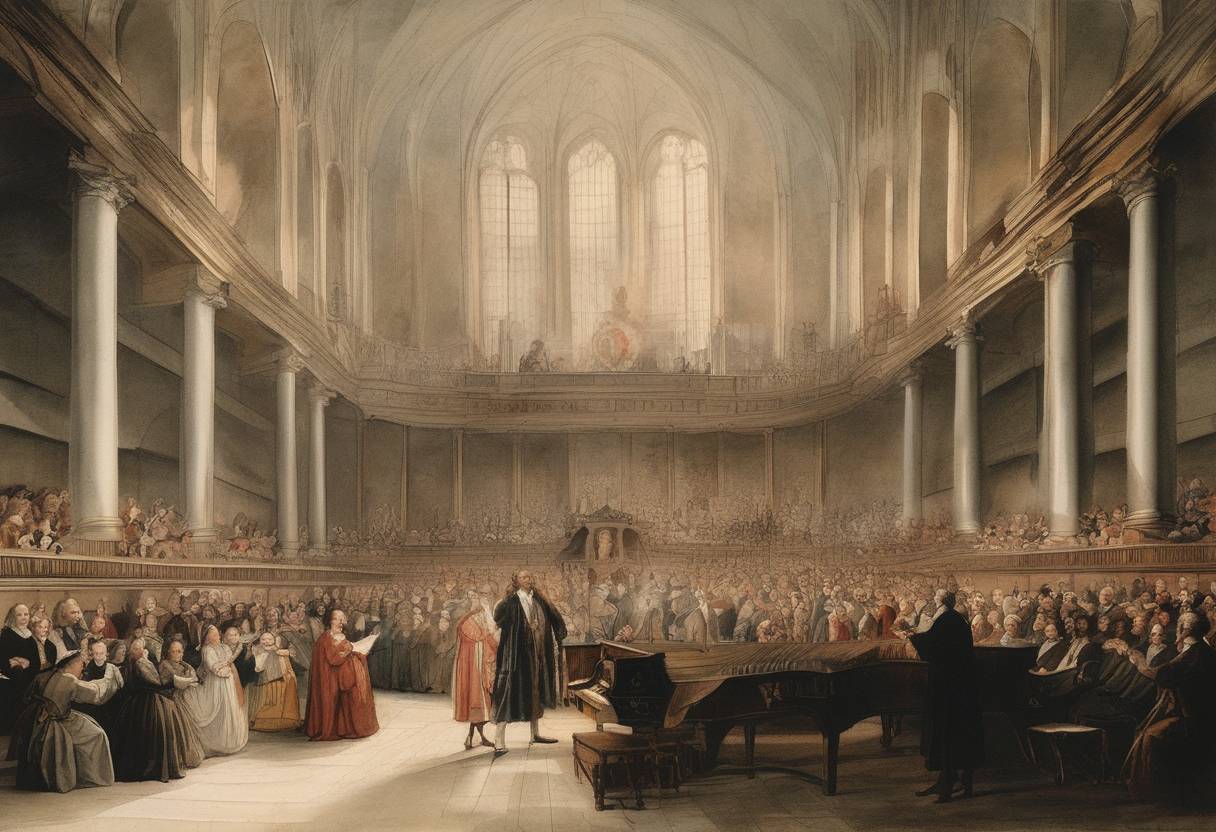
On April 7, 1724, Johann Sebastian Bach’s “Johannes-Passion” (St. John Passion), BWV 245, was premiered in Leipzig, Germany. This significant event took place at the St. Nicholas Church (Nikolaikirche), where Bach served as the director of music for the city.
Role in Leipzig: Bach had commenced his tenure as Thomaskantor in Leipzig a year prior, in 1723. His responsibilities included composing music for church services, directing performances, and overseeing the choir at St. Thomas School.
Origins of the Passion: The composition was created for Good Friday Vespers, a pivotal religious observance in the liturgical calendar. The Johannespassion is one of Bach’s major liturgical compositions, representing his interpretation of the Passion narratives from the Gospel of John.
Musical Elements: The piece is noted for its complex structure. Its composition includes choruses, arias, recitatives, and chorales. Bach’s innovative use of dramatic expression and contrast is evident throughout.
Textual Source: The text combines passages from the Gospel of John with chorales and librettos by various poets, employing a dramatic narrative style.
Unique Features: Unlike his “Matthew Passion,” the “St. John Passion” is known for its immediacy and emotional intensity, illustrating the events of Christ’s crucifixion vividly.
Legacy of the Passion: Bach’s Passions are paramount masterpieces within classical sacred music, and the premiere of the “St. John Passion” set a precedent for church music.
Influence on Music: The work continues to impact both liturgical music and the broader classical genre, being frequently performed during Holy Week around the world.
The “St. John Passion” remains a profound example of Bach’s genius in fusing theological themes with musical innovation. This premiere began the enduring legacy of one of the Baroque period’s most important choral works.
Source: www.bach-cantatas.com