Jack Ruby Found Guilty of Murdering Lee Harvey Oswald
1964 · Dallas, United States
A jury in Dallas, Texas, finds Jack Ruby guilty of murdering Lee Harvey Oswald, the accused assassin of President John F. Kennedy.
November 22, 1963
U.S. President John F. Kennedy was assassinated in Dallas, Texas, leading to a significant political and cultural impact on the United States.
Dallas, United States | U.S. Government
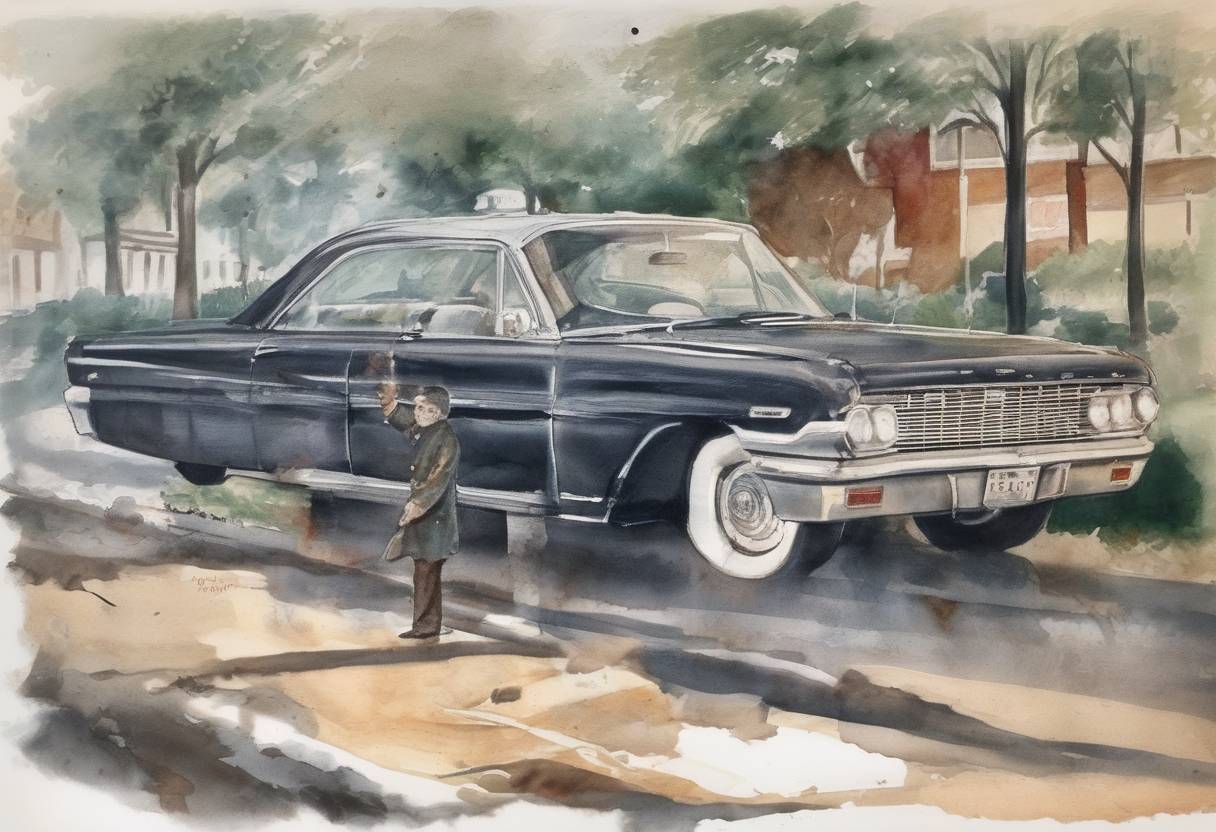
On November 22, 1963, the 35th President of the United States, John F. Kennedy, was assassinated in Dallas, Texas, an event that profoundly impacted the nation both politically and culturally.
John F. Kennedy, elected in 1960, was a charismatic leader who inspired many with his vision for America, encapsulated in his famous inaugural address urging citizens to “ask not what your country can do for you—ask what you can do for your country.” His presidency was marked by significant events, including the Cuban Missile Crisis, the advancement of the Civil Rights Movement, and the early stages of the Vietnam War.
Kennedy’s visit to Texas in November 1963 was part of a political strategy to mend rifts within the Democratic Party ahead of the 1964 election. Texas was crucial for Kennedy’s re-election bid, and the trip was intended to bolster support.
On the morning of November 22, President Kennedy, accompanied by First Lady Jacqueline Kennedy, Texas Governor John Connally, and his wife Nellie, embarked on a motorcade through downtown Dallas. As the motorcade passed through Dealey Plaza at approximately 12:30 PM, shots rang out. Kennedy was struck by two bullets, one in the neck and one in the head, fired from the Texas School Book Depository. Governor Connally was also seriously injured.
Kennedy was rushed to Parkland Memorial Hospital, where he was pronounced dead at 1:00 PM CST. Vice President Lyndon B. Johnson, who was traveling in a separate car in the motorcade, was sworn in as the 36th President of the United States aboard Air Force One at 2:39 PM, with Jacqueline Kennedy by his side.
Lee Harvey Oswald, an employee at the Texas School Book Depository, was arrested later that day for the assassination of President Kennedy and the murder of a Dallas police officer, J.D. Tippit. Oswald denied the charges, claiming he was a “patsy.” Two days later, on November 24, Oswald was shot and killed by nightclub owner Jack Ruby while being transferred from the city jail.
In response to widespread public demand for answers, President Johnson established the Warren Commission, led by Chief Justice Earl Warren, to investigate the assassination. The Commission concluded in 1964 that Oswald acted alone in killing Kennedy, a finding that has been the subject of much debate and numerous conspiracy theories over the years.
The assassination of John F. Kennedy was a watershed moment in American history. It marked the first assassination of a U.S. president in the television age, with the events unfolding live on national broadcasts, deeply affecting the American public. The loss of Kennedy, a symbol of youthful idealism and progressive change, left a void in American politics and culture.
The event also led to significant changes in Secret Service protocols and presidential security measures. Culturally, it marked the end of the perceived innocence of the early 1960s, ushering in a period of social upheaval and skepticism towards government institutions.
In the decades since, Kennedy’s legacy has been the subject of extensive analysis and reflection, with his vision for America continuing to inspire future generations.
Source: en.wikipedia.org