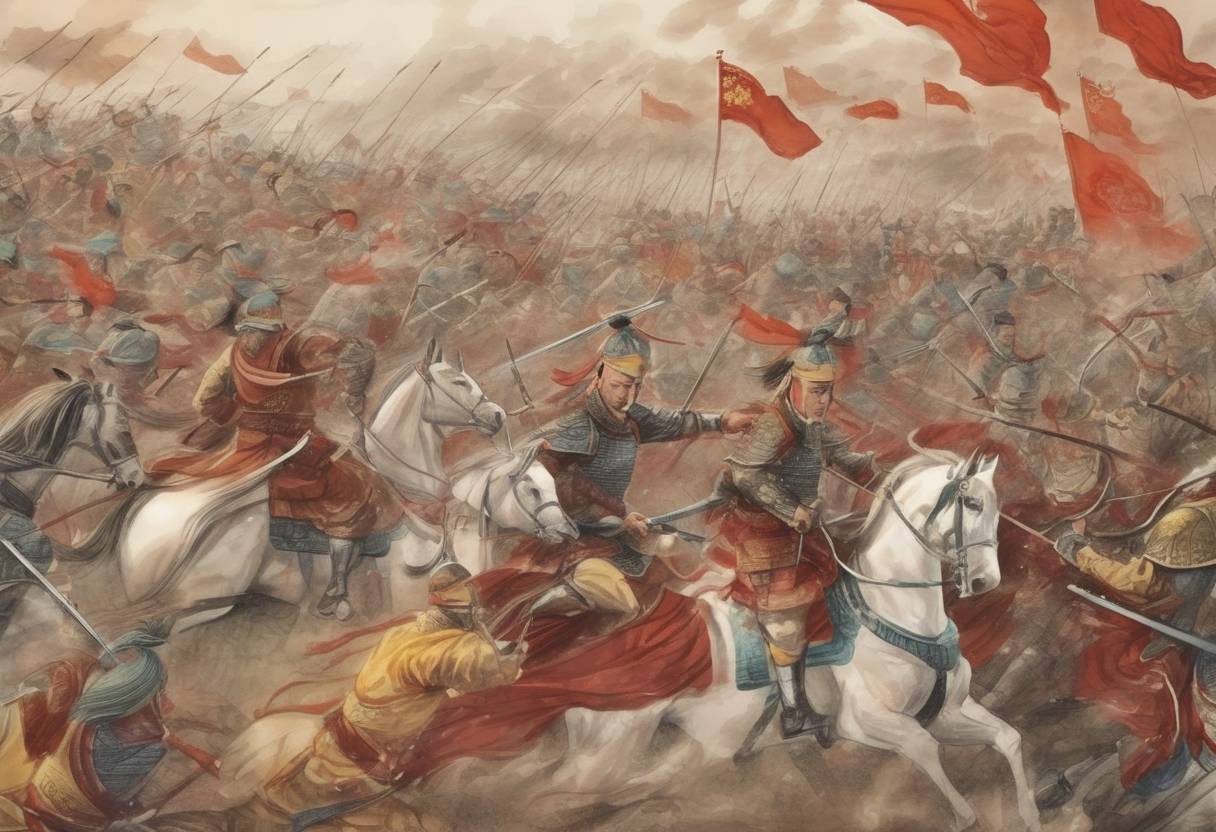
The Battle of Huoyi: November 30, 617
The Battle of Huoyi, fought on November 30, 617, was a pivotal conflict that marked a significant step in the establishment of the Tang dynasty in China. This battle saw the forces of the Tang, led by the formidable Li Shimin, decisively defeat the troops of the waning Sui dynasty. This victory was crucial in the Tang’s rise to power and the eventual establishment of one of China’s most enduring and influential dynasties.
Historical Context
The Sui dynasty, which had unified China in 589, was in decline by the early 7th century due to internal strife, heavy taxation, forced labor, and military failures, particularly the disastrous campaigns against Goguryeo (present-day Korea). These issues led to widespread unrest and rebellion across the empire.
Amidst this turmoil, Li Yuan, a former Sui official and military commander, saw an opportunity to challenge the Sui rule. In 617, he declared himself the Prince of Tang and initiated a rebellion against the Sui dynasty. His son, Li Shimin, played a crucial role in the military campaigns that followed.
The Battle
The Battle of Huoyi was a decisive engagement in this rebellion. Li Shimin, demonstrating exceptional military acumen, led the Tang forces against the Sui troops. The battle took place near present-day Huoyi, in Shanxi Province. Li Shimin’s strategic prowess and the superior tactics of the Tang army overwhelmed the Sui forces, leading to a significant victory for the Tang.
Aftermath and Significance
The victory at Huoyi was instrumental in the Tang’s campaign against the Sui dynasty. It bolstered the Tang’s position and allowed them to capture the Sui capital, Chang’an (modern-day Xi’an), shortly thereafter. This victory paved the way for Li Yuan to declare himself Emperor Gaozu of Tang in 618, officially founding the Tang dynasty.
The Tang dynasty would go on to become one of China’s golden ages, noted for its cultural, economic, and military achievements. The Battle of Huoyi, therefore, stands as a critical moment in Chinese history, marking the transition from the Sui to the Tang and setting the stage for centuries of prosperity and cultural flourishing.
Broader Historical Impact
The establishment of the Tang dynasty had far-reaching implications. It not only stabilized China after the chaos of the late Sui period but also expanded Chinese influence across Asia. The Tang era saw the flourishing of trade along the Silk Road, the spread of Buddhism, and significant advancements in art, literature, and technology.
In summary, the Battle of Huoyi was more than just a military victory; it was a turning point that heralded the rise of a dynasty that would shape the course of Chinese history for centuries to come.