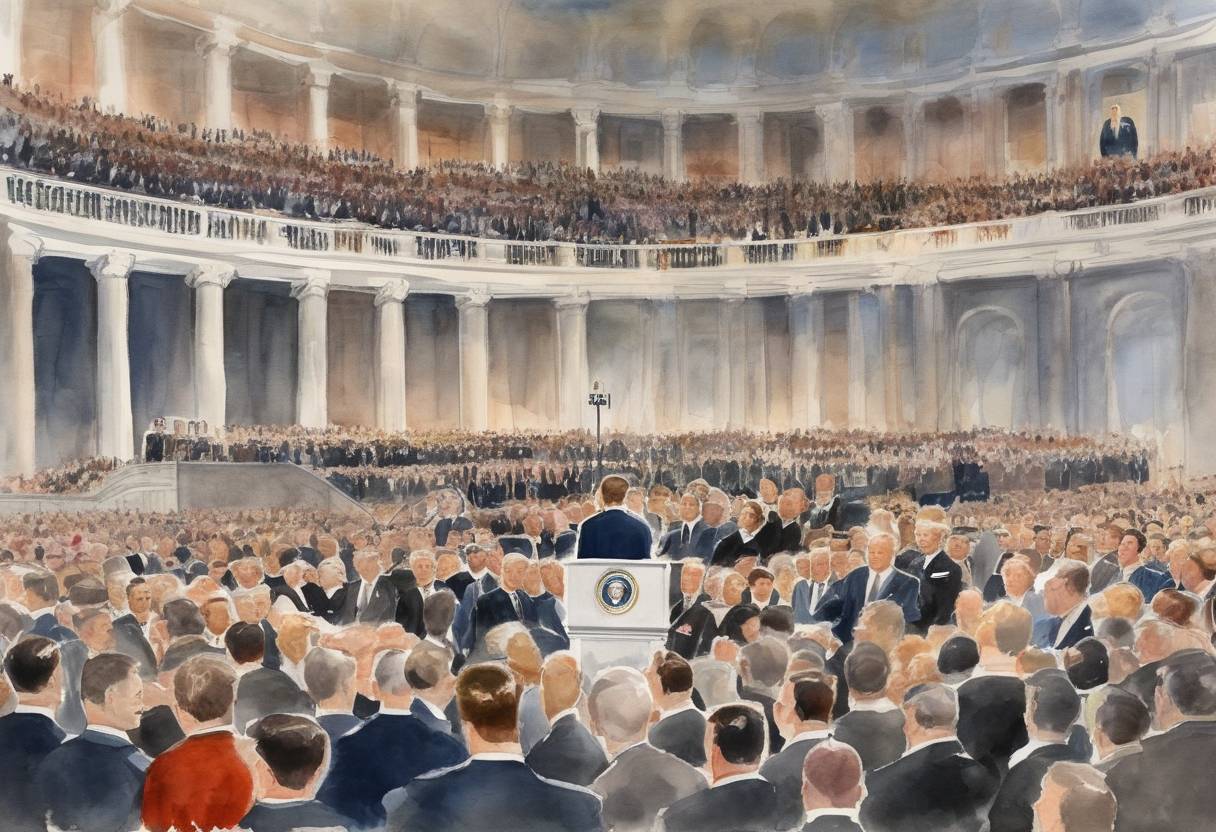
John F. Kennedy’s Inauguration - January 20, 1961
On January 20, 1961, John F. Kennedy was inaugurated as the 35th President of the United States. This event marked a significant moment in American history, characterized by Kennedy’s youthful energy and the promise of a new era. His inauguration was notable not only for the transition of power but also for his memorable inaugural address, which has since become one of the most quoted speeches in American history.
Context Leading Up to the Inauguration
- Election of 1960: Kennedy, a Democrat, won the presidency after a closely contested election against Republican candidate Richard Nixon. The election was one of the closest in U.S. history, with Kennedy winning by a narrow margin in the popular vote.
- Cold War Tensions: The inauguration took place during a period of heightened Cold War tensions between the United States and the Soviet Union. The threat of nuclear conflict and the spread of communism were pressing concerns for the new administration.
Key Events of the Inauguration Day
- Ceremony: The inauguration ceremony was held on the East Portico of the United States Capitol in Washington, D.C. It was attended by a large crowd, including dignitaries, politicians, and citizens.
- Inaugural Address: Kennedy’s speech is best remembered for its call to action and emphasis on public service. The most famous line from the address is: “Ask not what your country can do for you—ask what you can do for your country.” This line encapsulated Kennedy’s vision of civic responsibility and collective effort.
Themes and Significance of the Inaugural Address
- Call to Action: Kennedy urged Americans to contribute to the public good and to take an active role in addressing the nation’s challenges.
- Unity and Global Responsibility: The speech emphasized the importance of unity at home and a commitment to global peace and cooperation. Kennedy highlighted the need for Americans to work together to combat tyranny, poverty, disease, and war.
- Youth and Change: Kennedy’s address symbolized a generational shift in American politics, with a focus on innovation, progress, and a forward-looking agenda.
Aftermath and Historical Impact
- New Frontier: Kennedy’s presidency, often referred to as the “New Frontier,” sought to address domestic issues such as civil rights, education, and economic reform, while also navigating complex international relations.
- Legacy: The inaugural address set the tone for Kennedy’s administration and inspired a generation to engage in public service. His words continue to resonate as a call to civic duty and national service.
Kennedy’s inauguration and his iconic speech remain pivotal moments in American history, reflecting the aspirations and challenges of the early 1960s and leaving a lasting impact on the nation’s political and cultural landscape.